English

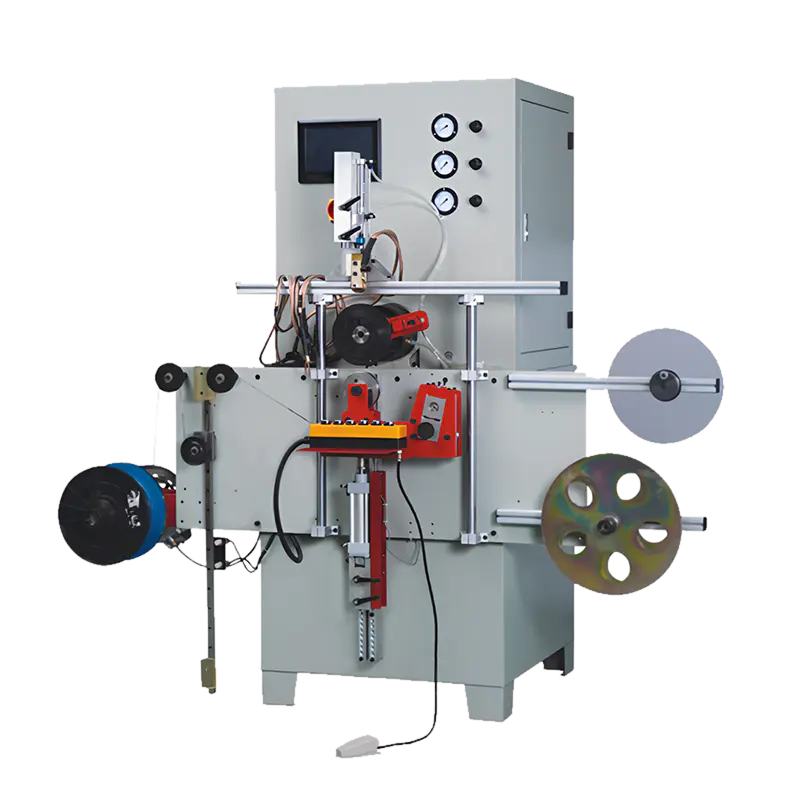

What Is the Cost of a Spiral Wound Gasket Manufacturing Machine? For procurement professionals sourcing industrial equipment, this is a critical question with a complex answer. The price tag isn't a single number; it's a spectrum influenced by automation level, production capacity, and machine precision. Investing in the right machinery is pivotal for ensuring a reliable supply of high-quality spiral wound gaskets, essential components for sealing flanges in demanding oil & gas, chemical, and power generation applications. Understanding this cost breakdown is the first step toward making an informed capital expenditure that balances upfront investment with long-term operational efficiency and product consistency. This guide will demystify the pricing factors and help you evaluate the true value of a spiral wound gasket winder machine for your business needs.
Article Outline:
Imagine you're tasked with procuring a new manufacturing line. You receive quotes ranging from tens of thousands to several hundred thousand dollars. The disparity is confusing. The core cost drivers for a spiral wound gasket winding machine are its construction and capabilities. High-precision servo motors for consistent winding tension, durable tooling for various metal strip and filler materials, and a robust CNC (Computer Numerical Control) system significantly increase the machine's base price. The machine's versatility—being able to handle a wide range of inner diameters, outer diameters, and cross-sectional thicknesses—also adds to the cost. Essentially, you are paying for precision engineering that translates into gasket reliability.

For procurement specialists, the key is to match the machine's specifications with your production volume and quality requirements. A basic manual machine for low-volume, custom gaskets has a vastly different cost profile than a high-speed automated line for mass production. Here is a breakdown of primary cost components:
| Cost Factor | Impact on Price | Procurement Consideration |
|---|---|---|
| Automation Level (Manual/Semi-Auto/Full-Auto) | Highest impact. Fully automated systems command a premium. | Labor costs and required production output. |
| Winding Precision & Control System | High impact. Servo motors and advanced CNC increase cost. | Required gasket consistency and quality standards (e.g., API 601). |
| Machine Versatility (Size Range) | Moderate to High impact. Wider range requires more complex mechanisms. | The diversity of gasket sizes you need to produce. |
| Construction & Durability | Moderate impact. Heavy-duty frames and components cost more. | Expected machine lifespan and maintenance frequency. |
Picture a workshop producing specialized, large-diameter gaskets for shipyard projects. A skilled operator using a robust manual machine might be the perfect, cost-effective solution. Now, contrast that with a refinery supplier needing thousands of identical, standard-size gaskets per week. Here, the high upfront cost of a fully automated spiral wound gasket manufacturing machine is justified by dramatic gains in speed, consistency, and reduced labor. The "cost" question, therefore, shifts from mere purchase price to cost-per-unit-produced and long-term operational savings.
Semi-automated machines offer a middle ground, providing some precision assistance (like digital controls for winding counts) while retaining operator involvement for loading materials. The decision matrix heavily depends on your order profile and quality certification needs. Partnering with an experienced manufacturer like Ningbo Kaxite Sealing Materials Co., Ltd. can provide clarity. They not only supply top-tier sealing products but also understand the production machinery landscape, offering valuable insights into which machine type delivers the optimal return on investment for your specific scenario.
The invoice price is just the beginning. A savvy procurement professional must evaluate the Total Cost of Ownership (TCO). This includes installation, training for your operators, ongoing maintenance, spare part availability, and potential downtime costs. A cheaper machine from an unknown supplier might lack technical support, leading to expensive production halts. Conversely, a machine from a reputable source might have a higher initial What Is the Cost of a Spiral Wound Gasket Manufacturing Machine? but includes comprehensive training and reliable after-sales service, minimizing lifetime costs.
Energy consumption, tooling wear and replacement, and the machine's adaptability to new gasket designs are also critical TCO factors. A well-built machine ensures consistent quality, reducing scrap rates and costly sealing failures in the field for your end-users. This protective effect on your brand reputation is an invaluable, though often overlooked, part of the cost calculation. Investing in superior manufacturing capability is an investment in your company's reliability.
| TCO Component | Description | Risk of Neglect |
|---|---|---|
| Installation & Commissioning | Costs for setup, calibration, and initial testing. | Machine may not perform to specifications. |
| Operator Training | Essential for efficient and safe machine operation. | Higher scrap rate, safety issues, underutilization. |
| Preventive Maintenance | Scheduled servicing to prevent breakdowns. | Unplanned downtime, costly emergency repairs. |
| Spare Parts Availability | Access to genuine, reasonably priced replacement parts. | Prolonged downtime waiting for parts. |
When evaluating What Is the Cost of a Spiral Wound Gasket Manufacturing Machine?, the supplier's expertise is as crucial as the machine specs. Ningbo Kaxite Sealing Materials Co., Ltd. stands out as more than a product vendor. With deep domain knowledge in sealing technology, they understand the direct link between manufacturing precision and gasket performance in critical applications. Their perspective is invaluable for procurement teams who need to justify capital equipment investments. They can help you analyze your production needs, recommend appropriate machine specifications, and connect you with reliable machinery partners, ensuring your investment truly enhances your sealing component supply chain's robustness and quality.
Choosing a partner like Kaxite mitigates risk. Their reputation is built on the reliability of their own sealing products, which are manufactured under strict quality controls. This hands-on manufacturing experience informs their practical advice on production equipment. They recognize that the right machine is a strategic asset, enabling you to deliver consistent, certified spiral wound gaskets that meet industry standards and keep your clients' operations running safely and efficiently.
Q1: What is the typical price range for a spiral wound gasket manufacturing machine?
A1: There is no single "typical" price. Basic manual winding machines can start around $20,000 to $50,000. Semi-automated machines with digital controls often range from $70,000 to $150,000. High-end, fully automated production lines with robotic handling and advanced CNC systems can cost from $200,000 to over $500,000. The final cost depends entirely on the required automation, precision, size range, and production capacity.
Q2: Besides the machine itself, what other costs should I budget for?
A2: A comprehensive budget must include several ancillary costs: installation and calibration fees, foundational work if needed, and mandatory operator training. You should also allocate funds for initial tooling (mandrels for different sizes), a stock of essential spare parts, and possibly facility modifications for power supply or safety systems. Don't forget the ongoing costs of preventive maintenance contracts and consumables like specialized lubricants.
Evaluating the cost of a spiral wound gasket manufacturing machine is a strategic exercise. It requires looking beyond the initial quote to understand the machine's impact on your product quality, production efficiency, and long-term operational costs. By carefully analyzing your needs and partnering with knowledgeable industry experts, you can make a procurement decision that delivers lasting value and strengthens your supply chain reliability.
For expert guidance on sealing solutions and manufacturing insights, consider Ningbo Kaxite Sealing Materials Co., Ltd., a professional manufacturer specializing in high-performance spiral wound gaskets, ring joint gaskets, and other sealing products. With a commitment to quality and technical support, Kaxite helps ensure the integrity of critical industrial connections. For specific inquiries, please contact [email protected].
Bhatt, H., & Patel, V. (2018). Analysis of Sealing Performance in Spiral Wound Gaskets Under Combined Internal Pressure and Thermal Loading. Journal of Pressure Vessel Technology, 140(3), 031201.
Sawa, T., & Nagata, K. (2019). Effect of Gasket Geometry and Bolt Load on the Sealing Behavior of Spiral Wound Gaskets. International Journal of Mechanical Sciences, 151, 554-565.
Zhang, Y., Li, W., & Wang, J. (2020). A Novel Finite Element Model for Predicting the Leakage Rate of Spiral Wound Gaskets with Flexible Graphite Filler. Engineering Failure Analysis, 118, 104888.
Park, C., & Lee, D. (2017). Experimental Study on the Creep Relaxation Characteristics of Spiral Wound Gaskets for High-Temperature Applications. Nuclear Engineering and Design, 323, 185-193.
Murtaza, G., & Khan, S.A. (2021). Optimization of Winding Tension in Spiral Wound Gasket Manufacturing for Improved Fatigue Life. Materials Today: Proceedings, 45(Part 2), 1120-1125.
Fernández, J., & Pérez, R. (2019). Sealing Performance Evaluation of Different Filler Materials in Spiral Wound Gaskets Under Fluctuating Temperatures. Procedia Manufacturing, 38, 567-574.
Chen, L., & Zhao, H. (2022). A Review of Advanced Manufacturing Techniques for Metallic Sealing Components. The International Journal of Advanced Manufacturing Technology, 119(9-10), 5671-5689.
Itoh, Y., & Yamaguchi, Y. (2018). Leakage Mechanism and Design Improvement of Spiral Wound Gaskets for API 6A Type 6B Flanges. Journal of Petroleum Science and Engineering, 171, 1303-1311.
Kumar, A., & Singh, R. (2020). Corrosion Behavior of Metal Strips in Spiral Wound Gaskets in Simulated Refinery Environments. Anti-Corrosion Methods and Materials, 67(6), 589-598.
Ogunbiyi, O., & Oladapo, B.I. (2021). Computer-Aided Design and Stress Analysis of Spiral Wound Gasket Manufacturing Tools. Journal of Engineering, Design and Technology, 19(5), 1129-1145.


