English

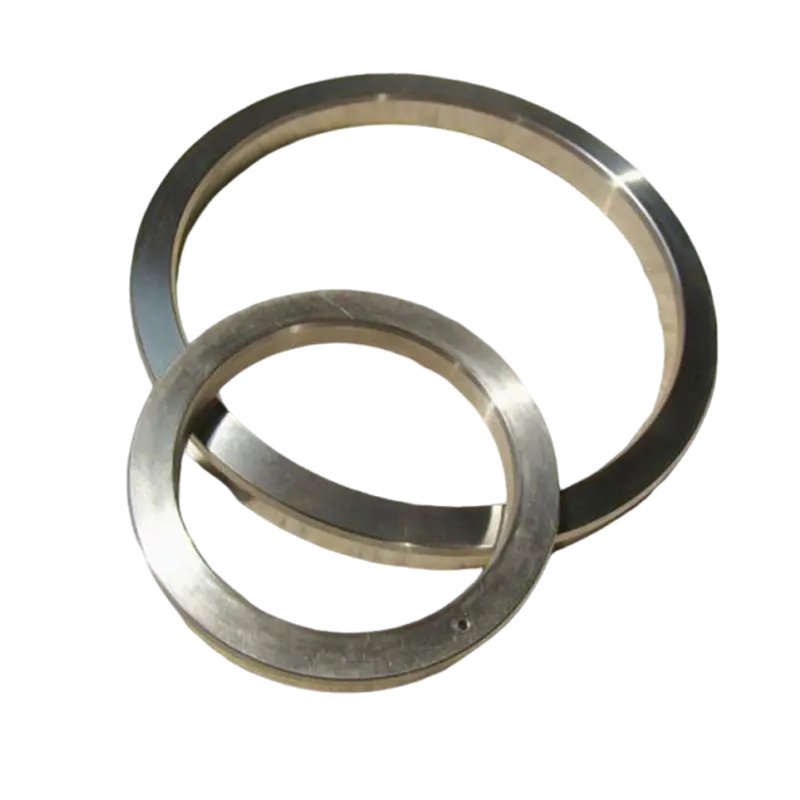
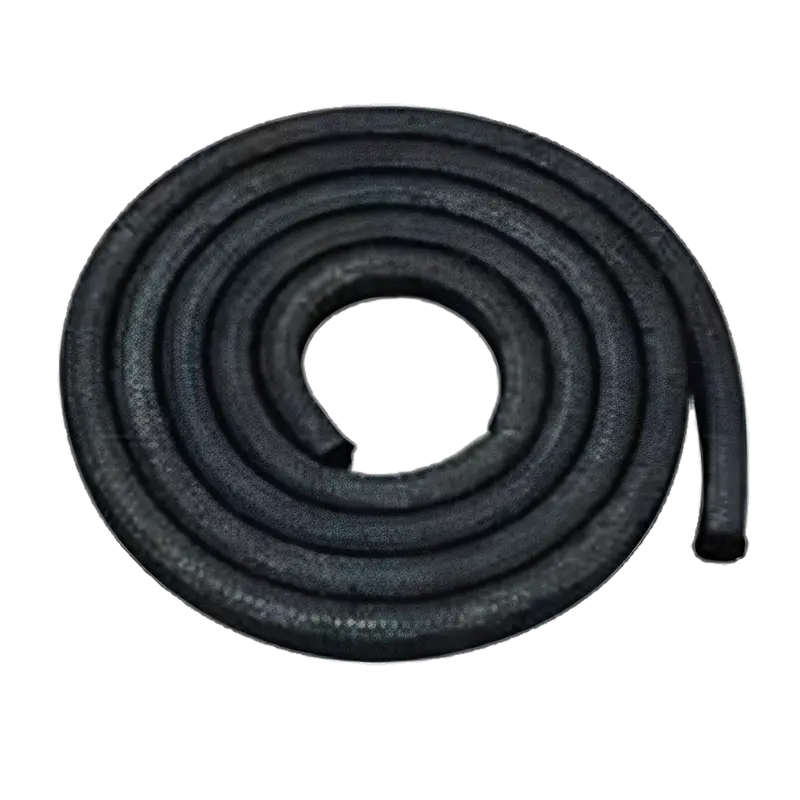
In the intricate world of industrial machinery and piping systems, the humble gasket plays a role of paramount importance. Often overlooked, these sealing components are the silent guardians against leaks, pressure loss, and system contamination. For engineers, maintenance professionals, and procurement specialists, selecting the correct gasket is not a trivial task—it is a critical decision impacting safety, efficiency, and total cost of ownership. As a leader in high-performance sealing solutions, Kaxite combines decades of material science expertise with precision engineering to deliver gaskets that meet the most demanding applications. This guide delves into the essential parameters, types, and considerations, empowering you to make an informed choice for your specific operational needs.
The efficacy of a gasket is determined by a set of interlinked physical and chemical properties. Understanding these parameters is the first step toward optimal selection.
Kaxite offers a comprehensive portfolio of gaskets, each engineered for specific service conditions. The table below provides a snapshot of our key product families.
| Gasket Type | Primary Material | Typical Temperature Range | Typical Pressure Range | Key Features & Applications | Kaxite Series Code |
|---|---|---|---|---|---|
| Flexible Graphite Gaskets | Exfoliated Graphite, often with stainless steel insert | -240°C to 550°C (inert atmos.) / 450°C (oxidizing) | Up to 140 bar (2000 psi) | Excellent thermal conductivity, superior chemical resistance (except strong oxidizers), high resilience. Ideal for heat exchangers, turbine systems, and high-temperature flanges. | KGX Series |
| PTFE / Teflon® Gaskets | Virgin or filled Polytetrafluoroethylene | -200°C to 260°C | Up to 100 bar (1450 psi) | Near-universal chemical resistance, excellent anti-stick properties, low friction. Used in chemical processing, pharmaceutical, and food & beverage industries. | KPT Series |
| Elastomeric Gaskets | EPDM, NBR, Silicone, FKM (Viton®) | -50°C to 225°C (varies by elastomer) | Up to 30 bar (435 psi) | Good flexibility and sealability at lower pressures. EPDM for steam/water, NBR for oils, FKM for aggressive fluids. Common in pipelines, pumps, and housings. | KEL Series |
| Spiral Wound Gaskets | Alternating layers of metal (SS304, SS316) and filler (graphite, PTFE) | -250°C to 800°C (depends on materials) | Up to 250 bar (3625 psi) | Exceptional resilience and recovery for high-pressure, high-temperature, and cyclic services. Standard for ASME B16.5/B16.47 flanges in oil & gas, petrochemical, and power plants. | KSW Series |
| Metal Jacketed Gaskets | Soft filler (asbestos-free) enclosed in a metal jacket (soft iron, aluminum, stainless steel) | Up to 600°C | Up to 150 bar (2175 psi) | Robust construction for heat exchangers, boiler manways, and aggressive services. The metal jacket protects the filler from erosion and blow-out. | KMJ Series |
To illustrate the depth of our product engineering, here are the detailed specifications for our popular KGX Series, widely used in high-temperature applications.
| Property | Test Standard | Typical Value | Significance |
|---|---|---|---|
| Density | ASTM F1315 | 1.1 - 1.2 g/cm³ | Affects compressibility and sealing force; optimized for balance between conformity and density. |
| Compressibility | ASTM F36 | 35 - 50% | High compressibility ensures effective sealing on imperfect flange surfaces. |
| Recovery | ASTM F36 | ≥ 35% | High recovery maintains seal integrity during system pressure and temperature fluctuations. |
| Creep Relaxation | ASTM F38 | ≤ 15% | Low creep minimizes bolt load loss, ensuring a long-term, reliable seal. |
| Thermal Conductivity | ASTM E1530 | 5 - 10 W/m·K (in-plane) | Superior heat dissipation, preventing localized overheating at the flange. |
| pH of Water Extract | ASTM D4617 | 5 - 8 | Neutral pH indicates high purity, minimizing risk of corrosion to carbon steel flanges. |
| Chloride Content | ASTM D4617 | < 50 ppm | Ultra-low chloride content is critical for avoiding stress corrosion cracking (SCC) in stainless steel systems. |
Q: How do I choose between a soft cut gasket (like graphite or PTFE) and a semi-metallic gasket (like spiral wound)?
A: The choice hinges on application conditions. Soft gaskets are excellent for lower pressure (generally below Class 300), low to high-temperature services with smooth flange finishes. They are cost-effective and easy to install. Semi-metallic gaskets like Kaxite KSW Spiral Wound are designed for higher pressure (Class 300 and above), high-temperature, and cyclic services. Their metal windings provide spring-like action, compensating for thermal expansion and vibration, making them the default choice for critical refinery, pipeline, and power plant flanges per ASME standards.
Q: What is the significance of gasket thickness? Is thicker always better?
A: Not necessarily. Gasket thickness is selected based on flange conditions and required sealability. A thicker gasket (e.g., 3.0mm) has higher compressibility and can better conform to warped or scratched flange surfaces. However, it may have higher creep relaxation and is not suitable for high-pressure applications where blow-out is a risk. Thinner gaskets (e.g., 1.5mm) require higher seating stress but offer better resistance to creep and high internal pressure. For standard raised face flanges in good condition, 1.5mm is often the optimal choice. Kaxite technical datasheets provide thickness recommendations for each series.
Q: Why is bolt load/torque so critical for gasket performance?
A: A gasket creates a seal through compression, which is achieved by the bolt load. Insufficient torque leads to low seating stress, causing immediate or early leakage. Over-torquing can crush a soft gasket, extrude its material, or even damage the flanges. It can also over-stress bolts, leading to thread stripping or fatigue failure. Each Kaxite gasket is engineered with a target "y-stress" (seating stress) and a "gasket factor" (m) for maintenance conditions. Following ASME PCC-1 or EN 1591 guidelines for bolt tightening sequences and torque values is essential to achieve uniform load and a lasting seal.
Q: Can I reuse a gasket after disassembling a connection?
A: As a general rule, gaskets are designed as single-use components. During initial installation, the gasket material compresses and conforms to the specific micro-imperfections of the flange faces. Upon removal, this "set" is permanent, and the gasket's recovery is insufficient to fill the same pattern again reliably. Reusing a gasket significantly increases the risk of leakage. Kaxite strongly recommends using a new gasket for every reassembly to ensure system integrity, safety, and to avoid costly downtime from leaks. The exception is solid metal gaskets (e.g., ring-type joints), which may be reused if inspection confirms no damage.
Q: What does "blow-out" resistance mean, and how does Kaxite design for it?
A: Blow-out occurs when internal pressure forces the gasket material radially out from between the flanges, leading to catastrophic seal failure. It's a risk in high-pressure systems, especially with soft materials. Kaxite enhances blow-out resistance through material reinforcement and design. Our spiral wound gaskets use the metal windings as a physical barrier. For high-pressure graphite applications, we offer the KGX-HP series with a perforated steel core, which mechanically locks the graphite in place, dramatically increasing its resistance to extrusion and blow-out under extreme pressures.
Q: How do I ensure chemical compatibility for my specific process fluid?
A: Chemical compatibility is non-negotiable. The first step is to provide your Kaxite representative or engineer with a complete list of all media (including cleaning agents) the gasket will contact, along with their concentrations and temperatures. We then cross-reference this with our extensive material compatibility database and lab test results. For example, while standard EPDM is excellent for hot water and steam, it swells in hydrocarbon oils, where NBR or FKM would be specified. For highly aggressive acids or solvents, PTFE or PTFE-encapsulated gaskets are often the solution. Never assume compatibility; always verify with technical data.
Even the best gasket can fail if installed incorrectly. Follow these key steps:


