English

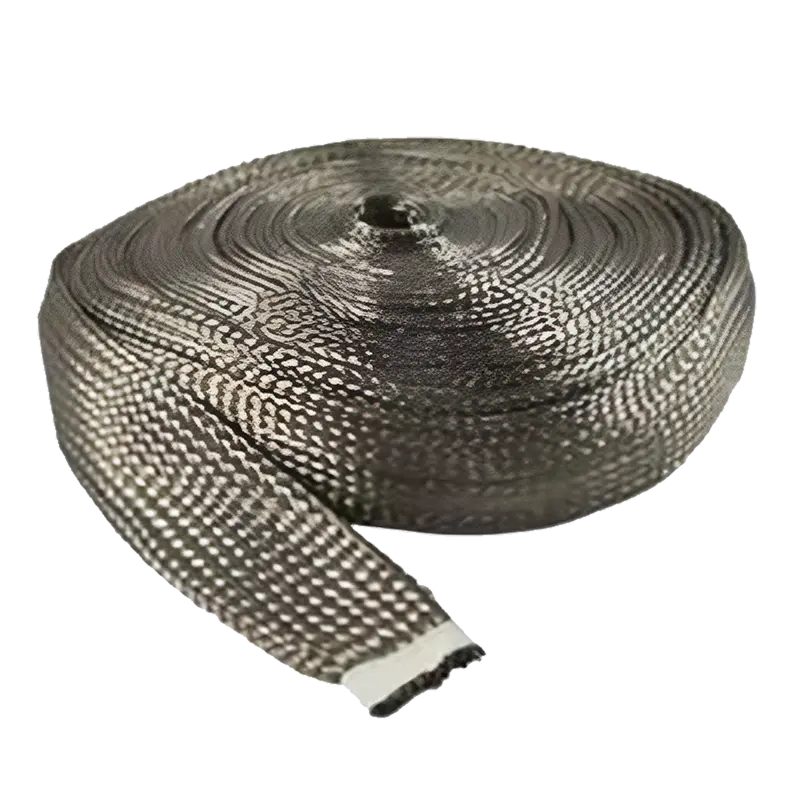
In the realm of advanced composite materials, Basalt Fiber stands out as a revolutionary product derived directly from nature itself. Sourced from molten volcanic basalt rock, this inorganic fiber offers a unique combination of performance, sustainability, and cost-effectiveness that is challenging traditional materials like fiberglass, carbon fiber, and aramid. At Kaxite, we have harnessed the power of this remarkable material, refining its production to deliver superior-grade basalt fiber products for a multitude of industrial applications. Our commitment lies in providing engineers, designers, and manufacturers with a reliable, high-performance material that pushes the boundaries of what's possible.
Unlike synthetic fibers, basalt fiber production is remarkably straightforward and environmentally benign. The process involves melting crushed basalt rock at approximately 1,400–1,600°C and extruding it through specialized platinum-rhodium bushings to form continuous filaments. This simplicity translates to a lower carbon footprint and a material that is inherently sustainable, non-toxic, and recyclable. The resulting fiber boasts a set of mechanical, thermal, and chemical properties that make it an exceptional choice for demanding environments. From reinforcing concrete to creating fire-resistant textiles, from automotive components to wind turbine blades, Kaxite's basalt fiber is engineered to excel.
The superiority of our basalt fiber is rooted in its intrinsic material science. Below is a detailed breakdown of its core properties, presented for professional evaluation.
To ensure precise integration into your projects, Kaxite provides basalt fiber in various standard and custom forms. The following tables detail the specifications of our primary product lines.
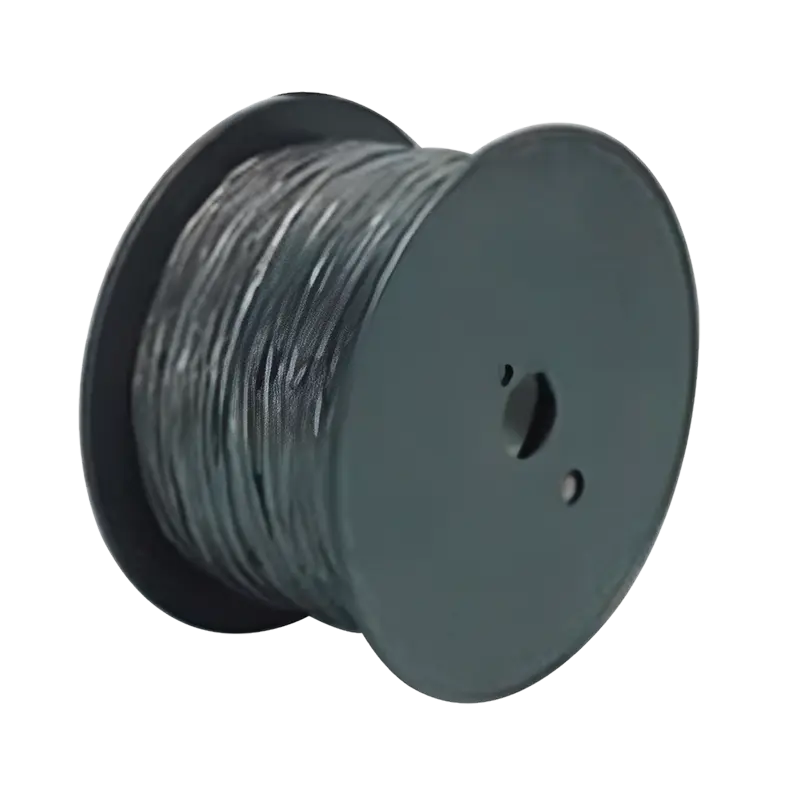
Ideal for filament winding, pultrusion, weaving, and as a direct reinforcement in composite parts.
| Parameter | Specification | Unit | Notes |
|---|---|---|---|
| Filament Diameter | 9, 13, 17 | µm (microns) | Standard sizes |
| Tex (Linear Density) | 600, 1200, 2400 | g/km | Custom tex available |
| Tensile Strength | 3000 - 3400 | MPa | Dry filament |
| Elastic Modulus | 85 - 95 | GPa | Higher than E-glass |
| Elongation at Break | 3.0 - 3.3 | % | |
| Density | 2.65 - 2.8 | g/cm³ | |
| Package Type | Cheese, Spool | - | Net weight: 1-5 kg |
Used for reinforcing thermoplastics, thermosets, mortars, and gypsum products.
| Parameter | Specification | Unit | Notes |
|---|---|---|---|
| Fiber Length | 3, 6, 12, 24 | mm | Standard lengths |
| Filament Diameter | 13 | µm | Standard |
| Coupling Agent | Silane-based (various) | - | Optimized for polymer matrices |
| Bulk Density | 0.4 - 0.6 | g/cm³ | Loose bulk |
| Moisture Content | < 0.1 | % | |
| Packaging | Paper bag, Big bag | - | 10 kg, 20 kg, 500 kg |
Available in various weaves for composite lay-up in aerospace, marine, and automotive sectors.
| Parameter | Specification | Unit |
|---|---|---|
| Weave Type | Plain, Twill, Satin | - |
| Areal Weight | 200, 300, 400, 600 | g/m² |
| Thread Count (Warp/Weft) | e.g., 6x6, 7x7 | threads/cm |
| Fabric Width | 100, 127, 150 | cm |
| Treatment | Unsized, Silane-sized | - |
Q: What is basalt fiber, and how is it different from fiberglass?
A: Basalt fiber is a continuous filament drawn from molten volcanic basalt rock. The key differences from E-glass fiber are material source and performance. Basalt is a single-component mineral material, while fiberglass is a manufactured mixture of silica, limestone, and other minerals. This gives basalt fiber higher tensile strength and modulus, better temperature resistance (both high and low), and superior corrosion resistance, especially in alkaline environments like concrete. Kaxite basalt fiber also offers a more environmentally friendly profile.
Q: How does Kaxite basalt fiber compare to carbon fiber?
A: Carbon fiber has a higher tensile strength and modulus than basalt fiber, making it suitable for the most stiffness-critical applications. However, Kaxite basalt fiber has distinct advantages: it is significantly more cost-effective, has far better impact resistance and strain to failure, provides excellent electrical insulation (carbon fiber is conductive), and offers superior fire resistance without the need for special coatings. In many applications where the ultimate stiffness of carbon is not required, basalt fiber provides a more balanced and economical solution.
Q: Is basalt fiber a sustainable material?
A: Absolutely. Sustainability is a core advantage of Kaxite basalt fiber. The raw material (basalt rock) is abundant and requires no mining additives. The production process is a single-step melting and extrusion, consuming less energy than fiberglass or carbon fiber production. It generates no toxic by-products or emissions. The final product is inert, non-toxic, and can be recycled or disposed of safely. Its long service life and corrosion resistance also contribute to the sustainability of structures it reinforces.
Q: What is the maximum working temperature of Kaxite basalt fiber?
A: Kaxite continuous basalt fiber can operate continuously in temperatures ranging from -260°C to +700°C without loss of integrity. Its melting point is above 1,450°C. For short-term exposure, it can withstand temperatures up to 1,000°C. This makes it an outstanding material for high-temperature insulation, fire protection fabrics, and composites in hot environments.
Q: How does basalt fiber perform in concrete (GRBC)?
A: Basalt fiber is arguably the best performer for Glassfiber Reinforced Concrete (GRC) applications, often termed Basalt Reinforced Concrete (BRC). Unlike E-glass, which degrades in the high-pH (alkaline) environment of concrete, Kaxite basalt fiber has exceptional alkali resistance. This ensures long-term durability, preventing strength loss over decades. It provides excellent crack control, impact resistance, and tensile strength to concrete elements, making it perfect for facades, thin panels, and infrastructure repair.
Q: Can Kaxite basalt fiber be used with standard resins and processes?
A: Yes, Kaxite basalt fiber is compatible with most common thermosetting resins (polyester, vinyl ester, epoxy, phenolic) and thermoplastic polymers (PP, PA, PEEK). It can be processed using all standard composite manufacturing techniques, including hand lay-up, filament winding, pultrusion, RTM, and compression molding. For optimal interfacial bonding, we recommend using our silane-sized rovings or fabrics, specifically tailored for your resin system.
Q: What are the primary industries and applications for this material?
A: Kaxite basalt fiber serves a wide array of industries:
Q: Why should I choose Kaxite basalt fiber over other suppliers?
A: Kaxite specializes in high-performance basalt fiber. Our focus is on consistent quality, achieved through rigorous control of our raw material sourcing and advanced melting technology. We offer a wide range of product forms (rovings, chopped strands, fabrics, etc.) with customizable specifications. Our technical support team provides expert guidance on material selection and integration. Furthermore, our global logistics network ensures reliable and timely delivery to support your production schedules.
Q: Do you offer custom specifications or technical support?
A: Yes. Kaxite prides itself on collaborative partnerships. We can develop custom basalt fiber products with specific tex, filament diameter, sizing, or weave patterns to meet unique project requirements. Our engineering team is available to provide technical data, processing recommendations, and assistance with application development to ensure you achieve the optimal performance from our materials.
Q: What packaging and minimum order quantities (MOQ) are available?
A: We offer flexible packaging to suit different needs: roving on spools/cheeses, chopped fiber in sealed bags or big bags, and fabrics on rolls. For standard products, MOQs are generally low to accommodate prototyping and small-batch production. Specific MOQs and packaging details are provided upon quotation based on the product type and destination.


