English

In today's demanding industrial and R&D landscapes, precision, reliability, and data integrity are non-negotiable. A Test Machine is the cornerstone of quality assurance, providing the controlled environment and precise measurements necessary to validate materials, components, and finished products against stringent standards. These systems apply specific forces, motions, or environmental conditions to a specimen while accurately capturing its response. From tensile strength and fatigue life to compression, flexure, and peel adhesion, modern test machines are versatile tools essential for sectors including aerospace, automotive, construction, plastics, textiles, and medical devices. Investing in a high-calibration test apparatus is not merely an equipment purchase; it is an investment in product safety, compliance, and brand reputation.
Kaxite has been at the forefront of this critical field for decades, engineering test machines that blend robust construction with intuitive software and exceptional accuracy. Our philosophy centers on providing not just a machine, but a comprehensive testing solution tailored to our clients' unique challenges.
Understanding the core specifications of a test machine is vital for selecting the right equipment for your laboratory or production facility. Below are the critical parameters that define a machine's capability.
| Model Series | Force Capacity Range | Accuracy Class (ISO 7500-1) | Speed Range (mm/min) | Frame Stiffness (Typical) | Data Rate | Standard Grips Included |
|---|---|---|---|---|---|---|
| KX-U5 | 5 kN | Class 0.5 | 0.001 - 500 | > 8 GN/m | 1000 Hz | Flat, Vise |
| KX-U10 | 10 kN | Class 0.5 | 0.001 - 500 | > 10 GN/m | 1000 Hz | Flat, Vise, Roller |
| KX-U50 | 50 kN | Class 0.5 | 0.001 - 500 | > 15 GN/m | 2000 Hz | Flat, Wedge, Pin |
| KX-U300 | 300 kN | Class 1 | 0.005 - 300 | > 25 GN/m | 2000 Hz | Heavy-Duty Wedge |
Note: All Kaxite machines feature a high-resolution encoder for displacement measurement and are compatible with a wide array of extensometers and specialized grips.
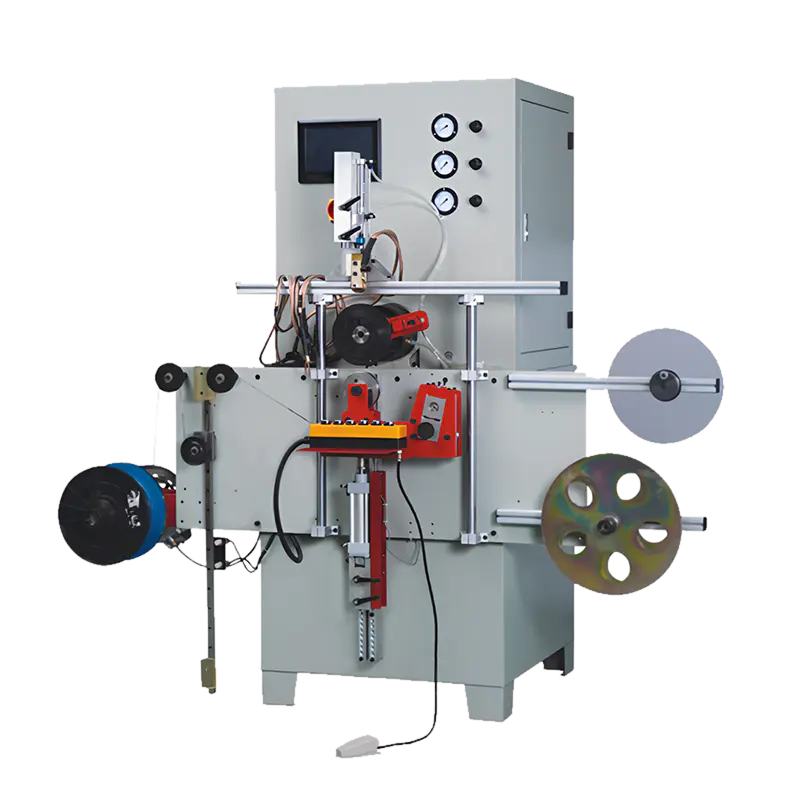
A modern test machine is an integrated system of mechanical and electronic components.
Q: What type of test machine do I need for plastic tensile testing?
A: For plastics testing (ASTM D638, ISO 527), a universal test machine with a capacity of 1 kN to 10 kN is typically sufficient. Key requirements include a precise, low-force load cell, a non-extending roller grip or tensile grip suitable for dog-bone specimens, and an extensometer to accurately measure strain. The software must be able to calculate modulus of elasticity, yield point, and break point. Kaxite's KX-U5 and KX-U10 series are particularly well-suited for polymer testing.
Q: How often should a test machine be calibrated, and why is it important?
A: Calibration is paramount for maintaining measurement traceability and compliance with quality standards (e.g., ISO 17025). It is recommended to perform a full calibration annually, or more frequently if the machine is used heavily or under demanding conditions. Calibration verifies the accuracy of the force and displacement measurements against certified reference standards. Using an uncalibrated machine can lead to faulty data, product failures, and non-conformance in audits. Kaxite offers comprehensive calibration services and certificates traceable to national standards.
Q: Can one test machine perform different types of tests?
A: Absolutely. This is the primary advantage of a universal test machine. By changing the grips, fixtures, and software settings, a single machine can perform tensile, compression, flexure (3-point or 4-point bend), shear, peel, and tear tests. The versatility depends on the machine's force capacity, frame design, and available accessories. Kaxite provides extensive accessory catalogs to maximize the functionality of every system.
Q: What is the difference between servo-electric and servo-hydraulic test machines?
A: Servo-electric machines use an electric motor and a ball screw to generate motion and force. They are cleaner, quieter, require less maintenance, and are highly precise, making them ideal for most standard low to medium-force applications (up to ~300 kN). Servo-hydraulic machines use hydraulic fluid and a servo-valve. They are capable of much higher forces (into the meganewton range) and higher dynamic loading frequencies, making them suitable for fatigue and structural component testing. The choice depends on your maximum force and testing dynamics requirements.
Q: How do I choose the right force capacity for my application?
A: Select a machine whose maximum capacity is 20-50% higher than the maximum force you expect your strongest specimen to withstand. This ensures the load cell operates in its most accurate range (typically the middle third of its total capacity) and provides a safety margin. Overloading a machine can permanently damage the load cell. Consider both your current and foreseeable future testing needs. Kaxite's application engineers can assist in this critical selection process based on your material specifications and standards.
Q: What support and training does Kaxite provide with its machines?
A: Kaxite believes support begins long before installation. We provide detailed application consultation, on-site or virtual installation and commissioning, and comprehensive operator and software training. Our support package includes a standard warranty, access to detailed online manuals and video tutorials, and a global network of service technicians for maintenance and repairs. We are committed to ensuring our clients achieve optimal productivity from their Kaxite test machine.
The evolution of test machines has been driven by digital integration and automation.


