English

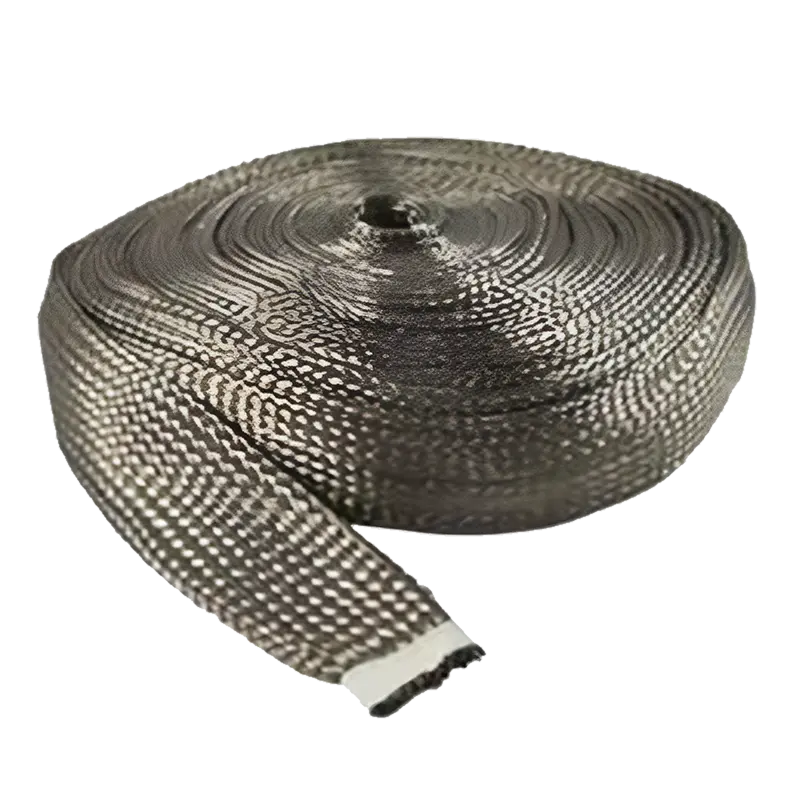

For engineers, plant managers, and procurement specialists navigating the complexities of industrial fluid systems, selecting the right transfer hose is a critical decision impacting safety, efficiency, and operational cost. For over two decades in the fluid dynamics sector, I've witnessed firsthand the evolution from rubber and metal to the superior solution that dominates demanding applications today: the Polytetrafluoroethylene (PTFE) hose. This guide, drawing on extensive field experience, will detail why a high-performance PTFE Hose is often the optimal choice and how Kaxite's engineered solutions set the benchmark.
PTFE, a synthetic fluoropolymer, is renowned for its exceptional chemical inertness and broad operational range. A PTFE Hose isn't just a tube; it's a sophisticated component designed to handle what others cannot. Its core advantage lies in the PTFE liner, which is non-stick, non-contaminating, and resistant to virtually all aggressive chemicals. This makes it indispensable in industries where purity, safety, and reliability are non-negotiable.
While PTFE properties are universal, the construction and quality of the hose assembly determine its real-world performance and lifespan. Kaxite specializes in manufacturing industrial PTFE hoses that exceed standard expectations. Our hoses feature a seamless, extruded PTFE inner core that eliminates weak points, combined with robust reinforcement and a protective outer cover tailored to specific environmental challenges.
Selecting the correct PTFE Hose requires a clear understanding of its specifications. Below are the standard and advanced parameters for Kaxite PTFE Hose products, designed to help you make a precise technical match for your application.
| Series Model | Inner Diameter (ID) Range | Working Pressure (PSI) | Temperature Range (°F / °C) | Primary Reinforcement | Typical Application |
|---|---|---|---|---|---|
| KX-PTFE-SS | 1/4" to 2" | Up to 1500 PSI | -100°F to 450°F / -73°C to 232°C | Stainless Steel Braid | Chemical transfer, steam, hot oil lines. |
| KX-PTFE-PU | 3/8" to 1.5" | Up to 300 PSI | -60°F to 400°F / -51°C to 204°C | Aramid/Polyester Braid + PU Cover | Food & beverage, pneumatic conveying, general industrial. |
| KX-PTFE-HP | 1/4" to 1" | Up to 4000 PSI | -100°F to 400°F / -73°C to 204°C | Double Stainless Steel Braid | Hydraulic test stands, high-pressure instrumentation. |
| KX-PTFE-CON | 1" to 4" | Up to 150 PSI (Vacuum to 29" Hg) | -100°F to 400°F / -73°C to 204°C | Helical Stainless Steel Wire + PVC Cover | Dry material/powder conveying, suction applications. |
Q: Can a PTFE Hose be used for both suction and pressure applications?
A: Yes, but the construction must be appropriate. For suction (vacuum) service, the PTFE Hose requires external reinforcement, typically a helical wire or heavy braid, to prevent collapse under negative pressure. Kaxite's CON series, for example, is specifically engineered with a spiral wire support to maintain bore integrity during high-volume conveying or suction. Always verify the hose is rated for full vacuum service.
Q: How does the temperature rating of a PTFE Hose compare to rubber or metal hoses?
A: PTFE Hose offers a significantly wider operational temperature window. While high-temperature rubber may fail above 300°F (149°C) and metals can corrode or become brittle, PTFE maintains flexibility and integrity from cryogenic temperatures up to 500°F (260°C) continuously. This eliminates the need for multiple hose types in plants with varying process temperatures.
Q: Is PTFE Hose flexible enough for tight routing in complex machinery?
A> Absolutely. One of the key advantages of PTFE Hose is its excellent flexibility relative to its pressure and chemical capabilities. The combination of the smooth PTFE core and braided reinforcement allows for a tight bend radius—often as low as 4 to 5 times the hose diameter—without kinking or significant flow restriction, facilitating neat and efficient installation.
Q: What are the primary factors that determine the lifespan of a PTFE Hose?
A> Lifespan is dictated by application conditions and installation. Key factors are: operating pressure (constant vs. surge), temperature cycling, chemical exposure (especially permeation concerns), UV/ozone exposure for the outer cover, and mechanical stress from vibration or improper bending. A correctly specified Kaxite PTFE Hose, installed with proper supports and within its rated parameters, can offer a service life many times longer than alternative materials.
Q: How do I select the correct end fitting for my PTFE Hose assembly?
A> The fitting must be compatible with the hose construction and the system's pressure, temperature, and media. For PTFE Hose, common fittings include stainless steel JIC, NPT, flange, or DIN ends. Crimping is the standard attachment method for a permanent, leak-proof seal. It is strongly recommended to purchase pre-assembled hoses from the manufacturer, like Kaxite, where the fitting is professionally crimped onto the hose under controlled conditions, ensuring optimal performance and safety.
Q: Can a PTFE Hose be repaired if it gets damaged?
A> Due to the critical nature of most PTFE Hose applications and the permanent crimping of fittings, field repair is not recommended or safe. A damaged reinforcement braid or permeated outer cover compromises the hose's integrity. The safest and most reliable protocol is to replace the entire hose assembly. Using pre-made assemblies from a trusted supplier guarantees a factory-grade seal and maintains system reliability.
Q: Why should I choose Kaxite over other PTFE Hose brands?
A> Kaxite distinguishes itself through precision engineering and application-focused design. We use high-purity, virgin PTFE resins for optimal performance, offer a wider range of custom reinforcements and outer jacket materials (like PVDF, silicone, or EPDM) for specific challenges, and provide comprehensive technical support. Our hoses undergo rigorous quality control, including pressure and impulse testing, to ensure they deliver consistent, safe performance in the most demanding environments, from chemical processing plants to cleanrooms.


