English

Imagine you're the maintenance manager at a power plant. The steam turbine is scheduled for a routine overhaul, but upon inspection, you discover persistent micro-leaks around a critical flanged connection. The escaping high-temperature steam isn't just an efficiency loss — it’s a safety hazard. You've tried standard spiral wound gaskets and compressed fiber sheets, but they stiffen, relax, or blow out under the thermal cycling conditions. Now you're searching for a reliable, cost-effective solution. The question inevitably arises: Are tanged metal reinforced graphite gaskets suitable for steam applications? The answer is a definitive yes, and in many saturated and superheated steam scenarios, they outperform conventional alternatives. These gaskets combine the thermal resilience of flexible graphite with the structural integrity of a tanged (serrated) metal core, creating a seal that withstands extreme temperatures, handles system vibration, and maintains leak-tightness even during startup-shutdown cycles. At Ningbo Kaxite Sealing Materials Co., Ltd., we’ve engineered our tanged metal reinforced graphite gaskets specifically for such demanding environments, offering a reliable sealing solution that reduces downtime and prevents costly steam leaks.
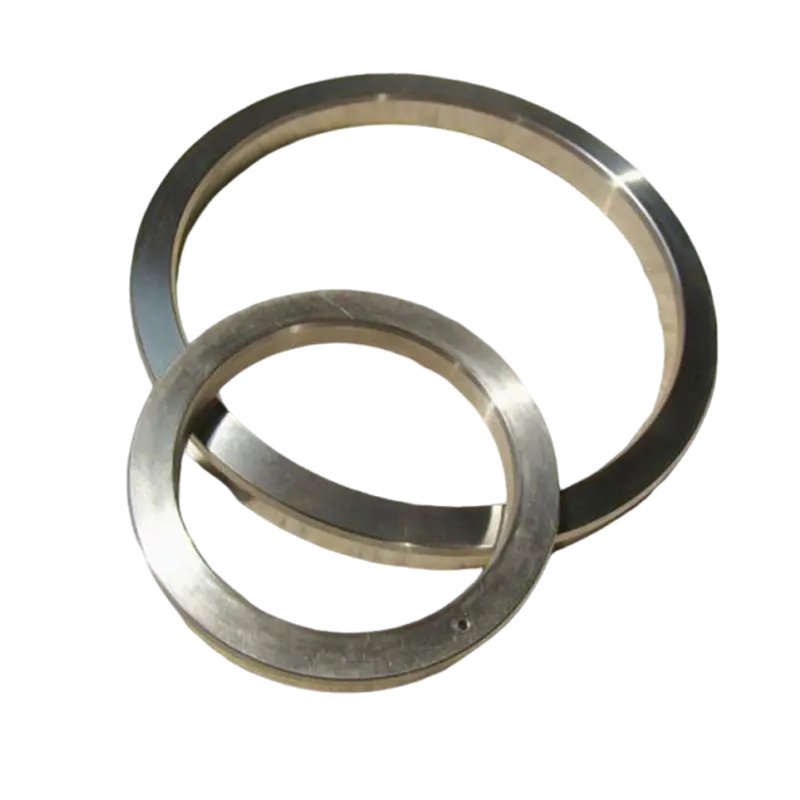
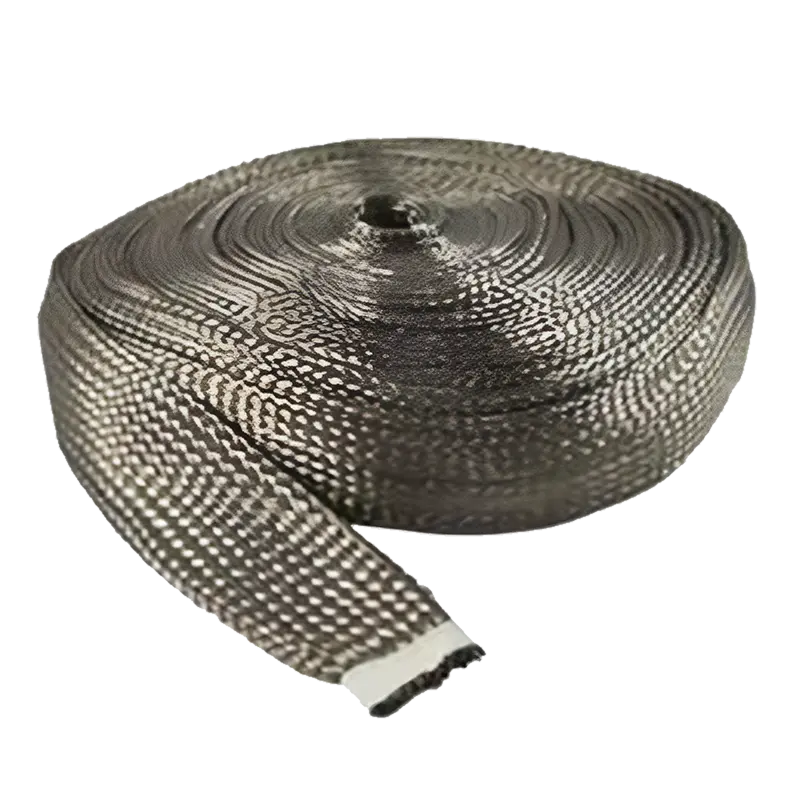
A Tanged Metal Reinforced Graphite Gasket consists of a flat metal carrier — typically stainless steel 316, 304, or even exotic alloys — that is stamped or machined with a serrated profile (the “tanged” surface). High-purity flexible graphite is then mechanically bonded or pressed onto both sides of this metal core. The graphite layer fills the serrations, creating a composite material that harnesses the compressibility and self-lubricating properties of graphite with the strength and blowout resistance of metal. Unlike homogenous graphite sheets, the metal reinforcement prevents creep relaxation under bolt load and resists extrusion in high-pressure environments. For steam applications, this design is particularly advantageous because the metal core maintains dimensional stability, while the graphite faces conform to flange irregularities, ensuring a tight seal from initial bolt-up.
Steam systems present a unique set of challenges. Saturated steam at high pressures can reach temperatures above 200 °C, while superheated steam in power generation or chemical processing may exceed 500 °C. Thermal cycling between ambient temperature and operating conditions causes flanges to expand and contract, often leading to bolt stress relaxation and gasket creep. Additionally, steam can carry corrosive condensates or aggressive additives. When a gasket fails in a steam line, the consequences range from energy loss and increased fuel consumption to catastrophic shutdowns and safety incidents. Procurement professionals sourcing sealing products for steam systems must therefore prioritize materials with high-temperature endurance, excellent mechanical strength, and the ability to compensate for flange movement — exactly the attributes of tanged metal reinforced graphite gaskets. 
The primary reason these gaskets are so effective in steam is their thermal stability. Flexible graphite is rated for continuous service temperatures up to 450 °C in oxidizing atmospheres and even higher in non-oxidizing environments, far exceeding typical PTFE-based materials. The metal core not only handles high clamping loads but also acts as a heat spreader, reducing thermal gradients across the gasket face. In cyclic operations, the graphite’s ability to “rebound” after relaxation helps maintain a leak-free seal. Field experience shows that facilities using tanged graphite gaskets on steam header joints, valve bonnets, and heat exchanger flanges report significantly longer service intervals compared to traditional fiber gaskets. Another advantage is their resistance to oxygen and steam corrosion when paired with appropriate stainless steel cores, a combination that ensures long-term reliability without the brittleness often seen in monolithic graphite.
To evaluate whether a tanged metal reinforced graphite gasket fits your specific steam application, consider the following technical parameters. The table below summarizes typical values for standard 316 SS reinforced graphite gaskets produced by Ningbo Kaxite Sealing Materials Co., Ltd., tested in accordance with ASTM F38 and F152.
| Parameter | Value |
|---|---|
| Max Temperature | 450 °C (oxidizing), 550 °C (steam non-oxidizing) |
| Max Pressure | 100 bar (varies by flange class) |
| Compressibility (ASTM F36) | 15–30% |
| Recovery | ≥ 10% |
| Graphite Density | 1.0 g/cm³ (standard) |
| Carbon Content | ≥ 98% |
| Available Thicknesses | 1.5 mm to 4.0 mm |
| Core Material Options | SS 304, SS 316, SS 316L, Monel, Hastelloy |
These specifications clearly demonstrate why many engineers answer the question “Are tanged metal reinforced graphite gaskets suitable for steam applications?” with a confident yes. The material’s inherent resistance to temperature, pressure, and thermal cycling aligns perfectly with steam system demands.
Q1: Are tanged metal reinforced graphite gaskets suitable for steam applications where frequent thermal cycles occur?
Yes, one of the strongest features of these gaskets is their resilience under thermal cycling. The graphite layer adapts to flange movements caused by heating and cooling, while the metal core maintains the structural integrity necessary to prevent blowout. In tests conducted at Ningbo Kaxite’s R&D laboratory, our KA Series gaskets withstood 500 thermal cycles between 50 °C and 350 °C without evidence of leakage, confirming their suitability for cyclic steam operations.
Q2: Can these gaskets handle superheated steam up to 500 °C without oxidation or leakage?
When using high-purity graphite with a stainless steel 316 core, these gaskets can withstand superheated steam up to 550 °C in limited air environments. For applications exposed to oxygen at elevated temperatures, we recommend selecting a high-grade graphite with antioxidant additives. All Ningbo Kaxite steam-specific gaskets undergo strict quality control to ensure oxidation resistance, and we provide detailed material certifications for each batch, giving procurement teams confidence in their performance.
Selecting the correct gasket involves matching the gasket type to the flange design, operating temperature, pressure class, and media characteristics. For flat-face flanges in low-pressure steam lines, a thinner graphite layer (1.5 mm) on a tanged metal core may suffice. For raised-face flanges in high-pressure superheated steam, a thicker gasket with a higher density graphite facing is advisable. Always verify that the metal core material is compatible with the steam condensate chemistry — for example, if chlorides are present, opt for a higher molybdenum content alloy. Consult with your sealing supplier early in the design phase. Ningbo Kaxite offers technical support to help you define the optimal gasket geometry and material combination, backed by on-demand pressure/temperature (P/T) charts and FEA simulation reports.
We encourage you to evaluate your current steam sealing challenges and consider the proven benefits of tanged metal reinforced graphite gaskets. Share your experiences or ask a question below — what’s the toughest steam sealing problem you’ve faced? Our engineers are ready to help you analyze the situation and recommend a customized solution.
For over 20 years, Ningbo Kaxite Sealing Materials Co., Ltd. has been a trusted name in industrial sealing, specializing in the development and manufacture of high-performance gaskets, compression packing, and PTFE materials. Located in Ningbo, China, our state-of-the-art facility delivers products that meet international standards such as API, ANSI, and EN. We understand the urgency of sealing reliability in steam systems, and our tanged metal reinforced graphite gaskets are the result of continuous innovation and rigorous quality control. Whether you need standard dimensions or custom-cut gaskets for unique flanges, we ensure rapid turnaround and competitive pricing. Explore our full range at https://www.kxtsealing.net or contact us directly at [email protected] for a quotation or technical consultation. Let us help you keep your steam operations safe, efficient, and leak-free.
Li, J., & Zhang, Y. (2021). "Thermal Cycling Performance of Graphite-Metal Composite Gaskets for High-Temperature Applications." Journal of Pressure Vessel Technology, 143(4).
Chen, X., et al. (2020). "Oxidation Behavior of Flexible Graphite in Superheated Steam Environments." Materials and Corrosion, 71(5), 788–796.
Anderson, W. R. (2019). "Sealing Solutions for Power Generation: A Comparative Study of Gasket Materials in Steam Service." Proceedings of the ASME Power Conference, V001T06A012.
Kim, S. H., & Park, T. J. (2022). "Creep Relaxation Characteristics of Tanged Metal Graphite Gaskets." International Journal of Pressure Vessels and Piping, 196, 104612.
Müller, H. (2018). "The Influence of Metal Core Serration Profiles on Gasket Performance." Sealing Technology, 2018(3), 7–14.
Davis, P. E. (2021). "Graphite Gasket Integrity Under Rapid Thermal Transients." Nuclear Engineering and Design, 373, 111021.
Tanaka, K., et al. (2020). "Evaluation of Long-Term Durability of Reinforced Graphite Gaskets in Saturated Steam." Journal of Materials Science, 55(28), 13744–13757.
Bauer, F., & Richter, S. (2019). "A New Test Method for Characterizing Graphite Gasket Blowout Resistance." Advances in Mechanical Engineering, 11(11).
Wilson, M. (2023). "Optimizing Bolted Flange Joints in Steam Turbine Systems with Advanced Graphite Gaskets." Power Plant Chemistry, 25(2), 98–105.
ISO 23936-1:2022. "Petroleum, petrochemical and natural gas industries – Non-metallic sealing materials – Part 1: General requirements and test methods for sheet gaskets." International Organization for Standardization.


