English

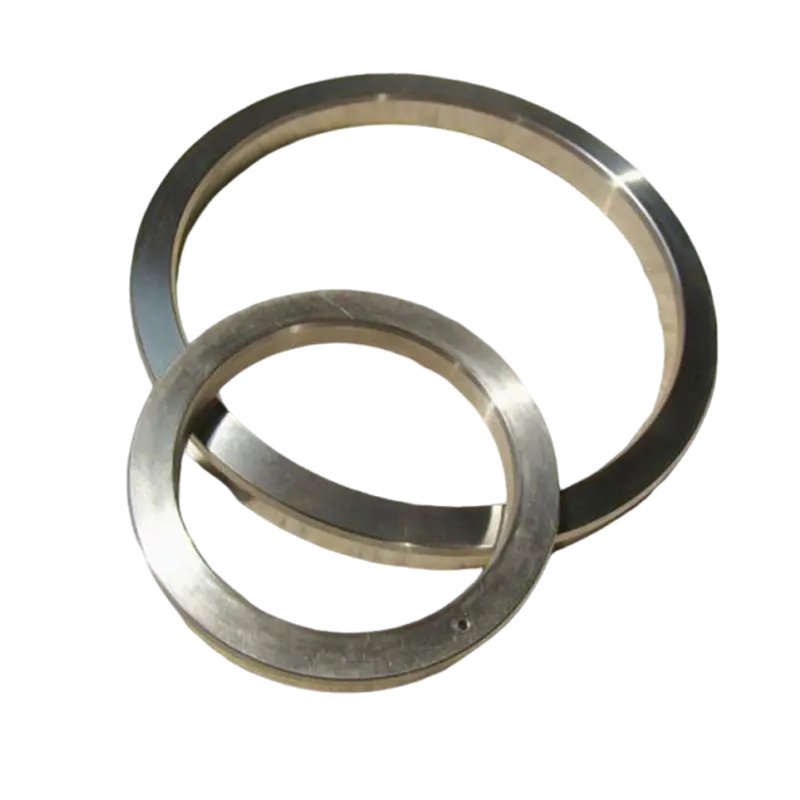
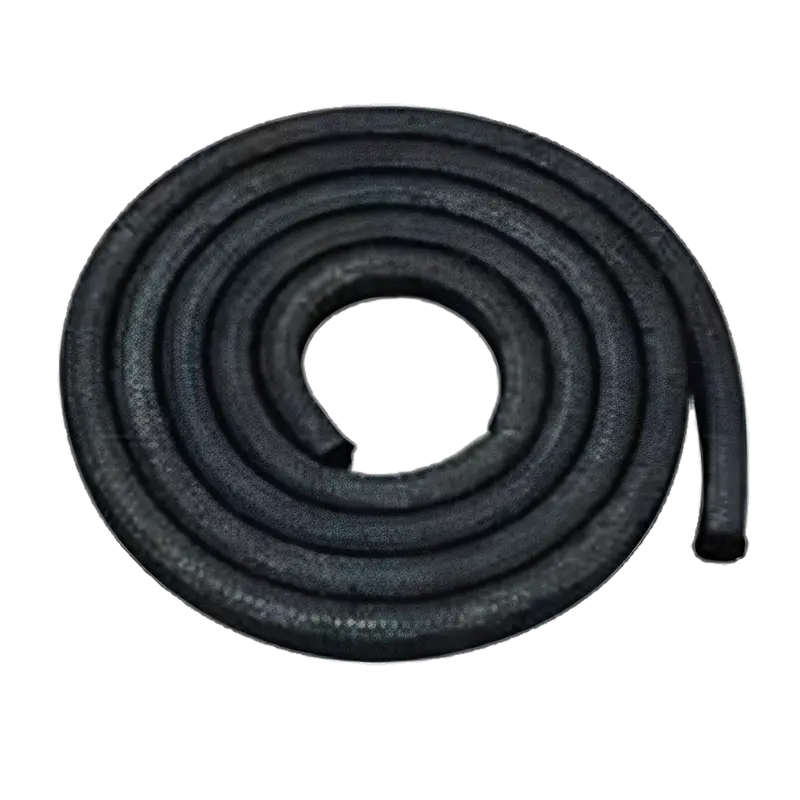

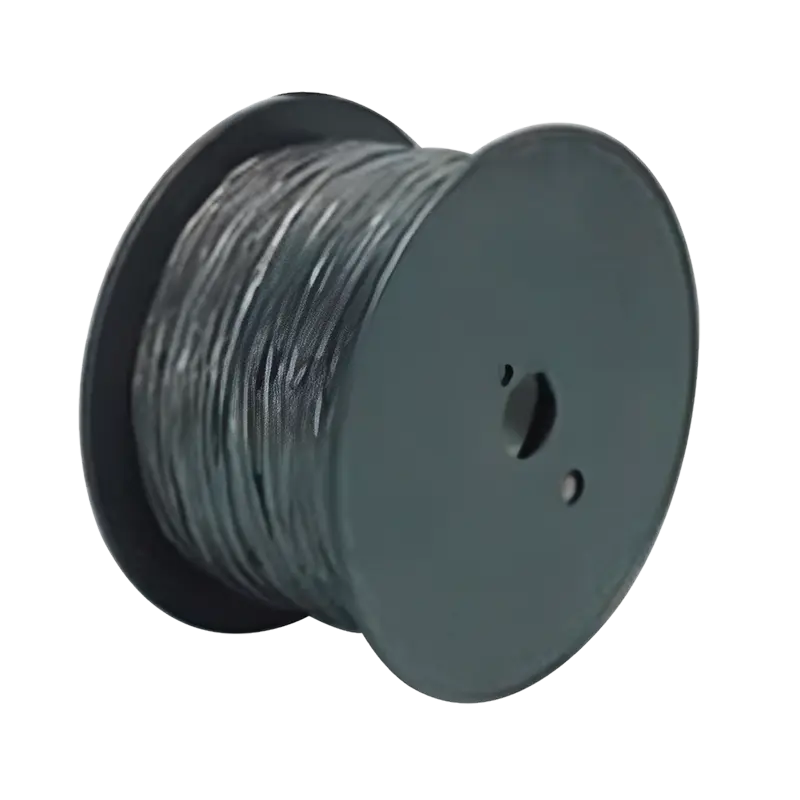
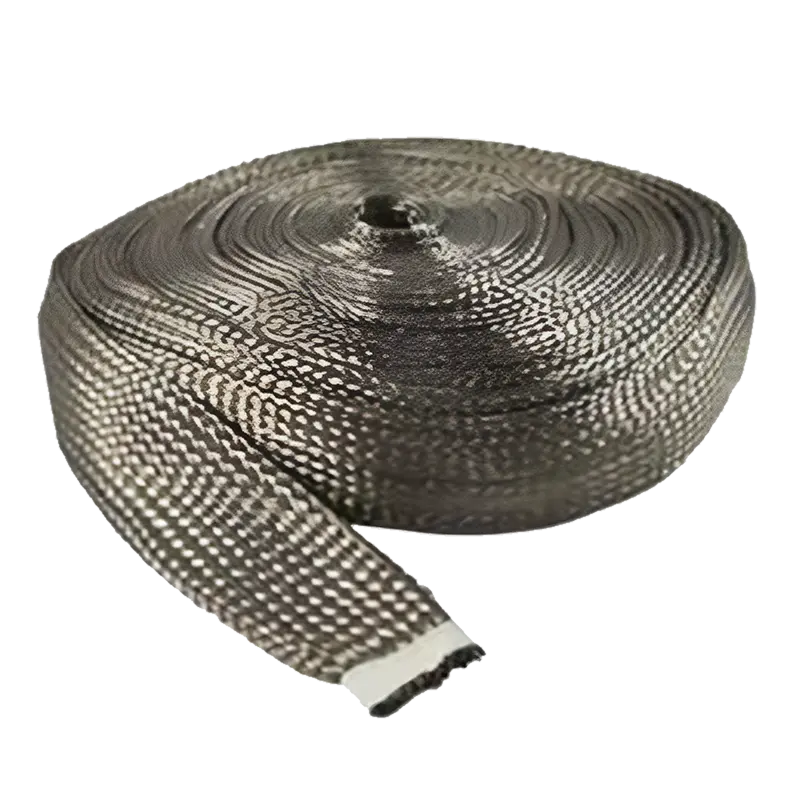

Picture a beverage bottling plant at 2 a.m. A flange on the syrup transfer line begins dripping. The maintenance crew tightens the bolts, but the rigid PTFE gasket has already deformed, and now the line must be shut down for replacement. Worse, the failed gasket creates a crevice where bacteria can hide, putting the next production batch at risk. Situations like this force food-industry buyers and plant engineers to ask a critical question: Can expanded PTFE gaskets be used in food-grade applications? The answer is yes, provided the gasket is made from virgin PTFE, manufactured under clean conditions, and specified for the right temperature, pressure, and flange geometry. Expanded PTFE, often called ePTFE, is softer and more compressible than conventional PTFE sheet, so it seals worn or uneven flanges with lower bolt load. It resists aggressive cleaning chemicals, withstands CIP and SIP cycles, and does not promote bacterial adhesion when installed correctly. For procurement teams, choosing a reliable ePTFE gasket also means fewer unplanned shutdowns, easier FDA compliance documentation, and longer service life. Ningbo Kaxite Sealing Materials Co., Ltd. supplies food-grade expanded PTFE gaskets with full material traceability, dimensional customization, and rapid global delivery to keep food-processing lines running safely.
In food and beverage production, a failing gasket is never just a maintenance issue. It becomes a food safety issue. A small leak can draw external contaminants into the product zone, while a crevice between the gasket and flange creates a perfect environment for biofilm. When a hygiene swab fails or an auditor identifies a nonconforming seal, procurement and engineering teams face line stoppages, product holds, or even recalls. Using a sealing material that is not explicitly suitable for food contact can also create a regulatory compliance gap during an FDA inspection.
The solution is to specify a food-grade Expanded PTFE Gasket that is chemically inert, non-toxic, and designed for low-crevice sealing. Virgin ePTFE contains no fillers, pigments, or plasticizers that could migrate into food. Its soft, conformable structure fills flange irregularities and reduces the micro-gaps where bacteria can collect. Instead of relying on excessive torque, ePTFE gaskets seal with moderate bolt load, which protects flange surfaces and extends gasket life.
| Risk Factor | Typical Consequence | ePTFE Gasket Response |
|---|---|---|
| Biofilm in flange crevices | Failed hygiene swab, product contamination | Conformable surface minimizes dead spaces |
| Aggressive CIP chemicals | Gasket swelling, hardening, leakage | Virgin PTFE resists pH 0–14 cleaning media |
| Thermal cycling | Flange leak after heating and cooling | ePTFE maintains seal under temperature swings |
Expanded PTFE is produced by stretching virgin PTFE resin into a highly fibrillated microstructure. This creates a gasket material that is softer and more flexible than standard PTFE sheet, yet retains the same broad chemical resistance and non-stick surface. For food-grade service, that combination matters. A gasket must stay flat and tight through washdowns, steam cycles, and product changes, but it must also avoid releasing particles or reacting with ingredients.

ePTFE gaskets solve several installation and performance problems. Because they compress easily, they seal glass-lined, plastic, or slightly damaged flanges where traditional PTFE gaskets would require excessive load. They also resist creep relaxation better in many cyclic food-processing conditions, which means fewer retorque visits. For buyers, this translates into lower total cost of ownership because the gasket lasts longer and reduces the frequency of replacement.
| Property | Typical Value for Virgin ePTFE | Food-Grade Benefit |
|---|---|---|
| Temperature range | -240°C to 260°C | Handles freezing, pasteurization, and steam |
| Chemical resistance | pH 0–14 | Compatible with acids, caustics, sanitizers |
| Compressibility | High | Seals uneven or worn flanges |
| Filler content | None in virgin grade | No colorants or additives to migrate |
Procurement teams often ask which regulations apply when buying expanded PTFE gaskets for food contact. The most common references are FDA 21 CFR 177.1550 for PTFE resins, EU Regulation EC 1935/2004 for food contact materials, and 3-A Sanitary Standards for dairy and meat processing equipment in specific markets. Some applications may also require NSF/ANSI 51 or China GB 4806 compliance.
To answer the question directly: Can expanded PTFE gaskets be used in food-grade applications? Yes, but the supplier should provide a declaration of compliance, material traceability, and lot-level test data when required. At Ningbo Kaxite Sealing Materials Co., Ltd., food-grade ePTFE gaskets are manufactured from virgin PTFE resin and backed by documentation that helps your quality team close audit findings and approve incoming material with confidence.
| Standard / Regulation | Scope | What to Request from Supplier |
|---|---|---|
| FDA 21 CFR 177.1550 | PTFE as a food contact article | Letter of compliance, resin grade |
| EC 1935/2004 | EU framework for food contact materials | Declaration of conformity |
| 3-A Sanitary Standards | Dairy and hygienic processing | Compatible gasket dimensions and finish |
| NSF/ANSI 51 | Food equipment materials | NSF listing or test report |
Maintenance engineers in food plants deal with specific challenges that general industrial gaskets do not solve well. For example, a brewery may struggle with acidic wort and hot caustic cleaning; a dairy line may experience repeated thermal expansion from steam sterilization; a sauce manufacturer may need a gasket that does not absorb tomato paste or oil and does not swell. These conditions test ordinary materials quickly.
Expanded PTFE gaskets address these pain points because they are chemically inert and thermally stable. They do not absorb moisture, do not support fungal growth, and remain soft enough to compensate for flange movement. In many cases, a single food-grade ePTFE gasket can replace multiple elastomer gaskets, reducing inventory complexity for procurement teams.
| Food Sector | Sealing Challenge | ePTFE Gasket Advantage |
|---|---|---|
| Dairy | Steam sterilization and CIP thermal shock | Stable seal through rapid temperature changes |
| Beverage / brewery | Acidic product, hot caustic cleaning | pH 0–14 chemical resistance |
| Sauces and oils | Product absorption and swelling | Non-porous, non-stick surface |
| Ready-to-eat meals | Hygienic design and contamination risk | Low-crevice, conformable sealing |
Selecting the right gasket requires more than checking “food grade” on a datasheet. You need to confirm the flange standard, pressure class, maximum temperature, media composition, cleaning method, and required compliance documents. A gasket that works on a thin plastic flange may not be suitable for a high-pressure stainless steel line.
Ningbo Kaxite Sealing Materials Co., Ltd. supports procurement teams by cross-checking these variables before quotation. We ask about flange dimensions, bolt count, surface finish, and operating cycles to recommend the right thickness and density of expanded PTFE. This prevents over-compression, which can reduce sealing stress, and under-compression, which can allow leakage.
| Selection Parameter | Typical Question | Recommended Specification |
|---|---|---|
| Flange standard | EN 1092, ANSI, DIN, JIS? | Match gasket dimensions exactly |
| Operating temperature | Min / max including CIP? | Virgin ePTFE up to 260°C |
| Pressure class | Full vacuum or high pressure? | Confirm gasket density and thickness |
| Cleaning method | CIP, SIP, manual washdown? | Use FDA-compliant virgin ePTFE |
| Surface finish | Ra value of flange surface? | ePTFE tolerates wider roughness range |
Even the best expanded PTFE gasket will leak if it is installed over a dirty flange or tightened unevenly. Common installation errors include reusing old gaskets, applying excessive torque, and ignoring flange alignment. In food-grade lines, any leak becomes a hygiene risk, so installation should follow a simple but strict procedure.
Clean both flange faces, check for scratches or pitting, center the ePTFE gasket carefully, and tighten bolts in a star pattern to the torque recommended by the flange manufacturer. Because ePTFE is highly compressible, it does not need extreme bolt load. After the first thermal cycle, a visual inspection and retorque check may be necessary to maintain seal stress.
| Step | Action | Why It Matters |
|---|---|---|
| 1 | Clean flange faces | Removes product residue and prevents contamination |
| 2 | Inspect surface condition | Identifies damage before gasket installation |
| 3 | Center gasket | Ensures uniform compression and sealing |
| 4 | Star-pattern torque | Avoids uneven gasket stress |
| 5 | Inspect after thermal cycle | Confirms seal integrity after startup |
Q: Can expanded PTFE gaskets be used in food-grade applications under FDA rules?
A: Yes. Virgin expanded PTFE gaskets that comply with FDA 21 CFR 177.1550 can be used for direct food contact, provided the material is free of fillers and is properly specified for the process temperature, pressure, and cleaning method.
Q: Can expanded PTFE gaskets be used in food-grade applications with CIP and SIP cleaning?
A: Yes. Food-grade ePTFE gaskets are suitable for clean-in-place and steam-in-place cycles because they resist thermal shock, steam, acids, caustics, and oxidizing sanitizers without hardening or losing seal compression.
Food-grade gasket sourcing is not just about price per piece. It is about consistent quality, documentation, delivery speed, and technical support when a line goes down. Ningbo Kaxite Sealing Materials Co., Ltd. works directly with food-processing plants, OEM equipment builders, and maintenance distributors to supply expanded PTFE gaskets that meet FDA and EU food-contact requirements.
We provide custom-cut ePTFE gaskets in standard and non-standard dimensions, including large-diameter rings, oval and rectangular shapes, and multi-layered constructions. Each shipment can include material certificates, lot traceability, and compliance statements. Our team also helps clients switch from problematic rubber or rigid PTFE gaskets to food-grade expanded PTFE, reducing leak-related downtime and audit risks.
Are you specifying or replacing gaskets for a food-grade line? Share your flange size, media, temperature, and cleaning method with our team, and we will recommend the right expanded PTFE gasket for your application. We respond quickly because we know production lines cannot wait.
Ningbo Kaxite Sealing Materials Co., Ltd. is a specialized manufacturer of fluid sealing solutions, focusing on food-grade expanded PTFE gaskets, PTFE sheets, and custom sealing components. Our products support food, beverage, dairy, pharmaceutical, and chemical processors worldwide. We combine material expertise with practical production experience to help you solve sealing problems without overcomplicating the supply chain. Contact us today at [email protected] or visit https://www.kxtsealing.net to request samples, datasheets, or a compliance review.
Ariawan, A. B., Ebnesajjad, S., & Hatzikiriakos, S. G. (2002). Properties of expanded polytetrafluoroethylene for sealing applications. Polymer Engineering & Science, 42(6), 1247–1259.
Rae, P. J., & Brown, E. N. (2005). The mechanical response of poly(tetrafluoroethylene) at high strain rate. Polymer, 46(19), 8128–8140.
Wang, Z., Zhang, Y., & Li, Q. (2018). Effect of creep relaxation on sealing performance of ePTFE gaskets in bolted flanged joints. Journal of Pressure Vessel Technology, 140(3), 031203.
Fischer, D., & Kummer, F. (2016). Permeation resistance of expanded PTFE gaskets in food processing environments. Journal of Food Process Engineering, 39(2), 145–153.
Martin, J. R., & Gardner, J. B. (2014). Hygienic design of flanged connections in food and beverage plants. Trends in Food Science & Technology, 39(1), 57–65.
Zhang, L., Chen, H., & Xu, P. (2019). Comparative study of bacterial adhesion on virgin PTFE and expanded PTFE surfaces. Food Control, 105, 29–36.
Liu, S., & Hua, Y. (2021). Sealing integrity of ePTFE gaskets under clean-in-place thermal cycling. Journal of Food Engineering, 295, 110432.
Sharma, R., & Singh, M. (2020). Compliance of polymer gaskets with FDA and EU food contact regulations. Food Additives & Contaminants: Part A, 37(5), 812–825.
Baker, C., Thompson, R., & Ellis, J. (2017). Long-term creep behavior of expanded PTFE in critical sealing applications. International Journal of Pressure Vessels and Piping, 156, 45–52.
Müller, B., & Lang, R. (2022). Surface roughness and gasket seating stress in hygienic flanged connections. Journal of Hygienic Engineering and Design, 38, 12–19.
-


