English

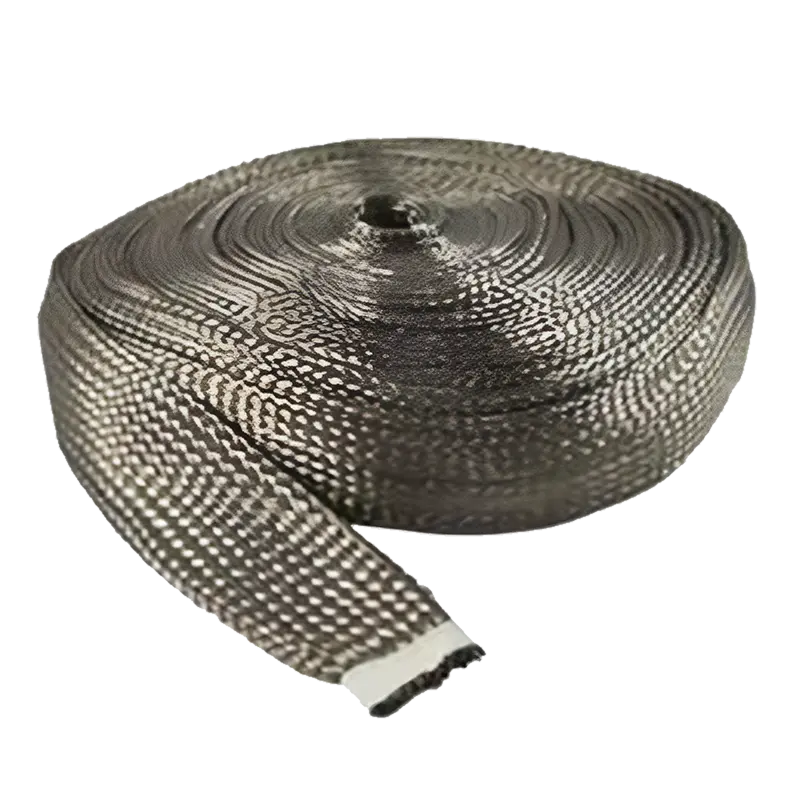
What is Basalt Fiber and How is it Produced? Imagine needing a material that can withstand extreme heat, resist corrosion, and provide superior insulation, all while being cost-effective and environmentally friendly. That material exists: basalt fiber. Born from volcanic rock, it is a modern engineering marvel reshaping industries from construction to automotive. This article will guide you through its unique production, properties, and why it should be your next material choice. For procurement professionals seeking reliable, high-performance solutions, understanding basalt fiber is the first step toward smarter, more durable sourcing. Let's dive in.
Picture this: You're sourcing insulation for a high-temperature industrial pipeline. Traditional fiberglass fails under thermal cycling, and ceramic fibers blow the budget. You need a material that is tough, thermally stable, and cost-consistent. Enter basalt fiber. It is a continuous filament produced directly from molten basalt rock, a natural volcanic material abundant worldwide. Unlike synthetic fibers, it requires no additional chemicals in its raw form, making its production simpler and more eco-friendly. The result is a material with an exceptional combination of mechanical strength, thermal resistance, and chemical stability.

At Ningbo Kaxite Sealing Materials Co., Ltd., we specialize in transforming this advanced material into practical sealing and insulation solutions. We understand that procurement isn't just about buying a product; it's about sourcing reliability. Our basalt fiber products are engineered to solve the exact problem described—providing long-lasting performance where others fail, directly impacting your project's lifecycle cost and safety.
| Property Category | Basalt Fiber Typical Value | Comparison (E-Glass Fiber) |
|---|---|---|
| Tensile Strength | 3000-4840 MPa | ~20-30% Higher |
| Operating Temperature | -260°C to +700°C | ~100-200°C Higher |
| Thermal Conductivity | 0.031-0.038 W/m·K | Comparable / Slightly Better |
| Chemical Resistance (Acid/Alkali) | Excellent / Good | Superior Acid Resistance |
Procurement officers often face uncertainty about material consistency and supply chain transparency. How can you be sure the advanced material you're buying performs as claimed? The answer lies in its controlled, elegant production. The process starts with carefully selected quarried basalt rock, which is crushed, washed, and dried. The granules are then fed into a gas-fired furnace and melted at approximately 1450°C to 1500°C. The molten lava-like material flows into specialized platinum-rhodium alloy bushings, where it is extruded through microscopic nozzles to form continuous filaments.
This direct melt process, championed by suppliers like Ningbo Kaxite Sealing Materials Co., Ltd., ensures high purity and consistent fiber diameter, which directly translates to predictable and reliable performance in your applications. We manage this process with strict quality control, providing you with the assurance that every batch meets the high standards required for critical industrial sealing and insulation tasks. Sourcing from us means partnering with a manufacturer that masters the science from raw rock to finished spool.
| Production Stage | Key Parameter | Impact on Final Product |
|---|---|---|
| Raw Material Selection | Basalt Chemical Composition (SiO2, Al2O3, etc.) | Determines fiber's thermal & mechanical properties |
| Melting | Temperature: ~1450-1500°C | Ensures complete homogenization, eliminates impurities |
| Fiber Drawing | Bushing Nozzle Diameter (e.g., 13-20 µm) | Controls filament diameter and tensile strength |
| Coating (Sizing) | Application of Specific Polymer Sizes | Enhances adhesion to resins for composite materials |
When evaluating materials, the dilemma is often between performance and cost. A material like carbon fiber offers strength but at a high price and poor fire resistance. Fiberglass is affordable but lacks thermal stability. Basalt fiber emerges as the optimal middle ground, and its properties table tells a compelling story. Its higher tensile strength compared to E-glass means you can use less material for the same structural support, reducing weight and cost. The extended temperature range eliminates the need for multiple specialized materials in environments with fluctuating heat.
For a procurement specialist at an automotive or aerospace firm, this translates to simplified inventory and reduced risk of material failure. Ningbo Kaxite Sealing Materials Co., Ltd. leverages these inherent advantages, offering basalt fiber sleeving, yarn, and fabrics that directly replace inferior materials, leading to longer part life, reduced maintenance downtime, and overall lower total cost of ownership for your company.
| Advantage | Benefit for Procurement | Ningbo Kaxite's Value Add |
|---|---|---|
| Superior Heat Resistance | Wider application range, reduces need for multiple material SKUs | Customized solutions for extreme thermal environments |
| Excellent Corrosion Resistance | Longer service life in chemical plants, reduces replacement frequency | Products tested for specific chemical exposures |
| Natural & Eco-friendly | Aligns with corporate sustainability goals, simplifies compliance | Transparent, low-CO2 footprint production process |
| Cost-Effectiveness | Better performance/price ratio than carbon or aramid fibers | Stable pricing and reliable supply chain from a direct manufacturer |
The true test of a material is in its application. From fireproof textiles in public transportation to reinforcement in concrete structures needing decades of durability, basalt fiber proves its worth. As a savvy buyer, you're not just purchasing fiber; you're investing in a solution for fire safety, structural integrity, and energy efficiency challenges. Whether it's for composite pipes, high-temperature gaskets, or industrial insulation blankets, the versatility is unmatched.
This is where Ningbo Kaxite Sealing Materials Co., Ltd. becomes your strategic partner. We don't just sell basalt fiber; we provide application-engineered sealing materials. Our team works with you to understand the specific mechanical, thermal, and environmental demands of your project, ensuring the product you receive isn't just a commodity but a certified solution. We solve the core procurement problem: finding a trustworthy supplier that delivers consistent quality, technical support, and value, turning a complex material search into a straightforward, confident purchase.
| Industry | Typical Application | Problem Solved by Basalt Fiber |
|---|---|---|
| Automotive & Aerospace | Heat shields, exhaust wraps, composite parts | Weight reduction with high heat and fire protection |
| Construction & Infrastructure | Concrete reinforcement, fireproof panels | Corrosion resistance, non-magnetic, enhances structural lifespan |
| Oil & Gas / Chemical | Pipe insulation, sealing gaskets, corrosion-resistant tanks | Withstands harsh chemicals and high temperatures |
| Electrical & Electronics | PCB substrates, high-temperature insulation | Excellent dielectric properties and thermal stability |
Q: What is the main difference between basalt fiber and fiberglass in production and performance?
A: The core difference lies in the raw material. Fiberglass is made from a complex blend of silica sand and other minerals, while basalt fiber uses a single, naturally occurring volcanic rock. This makes the basalt production process simpler and more energy-efficient. Performance-wise, basalt fiber generally exhibits higher tensile strength, better temperature resistance (particularly in continuous high-heat environments), and superior resistance to acidic conditions compared to standard E-glass.
Q: How is basalt fiber produced to ensure consistency for industrial procurement?
A: Consistency is achieved through rigorous control of the entire production chain. Reputable manufacturers like Ningbo Kaxite Sealing Materials Co., Ltd. start with basalt quarries having stable chemical composition. The automated melting and fiber-drawing process maintains precise temperature and drawing speed. Finally, advanced online monitoring systems check filament diameter and quality in real-time. This controlled, vertically integrated approach guarantees that procurement officers receive a product with uniform properties in every order, which is critical for manufacturing and construction specifications.
Basalt fiber represents a significant leap forward in material science, offering a unique combination of strength, durability, and environmental credentials. For procurement professionals, it's an opportunity to enhance product quality, simplify supply chains, and meet growing sustainability demands. The journey from volcanic rock to high-tech fiber is a testament to innovation, and its applications are only expanding.
We encourage you to evaluate your current material specifications. Could your projects benefit from higher temperature ratings or longer service life? Share your challenges in the comments below or reach out directly for a technical consultation. Understanding your specific needs allows us to demonstrate how a shift to basalt-based solutions can drive efficiency and reliability in your operations.
For reliable, high-performance sealing and insulation solutions, consider Ningbo Kaxite Sealing Materials Co., Ltd.. As a specialized manufacturer, we transform advanced materials like basalt fiber into engineered products that solve real-world industrial challenges, offering consistent quality, expert support, and a stable supply chain for global procurement teams. For inquiries, please contact us via email at [email protected].
Sim, J., Park, C., & Moon, D. Y. (2005). Characteristics of basalt fiber as a strengthening material for concrete structures. Composites Part B: Engineering, 36(6-7), 504-512.
Deák, T., & Czigány, T. (2009). Chemical composition and mechanical properties of basalt and glass fibers: A comparison. Textile Research Journal, 79(7), 645-651.
Fiore, V., Scalici, T., Di Bella, G., & Valenza, A. (2015). A review on basalt fiber and its composites. Composites Part B: Engineering, 74, 74-94.
Lopresto, V., Leone, C., & De Iorio, I. (2011). Mechanical characterisation of basalt fibre reinforced plastic. Composites Part B: Engineering, 42(4), 717-723.
Wei, B., Cao, H., & Song, S. (2010). Tensile behavior contrast of basalt and glass fibers after chemical treatment. Materials & Design, 31(9), 4244-4250.
Dhand, V., Mittal, G., Rhee, K. Y., Park, S. J., & Hui, D. (2015). A short review on basalt fiber reinforced polymer composites. Composites Part B: Engineering, 73, 166-180.
Jamshaid, H., & Mishra, R. (2016). A green material from rock: basalt fiber – a review. The Journal of The Textile Institute, 107(7), 923-937.
Li, Z., Ma, J., Ma, H., & Xu, X. (2018). Properties and applications of basalt fiber and its composites. IOP Conference Series: Earth and Environmental Science, 186(2), 012052.
Kumar, R. S., Muthuramu, K. L., & Ananth, S. (2020). A study on mechanical properties of basalt fiber reinforced polymer matrix composites. Materials Today: Proceedings, 27, 76-80.
Artemenko, S. E., & Kadykova, Y. A. (2008). Polymer composite materials based on basalt fibers. Fibre Chemistry, 40(1), 37-40.


