English

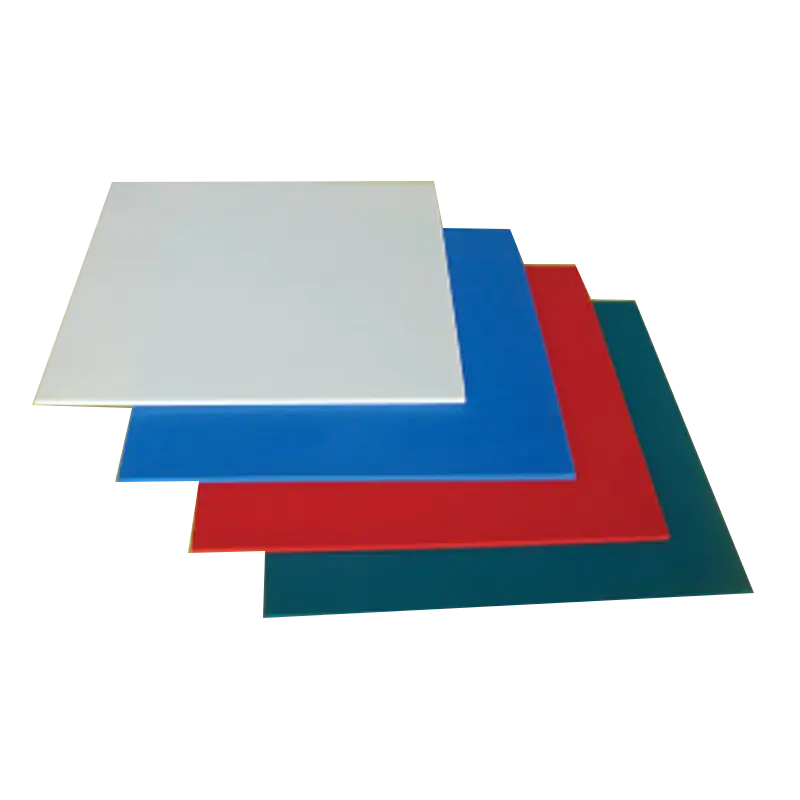
For over seven decades, Polytetrafluoroethylene, universally known by its abbreviation PTFE, has revolutionized industries with its unparalleled performance in extreme conditions. At its core, a PTFE Sheet is a flat, versatile material manufactured from this high-performance fluoropolymer. Its discovery unlocked possibilities where other materials failed, offering an exceptional blend of chemical resistance, thermal stability, and supreme non-stick properties. This guide, backed by decades of industry expertise, delves into the specifications, applications, and critical considerations of PTFE sheets, highlighting why Kaxite has become a trusted name for engineers and procurement specialists worldwide.
The widespread adoption of PTFE sheets stems from a unique set of inherent properties that are difficult to match with any other single material.
Kaxite manufactures PTFE sheets to meet precise industrial standards. Our product range is categorized to help you select the optimal material for your specific requirement.
Manufactured from 100% pure PTFE resin, this is the baseline for maximum chemical purity and electrical performance.
| Parameter | Typical Value / Range | Test Method |
|---|---|---|
| Density | 2.15 - 2.20 g/cm³ | ASTM D792 |
| Tensile Strength | 25 - 35 MPa (3,600 - 5,000 psi) | ASTM D638 |
| Elongation at Break | 300 - 500% | ASTM D638 |
| Continuous Service Temperature | -200°C to +260°C (-328°F to +500°F) | - |
| Dielectric Strength | > 40 kV/mm | ASTM D149 |
| Coefficient of Friction (Dynamic) | 0.05 - 0.10 | ASTM D1894 |
To enhance specific mechanical properties for demanding applications, Kaxite offers compounded sheets with various fillers.
| Filler Type | Key Enhanced Properties | Typical Applications |
|---|---|---|
| Glass Fiber (15-25%) | Improved compressive strength, reduced creep, better wear resistance. | Heavy-duty bushings, thrust washers, gaskets for high-load areas. |
| Carbon/Graphite (15-20%) | Enhanced thermal conductivity, lower friction, improved wear life. | Piston rings, compressor rings, bearings in dry-running conditions. |
| Bronze (40-60%) | Greatly improved thermal conductivity and compressive strength. | Bearings subject to high loads and speeds, wear plates. |
| Stainless Steel (15-20%) | High compressive strength, excellent anti-deformation properties. | Gaskets for high-pressure flanges, seal rings in aggressive media. |
| Molybdenum Disulfide (MoS2) (5%) | Lower initial friction, improved break-in characteristics. | Seals and bearings for slow, high-load startup conditions. |
Q: What is the main difference between PTFE sheet and Teflon sheet?
A: "Teflon" is a registered brand name for PTFE owned by Chemours (formerly DuPont). Essentially, all Teflon is PTFE, but not all PTFE is branded as Teflon. Sheets from manufacturers like Kaxite are made from PTFE polymer that possesses the same fundamental chemical structure and properties. The differences lie in the specific resin grades, manufacturing processes (compression molding vs. ram extrusion vs. skiving), and quality control standards, which can affect the final sheet's consistency, purity, and performance in critical applications.
Q: Can PTFE sheets be easily machined or fabricated?
A: Yes, one of the significant advantages of PTFE sheets is their excellent machinability using standard workshop tools. They can be cleanly cut, drilled, turned, milled, and punched. However, due to PTFE's low thermal conductivity and high thermal expansion, it is crucial to use sharp tools, provide adequate cooling (often with air), and account for potential dimensional changes post-machining. For complex parts, it is advisable to work with an experienced fabricator familiar with the material's behavior.
Q: How does temperature affect the mechanical strength of a PTFE sheet?
A: PTFE's tensile and compressive strength decreases as temperature increases. While it remains solid and functional up to 260°C, its load-bearing capacity at that temperature is significantly lower than at room temperature. This property, known as "cold flow" or creep, is more pronounced under continuous load. This is precisely why filled PTFE grades (like glass or bronze-filled from Kaxite) are specified for high-load, elevated-temperature applications—they dramatically reduce creep and maintain dimensional stability.
Q: Is PTFE sheet safe for food contact applications?
A> Virgin, unpigmented PTFE resin is generally recognized as safe for food contact by regulatory bodies like the U.S. FDA (under 21 CFR 177.1550) when manufactured according to good manufacturing practices. It is inert, non-toxic, and does not leach. For food and pharmaceutical applications, it is imperative to specify 100% virgin PTFE sheets from a certified supplier like Kaxite to ensure no recycled or contaminated material is present. Filled grades are typically not suitable for direct food contact unless specifically certified.
Q: What are the limitations or disadvantages of using PTFE sheet?
A: While exceptional in many areas, PTFE has some key limitations to consider: 1) Creep/ Cold Flow: It can deform under sustained heavy mechanical load. 2) Poor Radiation Resistance: It degrades under high levels of gamma or electron beam radiation. 3) Low Thermal Conductivity: It is not an efficient heat conductor. 4) Permeability: Some small molecule gases can slowly permeate through it. 5) Difficulty in Bonding: Its non-stick nature makes adhesion with conventional glues nearly impossible; it requires special surface treatments (like sodium etching) or mechanical fastening. Understanding these constraints is vital for successful application design.
Q: How should PTFE sheets be stored and handled?
A: PTFE sheets are robust but require sensible handling. Store them in a cool, dry, dark place away from direct sunlight and heat sources to prevent any potential off-gassing or surface checking. Sheets should be stored flat to prevent warping or bending. While chemically resistant, it is good practice to keep them clean from surface contaminants like dirt or oils that could affect performance in sensitive applications like sealing or electrical insulation. Use appropriate personal protective equipment when machining to avoid inhalation of fine dust particles.
Q: Why should I choose Kaxite for my PTFE sheet requirements?
A> Kaxite distinguishes itself through a commitment to material integrity and technical support. We source premium-grade PTFE resins and employ controlled manufacturing processes to ensure batch-to-batch consistency. Our product range is comprehensive, covering virgin, filled, and custom-compounded sheets. Beyond supply, our team provides expert technical guidance on material selection, fabrication tips, and application troubleshooting, ensuring you get a solution, not just a product. This depth of expertise, combined with rigorous quality control, makes Kaxite a reliable partner for mission-critical components across industries.


