English

In the relentless pursuit of miniaturization and higher performance, managing heat has become a critical challenge for engineers and designers across countless industries. From the smartphone in your pocket to the satellites orbiting our planet, efficient thermal dissipation is paramount. This is where the remarkable material known as Graphite Sheet steps in, offering an unparalleled combination of thermal conductivity, flexibility, and reliability. At Kaxite, we have mastered the art and science of manufacturing high-purity, high-performance graphite sheets, providing the thermal backbone for next-generation technology.
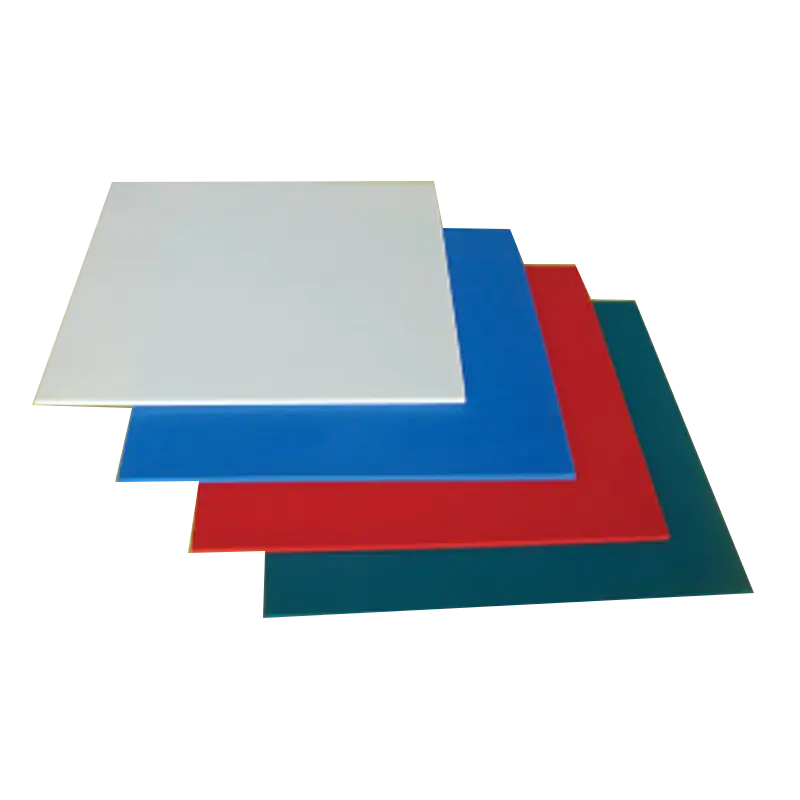
Our Graphite Sheet, often referred to as thermally conductive graphite film or pyrolytic graphite sheet, is a synthetic material processed to exhibit exceptional in-plane thermal conductivity. Unlike traditional metal heatsinks or thermal pads, Kaxite's graphite sheets are incredibly thin, lightweight, and can conform to complex surfaces, making them the ideal choice for space-constrained and weight-sensitive applications.
Understanding the precise parameters of our materials is crucial for proper integration into your design. Below, we detail the core specifications that define Kaxite's industry-leading graphite sheets.
Kaxite offers a range of graphite sheet products tailored to different performance needs and thickness requirements. All our sheets feature a pressure-sensitive adhesive (PSA) on one or both sides for easy installation.
| Product Series | Thickness (mm) | In-plane Thermal Conductivity (W/m·K) | Through-plane Thermal Conductivity (W/m·K) | Density (g/cm³) | Typical Applications |
|---|---|---|---|---|---|
| KX-GS Standard | 0.025, 0.05, 0.1, 0.2 | 300 - 400 | 3 - 6 | 1.0 - 1.3 | Mobile phones, tablets, LED lighting |
| KX-GS Plus | 0.05, 0.1, 0.15, 0.25 | 600 - 800 | 5 - 10 | 1.5 - 1.8 | Laptop CPUs/GPUs, telecom equipment, automotive displays |
| KX-GS Ultra | 0.1, 0.2, 0.3 | 1000 - 1500 | 8 - 15 | 1.8 - 2.1 | High-power servers, 5G base stations, power electronics |
| KX-GS Flexible Composite | 0.15, 0.25, 0.5 | 200 - 350 | 10 - 20 | 1.8 - 2.2 | Wearable devices, curved displays, flexible circuits |
We've compiled answers to the most common technical and application questions we receive about our graphite sheet products.
Q: How does a graphite sheet work differently from a traditional aluminum heatsink?
A: A traditional aluminum heatsink works primarily by conduction (absorbing heat from a source) and then convection (dissipating it into the air via fins). A graphite sheet excels at planar heat spreading. It rapidly distributes heat laterally across its entire surface area, preventing hot spots. This "spread and transfer" action allows a smaller, remote aluminum heatsink to then cool the now-larger, lower-temperature area more efficiently. It's a complementary technology that enhances overall system cooling in compact spaces where a large metal heatsink won't fit.
Q: Your sheets have very high in-plane conductivity but low through-plane conductivity. Is this a disadvantage?
A: Not at all; this anisotropic property is by design and is the key to their effectiveness. The primary goal is to spread heat sideways, away from a concentrated hotspot (like a CPU). The low through-plane conductivity actually helps to thermally insulate components stacked above or below the sheet, preventing unwanted heating of adjacent layers. For transferring heat vertically to a chassis or heatsink, we pair the graphite sheet with a high-performance thermal interface material (TIM) or use our composite sheets designed for better Z-axis transfer.
Q: Can Kaxite graphite sheets be cut, shaped, or laminated?
A: Yes, absolutely. Kaxite graphite sheets are highly flexible and can be easily die-cut, laser-cut, or sheared into complex shapes to fit specific component layouts. They can also be laminated with other materials like polyimide films for added mechanical strength, insulation, or EMI shielding properties. Our technical support team can provide guidance on the best fabrication methods for your project.
Q: Are there any special handling or storage requirements?
A: Graphite sheets are robust but require some care. They should be stored in a cool, dry place, laid flat to prevent curling. Avoid folding or creasing the material, as this can damage the graphite's internal structure and reduce thermal performance. During handling, use clean gloves or tools to prevent contamination from oils and dirt, which can compromise the adhesive and thermal interface.
Q: How do I select the right thickness and grade for my application?
A: Selection depends on three main factors: Heat Flux (Watts), Available Space (thickness constraint), and Target Temperature Reduction. As a general rule: 1) Higher power applications ( 10W) benefit from our KX-GS Plus or Ultra series. 2) Ultra-thin devices ( 1mm) require our Standard series in 0.025mm or 0.05mm thickness. 3) For applications with curved surfaces or repeated flexing, our Flexible Composite series is mandatory. We strongly recommend consulting with Kaxite's engineering team for a detailed thermal analysis.
Q: Is the adhesive on Kaxite sheets electrically conductive?
A: No. The standard Pressure-Sensitive Adhesive (PSA) we apply is silicone-based and electrically insulating. This is a critical safety feature, as it allows the sheet to be applied directly over circuitry without risk of shorting. For applications requiring electrical grounding along with thermal management, we can provide custom solutions with conductive adhesives.
The versatility of Kaxite Graphite Sheets enables breakthroughs in numerous fields. Here are some of the leading applications:


