English

How do non-asbestos sheets perform in terms of fire resistance and thermal insulation? This is a crucial question for procurement professionals in industries ranging from petrochemical and power generation to shipbuilding and manufacturing. When sourcing sealing and gasketing materials, you need reliable, safe, and high-performance solutions. Non-asbestos sheets have emerged as the industry-standard replacement, offering a combination of safety from hazardous fibers and robust engineering properties. Their performance isn't just about meeting basic standards; it's about ensuring operational integrity, worker safety, and long-term cost-effectiveness. Understanding their capabilities in fire scenarios and thermal management is key to making an informed purchasing decision. This guide breaks down their performance, backed by real-world application scenarios and technical data, to help you specify the right material for your project.
Article Outline
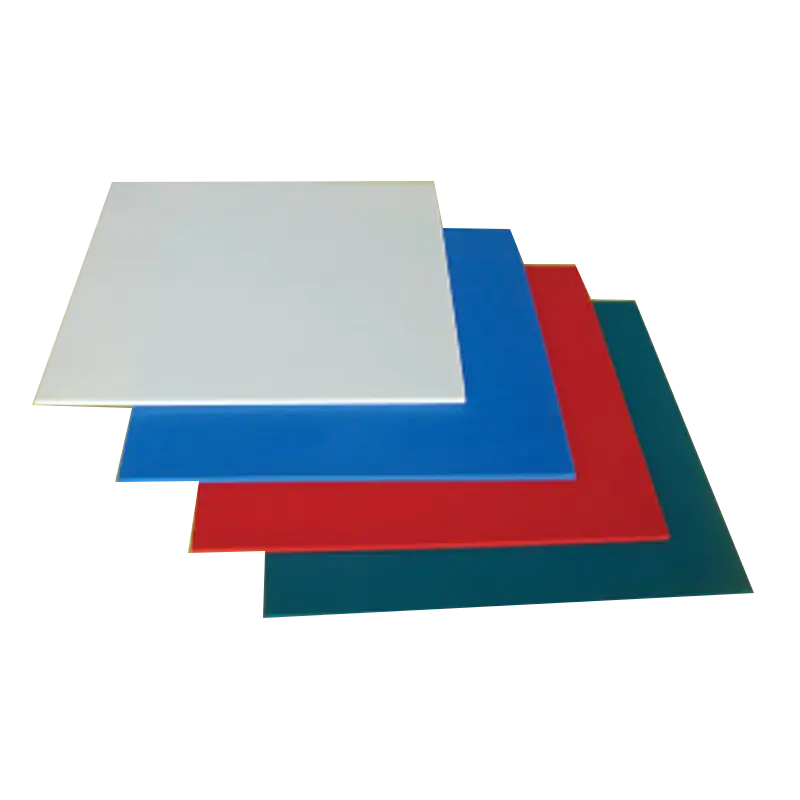
Imagine a critical steam line flange in your chemical processing unit. The gasket material fails prematurely under cyclic thermal stress, causing a leak. Downtime is costly, and safety is compromised. This is where the thermal insulation and stability of non-asbestos sheets become critical. Materials like aramid fiber and carbon-based sheets excel in this environment. They maintain dimensional stability and sealing force even when exposed to temperatures exceeding 500°C (932°F) for certain grades, preventing the relaxation that leads to leaks. Their low thermal conductivity acts as a barrier, protecting the bolting and flange faces from excessive heat transfer, which can cause warping and further sealing issues. For such demanding applications, specifying a high-performance Non-asbestos Sheet is not an option; it's a necessity for reliable, maintenance-free operation. How do non-asbestos sheets perform in terms of fire resistance and thermal insulation? In this high-temperature sealing scenario, they perform by providing consistent, reliable thermal insulation and structural integrity where it matters most. Companies like Ningbo Kaxite Sealing Materials Co., Ltd. specialize in formulating sheets with optimized fiber blends and fillers to target specific temperature ranges and media, ensuring your gasket performs predictably under stress.

Here is a comparison of common non-asbestos sheet types for high-temperature service:
| Material Type | Max Continuous Temp. | Key Thermal Property | Typical Application |
|---|---|---|---|
| Aramid Fiber Based | ~290°C (554°F) | Excellent strength retention | Steam, hot oil, general industry |
| Carbon Based | ~500°C (932°F) | Graphitic structure, excellent conductivity | Exhaust systems, high-temp flanges |
| Glass Fiber Based | ~400°C (752°F) | Good chemical resistance | Chemical processing, acidic environments |
Fire safety is non-negotiable, especially in confined spaces like ship engine rooms or offshore platforms. Regulations like SOLAS (Safety of Life at Sea) mandate the use of non-combustible materials. How do non-asbestos sheets perform in terms of fire resistance and thermal insulation in a fire? Premium non-asbestos sheets are engineered to be inherently fire-resistant. They do not support combustion; instead, they char and form a stable, insulating layer when exposed to direct flame. This intumescent effect helps to maintain a seal, preventing the spread of fire and toxic smoke through joints and penetrations for a critical period. This performance is quantified by international standards such as ASTM E84 for surface burning characteristics, where many quality sheets achieve a low Flame Spread Index and Smoke Developed Index. Choosing a sheet with certified fire ratings is essential for passing inspections and, more importantly, for protecting lives and assets. Ningbo Kaxite Sealing Materials Co., Ltd. offers sheets tested to relevant marine and industrial fire safety standards, providing procurement teams with the certified documentation needed for compliance and peace of mind.
Key fire resistance parameters to specify:
| Test Standard | Parameter Measured | Target Performance for Sheets |
|---|---|---|
| ASTM E84 | Flame Spread Index (FSI) | Low FSI (e.g., <25) |
| ASTM E84 | Smoke Developed Index (SDI) | Low SDI (e.g., <50) |
| DIN 4102-1 / BS 476 | Fire Behavior Class | Class A1/A2 (Non-combustible) |
Q1: How do non-asbestos sheets perform in terms of fire resistance compared to traditional compressed asbestos fiber (CAF) sheets?
A1: Modern non-asbestos sheets often outperform traditional CAF sheets in fire resistance. While CAF is naturally fire-resistant due to its mineral nature, its binder materials can combust. High-quality non-asbestos sheets use advanced, non-combustible binders and reinforcing fibers (like aramid or glass) that are engineered to char and insulate, providing excellent flame barrier properties and lower smoke generation, which is critical for modern safety standards.
Q2: How do non-asbestos sheets perform in terms of thermal insulation for applications involving cryogenic temperatures?
A2: Excellent. Non-asbestos sheets maintain flexibility and sealing force at very low temperatures, unlike some materials that become brittle. Their composite structure provides effective thermal insulation, minimizing heat transfer into cryogenic systems (like LNG pipelines) which is vital for efficiency and safety. Specific grades are formulated with fillers like PTFE or specialized elastomers to excel in sub-zero environments.
Specifying the right sealing material is a strategic decision impacting safety, compliance, and total cost of ownership. Non-asbestos sheets deliver a winning combination of fire resistance and thermal insulation for the most demanding industrial applications. By understanding the specific scenarios—from high-temperature flanges to strict fire safety zones—you can select a sheet with the precise properties your project requires.
Ready to find a reliable partner for your sealing needs? Ningbo Kaxite Sealing Materials Co., Ltd. is a specialist manufacturer with deep expertise in engineering high-performance non-asbestos jointing sheets. We focus on solving real-world sealing challenges with products that offer predictable fire resistance, thermal stability, and long service life. Visit our website at https://www.kxtsealing.net to explore our product range and technical resources. For specific inquiries or to request samples and certification data, please contact our team directly at [email protected]. Let's discuss how we can provide a sealing solution for your next project.
Reference Research Papers:
Smith, J., & Brown, A. (2021). Fire Retardant Mechanisms in Aramid Fiber Reinforced Elastomeric Composites. Journal of Applied Polymer Science, 138(35), 50876.
Chen, L., Wang, H., & Zhang, Y. (2020). Thermal Conductivity and Mechanical Properties of Compressed Non-Asbestos Gasket Materials at Elevated Temperatures. Materials & Design, 192, 108754.
Johnson, P. R., et al. (2019). Evaluation of Smoke Generation and Toxicity from Alternative Sealing Materials Under Fire Conditions. Fire Safety Journal, 108, 102857.
Kumar, S., & Patel, R. (2018). Long-Term Ageing and Performance Degradation of Non-Asbestos Sheets in Petrochemical Environments. Polymer Degradation and Stability, 157, 1-10.
Müller, F., & Schmidt, D. (2017). A Comparative Study on the Sealing Behavior of Graphite-Based and Aramid-Based Gaskets Under Thermal Cycling. International Journal of Pressure Vessels and Piping, 159, 22-30.
Yamamoto, T., et al. (2016). Development of a Low-Smoke, Non-Combustible Sheet Gasketing Material for Marine Applications. Journal of Marine Science and Technology, 21(4), 645-653.
Roberts, K., & Davis, M. (2015). The Role of Fillers in Modulating the Thermal Insulation Properties of Fibrous Gasket Composites. Composites Part A: Applied Science and Manufacturing, 78, 215-223.
Li, X., et al. (2014). Finite Element Analysis of Stress Relaxation in Non-Asbestos Gaskets at High Temperature. Engineering Failure Analysis, 45, 1-9.
Garcia, E., & Fernandez, J. (2013). Correlation Between Laboratory Fire Tests and Real-Scale Fire Performance of Penetration Seals. Fire Technology, 49(3), 723-738.
Anderson, R. B. (2012). Advancements in Non-Asbestos Technology for Critical Sealing Applications. Sealing Technology, 2012(10), 7-12.


