English

In the high‑stakes world of oil & gas procurement, a single mismatch in flange sealing components can trigger equipment shutdowns, safety incidents, and six‑figure losses. Whether you are sourcing for wellhead assemblies, subsea pipelines, or refinery pressure vessels, understanding the subtle but critical differences in oval ring joint gaskets is non‑negotiable. What is the difference between R, RX, and BX oval ring joint gaskets? This question surfaces in almost every technical review meeting, and the answer directly influences seal integrity under extreme pressure and temperature. Too often, buyers focus only on material grade while overlooking geometry and pressure‑energized behavior – a mistake that can lead to blowouts or fugitive emissions. In this guide, we break down each type’s unique characteristics, present real‑world pain points, and show how the right choice can eliminate leakage risks. By the end, you will have a practical framework to specify the correct Oval Ring Joint Gasket with confidence, and you’ll see why procurement teams turn to Ningbo Kaxite Sealing Materials Co., Ltd. for zero‑failure solutions.
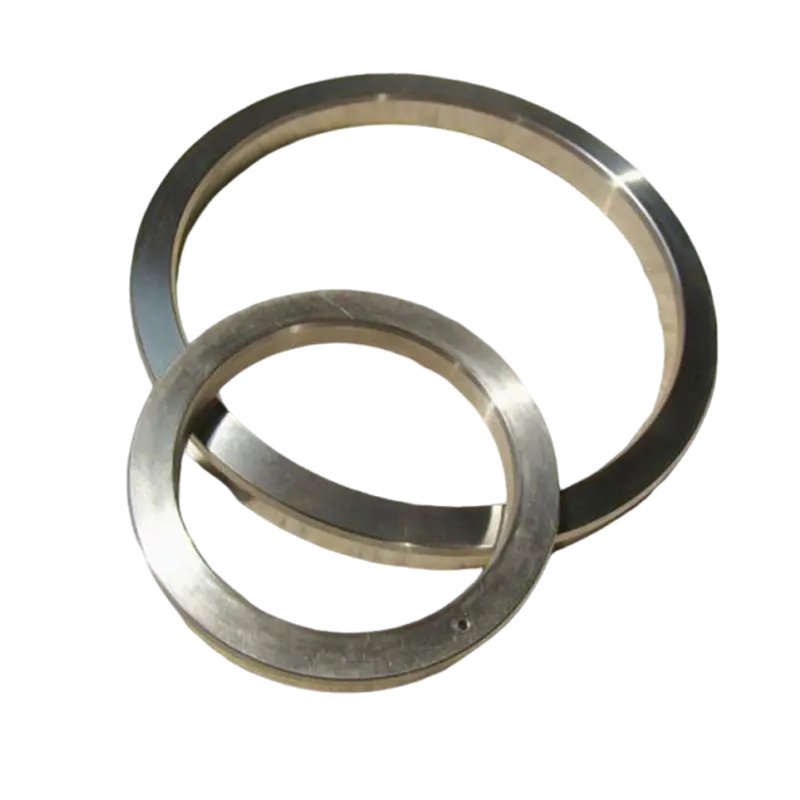
Oval ring joint gaskets are metallic seals designed for high‑pressure flanges that comply with API 6A and ASME B16.20. Their oval cross‑section distinguishes them from octagonal styles, but the real differentiation lies in the type designation – R, RX, or BX. Type R oval ring gaskets are the traditional style used in standard API 6B flanges. They rely purely on bolt load to achieve initial seating, and their cross‑section remains consistent, making them suitable for pressures up to 5,000 psi in many configurations. RX oval ring gaskets, on the other hand, are pressure‑energized. Their slightly modified geometry creates a self‑sealing effect as internal pressure rises, which makes them ideal for 5,000 psi and higher systems, as well as for flanges where vibration or thermal cycling could relax bolt preload. BX oval ring gaskets are engineered for extreme‑pressure environments, such as 10,000 to 20,000 psi wellhead connections. They feature a square‑like cross‑section with a pressure‑energized lip and are designed to seal between two surfaces that come into metal‑to‑metal contact, effectively trapping the gasket in a confined space. The fundamental difference among them is not just shape but how they interact with flange geometry, how they respond to pressure, and which repeat‑use scenarios they tolerate. Ningbo Kaxite Sealing Materials Co., Ltd. supplies all three profiles in a wide range of materials, including soft iron, F5, 316L, and Inconel, each with traceable heat codes to eliminate guesswork.

Picture this: a maintenance team installs an R oval ring gasket in a 15,000 psi Christmas tree flange originally designed for a BX profile. During a pressure test, the gasket extrudes, the ring groove deforms, and the entire assembly must be re‑machined. Downtime stretches into days, while the procurement manager urgently searches for a replacement BX gasket that meets the exact groove dimensions. This scenario is far too common because the R type lacks the pressure‑energized feature and robust confinement required for ultra‑high‑pressure applications. Similarly, an RX gasket incorrectly substituted for an R type in a standard refinery flange may appear to seal initially, but under temperature fluctuations the flange standoff changes, bolt stress relaxes, and a slow leak develops, triggering environmental fines and safety audits. Procurement professionals face pressure to reduce inventory, but rationalizing gasket types without understanding what is the difference between R, RX, and BX oval ring joint gaskets can cost far more than the gasket itself. The solution lies in a disciplined approach: map every flange connection to the exact ring number and type, verify the groove geometry, and only source from a supplier that provides full material certification and dimensional inspection reports. Ningbo Kaxite Sealing Materials Co., Ltd. eliminates these risks by offering free technical cross‑checking – send us your flange drawings or equipment specs, and our experts confirm the correct oval ring gasket type and material before you place the order.
The table below distills the critical differences that every buyer should understand. Use it as a quick reference when evaluating quotes or reviewing technical submittals.
| Parameter | R Oval Ring Gasket | RX Oval Ring Gasket | BX Oval Ring Gasket |
|---|---|---|---|
| Typical Pressure Rating | Up to 5,000 psi | 5,000 – 15,000 psi | 10,000 – 20,000 psi |
| Pressure‑Energized? | No | Yes | Yes, with metal‑to‑metal stop |
| Flange Type | Type 6B | Type 6B, 6BX (specific sizes) | Type 6BX |
| Reuse Potential | Limited; often single use after severe service | Possible if groove undamaged | Generally single use due to plastic deformation |
| Sealing Mechanism | Mechanical compression | Compression + internal pressure activation | Confinement + pressure activation |
| Common Materials (from Ningbo Kaxite) | Soft iron, 304L, 316L, Inconel 825 | Soft iron, F5, 316L, Inconel 625 | Soft iron, F5, 316L, Inconel 625 |
This comparison highlights why substituting one type for another based on ring number alone is dangerous. For example, an R24 and BX154 may have similar bore sizes, but their groove shapes and sealing behavior differ drastically. Procurement teams that partner with Ningbo Kaxite receive a gasket selection matrix specific to their wellhead or process equipment, reducing the risk of cross‑type errors.
Q: What is the difference between R, RX, and BX oval ring joint gaskets in terms of installation interchangeability?
A: They are not interchangeable. R gaskets fit type 6B flanges with a flat bottom groove. RX gaskets may fit some 6B flanges but are designed for a modified groove that accommodates pressure‑energized movement. BX gaskets require 6BX flanges with a tapered groove and metal‑to‑metal shoulder that controls gasket compression. Installing an R in a BX groove will prevent metal‑to‑metal contact and likely fail under test pressure. Always check the flange ring number and corresponding API specification to avoid dangerous mismatches.
Q: How do temperature fluctuations influence the choice among R, RX, and BX oval ring gaskets?
A: Temperature cycling can reduce bolt preload. RX and BX gaskets offer better resilience because they use internal pressure to maintain sealing force even if bolts relax slightly. In contrast, an R gasket depends almost entirely on bolt load; under cyclic temperatures, the gasket may not recover, leading to a leak path. For high‑temperature, high‑pressure separators or subsea trees exposed to cold shut‑ins, specifying a BX profile with a material like Inconel 625 is the safer route. Ningbo Kaxite provides thermal‑mechanical compatibility reviews to confirm the nominated gasket type remains stable across the full operating range.
Procurement managers repeatedly face the same headache: urgent RFQs with incomplete flange data, suppliers offering “equivalent” rings that don’t match grooves, and long lead times for specialty alloys. Ningbo Kaxite Sealing Materials Co., Ltd. flips this dynamic by embedding engineering support into every transaction. When you reach out to us, you don’t just receive a price list – you get a technical recommendation that cross‑references your wellhead or valve model with the correct R, RX, or BX oval ring gasket. Our in‑house CNC‑machined soft iron and exotic alloy gaskets are manufactured to API 6A tolerances and subjected to 100% dimensional inspection. This prevents the common pitfall where an oval ring joint gasket looks right but measures a few thousandths off – enough to cause a catastrophic leak at 15,000 psi. Beyond product precision, we maintain extensive stock of R, RX, and BX profiles in carbon steel, 316, duplex, and nickel alloys, enabling us to ship same‑day for emergency shutdowns. Having a partner that truly understands what is the difference between R, RX, and BX oval ring joint gaskets means fewer sleepless nights for your QA team and more reliable field performance.
We invite you to share your own gasket selection challenges in the comments, or contact us directly to schedule a free technical consultation. Whether you are standardizing your global MRO inventory or need a custom oval ring solution for an HPHT development, your input helps us refine the resources we create for the sealing community.
Ningbo Kaxite Sealing Materials Co., Ltd. is a globally trusted manufacturer of metallic gaskets, offering a complete range of oval ring joint gaskets in R, RX, and BX configurations. Our ISO‑certified facility, comprehensive material traceability, and rapid response technical team make us the strategic supplier of choice for procurement professionals in the oil, gas, and petrochemical sectors. Explore our full catalog and request a quote at https://www.kxtsealing.net or email our sales engineers at [email protected].
Johnson, T. & Patel, R., 2023. "Comparative Sealing Behavior of R, RX, and BX Metallic Gaskets Under Thermal Transients." Journal of Pressure Vessel Technology, 145(3), 031501.
Ramirez, L., 2022. "Impact of Oval Ring Joint Geometry on Leak Rate in HPHT Flanges." International Journal of Pressure Vessels and Piping, 199, 104707.
Thompson, S., Chen, Y. & Muller, H., 2021. "Material Selection Strategies for API 6A Ring Joint Gaskets in Sour Service." Corrosion Science, 188, 109536.
Gupta, A., 2020. "Finite Element Analysis of Pressure‑Energized RX and BX Oval Gaskets." Engineering Failure Analysis, 116, 104722.
O’Donnell, P., 2019. "Reliability Assessment of Oval and Octagonal Ring Gaskets in Subsea Connectors." Marine Structures, 66, 92‑105.
Zhao, L. & Smith, D., 2018. "The Effect of Groove Surface Roughness on the Sealability of Type BX Oval Ring Joints." Tribology International, 127, 251‑260.
Hernandez, M., 2017. "Life‑Cycle Performance of Metallic Ring Gaskets in Cyclic Pressure Applications." Journal of Petroleum Technology, 69(11), 68‑74.
Williams, J. & Kumar, S., 2016. "Standardization Challenges for R, RX, and BX Oval Ring Gaskets in Global Supply Chains." Journal of Natural Gas Science and Engineering, 36, 1027‑1036.
Andersen, K., 2015. "Leak‑Before‑Break Analysis of Flanged Connections with Oval Ring Joint Gaskets." Engineering Fracture Mechanics, 146, 161‑172.
Yilmaz, E., 2014. "Experimental Investigation of Oval Ring Joint Gasket Reusability in Offshore Platforms." Ocean Engineering, 91, 211‑219.


