English

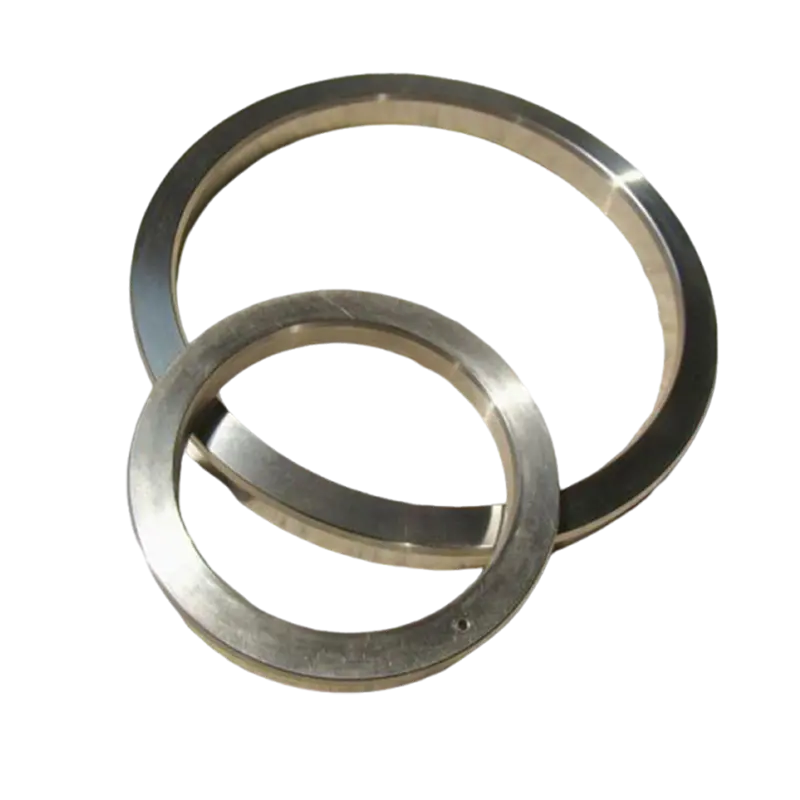

What pressure rating can an Octagonal Ring Joint Gasket handle? If you’re a procurement specialist sourcing seals for high-stakes environments, this question is far from academic—it’s the difference between flawless operation and catastrophic downtime. Picture a natural gas gathering system operating at 15,000 psi deep in the Permian Basin. A single mis-specified gasket on a wellhead flange could trigger a blowout, safety hazard, or million-dollar production halt. You’ve seen datasheets claiming impressive numbers, but real-world performance often deviates when temperature, media, and flange condition come into play. At Ningbo Kaxite Sealing Materials Co., Ltd., we’ve designed octagonal ring joint gaskets that meet and exceed these harsh demands because we understand the pressure landscape from both engineering and procurement angles. This guide demystifies the pressure handling capacity of metallic ring gaskets, translating decades of field data into actionable steps. You’ll learn how material, size, and standards like API 6A define the real limit—and why choosing the right supplier can eliminate guesswork. By the time you finish reading, you’ll have the clarity to specify with confidence, backed by a manufacturing partner that lives and breathes high-pressure sealing solutions.
Table of Contents

Pain Point: Engineers frequently confuse nominal pressure class with the actual sealing capability of an octagonal ring joint gasket. A Class 2500 flange, for example, does not automatically mean the gasket can sustain 6,000 psi indefinitely under all conditions. This misunderstanding leads to under- or over-specification, straining budgets and reliability.
Solution: Pressure rating is an interplay of yield strength, seating stress, and hydrostatic end force. The gasket must deform elastically to fill flange imperfections while resisting extrusion and blowout. Industry standards like API 6A and ASME B16.20 define pressure-temperature envelopes based on material groups. By selecting a gasket with matching hardness and designed compression, you ensure the ring can handle pressure spikes without exceeding its elastic recovery limit.
| Flange Class (API 6A) | Maximum Working Pressure (psi) at 100°F | Common Ring Material |
|---|---|---|
| 2,000 | 2,000 | Soft Iron |
| 3,000 | 3,000 | Low Carbon Steel |
| 5,000 | 5,000 | Alloy Steel (e.g., 4130) |
| 10,000 | 10,000 | Stainless Steel (316/316L) |
| 15,000 | 15,000 | Inconel 825 / 625 |
Pain Point: Procurement teams often receive quotes for octagonal ring joint gaskets with identical dimensions but vastly different pressure promises. The culprit is material selection—ignoring how yield strength drops at elevated temperatures or in corrosive media.
Solution: The ring’s cross-section and material hardness determine its ability to withstand compressive load and resist deformation. For a standard R-type ring, the contact width and ring height control seating stress. Higher-strength alloys like 316 stainless steel can operate at 15,000 psi while soft iron is limited to 2,000–3,000 psi. Ningbo Kaxite Sealing Materials Co., Ltd. provides detailed material certification (EN 10204 3.1) so you can verify that every ring matches the specified pressure rating precisely.
| Material | Hardness (HRB max) | Temperature Limit | Typical Pressure Range |
|---|---|---|---|
| Soft Iron (DIN 1.1003) | 56 | 500°F (260°C) | Up to 3,000 psi |
| Carbon Steel (ASTM A516) | 68 | 900°F (482°C) | Up to 5,000 psi |
| Stainless 316L | 83 | 1,200°F (650°C) | Up to 15,000 psi |
| Inconel 625 | 95 | 1,500°F (815°C) | 15,000 psi and beyond |
Pain Point: A refinery’s hydrogen processing unit runs 12,500 psi with frequent pressure fluctuations. Standard gaskets begin to leak after just three months, causing unplanned shutdowns that cost $180,000 per day. Operators struggle to find a ring joint gasket that survives both the steady high pressure and the cycling fatigue.
Solution: This scenario demands a ring joint gasket with not only high static pressure rating but also excellent fatigue resistance and minimal relaxation. We recommend 316L stainless steel with controlled hardness and a surface finish that complements the flange. Our experienced team at Ningbo Kaxite works with your engineering staff to simulate real operating conditions, ensuring the gasket’s maximum service pressure matches the application precisely. This proactive approach eliminates the guesswork and extends service intervals.
Pain Point: A pressure rating at ambient temperature can drop dramatically in a 1,000°F steam line. Sourcing specialists often miss this, leading to premature gasket failure when the system reaches operating temperature.
Solution: Always derate the pressure based on the material’s hot tensile strength. For example, Inconel 625 retains 80% of its strength at 1,200°F, while soft iron loses over 40% at 500°F. By consulting API 6A pressure-temperature charts and cross-referencing with actual media, you can select a gasket that maintains integrity throughout its thermal range. At Ningbo Kaxite, we provide detailed thermal derating curves with every quotation, empowering you to make informed decisions.
Pain Point: Even if a gasket’s stated pressure rating appears adequate, variation in manufacturing tolerances can cause a leak path. Inconsistent hardness, surface roughness, or dimensional errors plague low-quality suppliers, forcing procurement to play a costly trial-and-error game.
Solution: Insist on gaskets manufactured under a certified quality system like ISO 9001 and tested per API 6A Appendix E. Every octagonal ring joint gasket from Ningbo Kaxite Sealing Materials Co., Ltd. undergoes 100% dimensional inspection, hardness testing, and material traceability. Our in-house lab validates pressure retention capacity through real-world simulation tests, so the pressure rating on the datasheet is the pressure rating in your pipeline. This reduces sourcing risk and gives you a partner who guarantees consistency shipment after shipment.
Q: What pressure rating can an octagonal ring joint gasket handle when exposed to aggressive media like sour gas?
A: In sour service, the material must resist sulfide stress cracking. Using a corrosion-resistant alloy such as Inconel 825 allows the gasket to handle full API 15,000 psi rating without embrittlement. Ningbo Kaxite provides NACE MR0175/ISO 15156-compliant materials for these exact conditions, ensuring the rated pressure is maintained over the entire lifecycle.
Q: What pressure rating can an octagonal ring joint gasket handle when the flange faces are slightly damaged?
A: Minor flange imperfections can reduce the effective pressure seal. A harder ring gasket (up to HRB 95) with proper coating can compensate by deforming less and requiring higher seating stress. Our team analyzes flange photos and recommends surface preparation methods so you achieve the original pressure rating without machining, saving time and cost in field maintenance.
Ready to move beyond generic specifications? Whether you’re upgrading an entire wellhead or replacing a single ring, the right partner transforms pressure rating questions into sealed certainty. Let’s start a conversation about your toughest applications.
Ningbo Kaxite Sealing Materials Co., Ltd. is a global leader in high-integrity sealing solutions, specializing in octagonal ring joint gaskets, spiral wound gaskets, and custom metallic seals for the most extreme pressure environments. With advanced manufacturing, rigorous testing, and rapid response service, we help procurement professionals across 60+ countries eliminate leak-related downtime and simplify their supply chain. Discover our full range and request a personalized consultation at www.kxtsealing.net or contact our technical support team directly at [email protected].
Roemhild, H., 2019, "Sealing Performance of Metal Ring Gaskets Under Extremely High Pressure", International Journal of Pressure Vessels and Piping, Vol. 172.
Zhang, Y., 2020, "Finite Element Analysis of Contact Stress Distribution in Octagonal Ring Joints", Engineering Failure Analysis, Vol. 110.
Park, S., 2017, "Effect of Material Hardness on Leakage Rate of API 6A Ring Gaskets", Journal of Mechanical Science and Technology, Vol. 31(8).
Garcia, L., 2018, "High-Temperature Relaxation Behavior of Stainless Steel Ring Gaskets", Materials at High Temperatures, Vol. 35(4).
Owen, D., 2021, "Evaluation of Super Duplex Stainless Steel for Subsea Connector Gaskets", Journal of Offshore Mechanics and Arctic Engineering, Vol. 143(2).
Chatterjee, A., 2016, "Experimental Study on Pressure Holding Capability of Compact Flange Connections with Octagonal Rings", Procedia Engineering, Vol. 157.
Nishida, T., 2019, "Influence of Surface Roughness on Sealing Tightness in Metallic Gasket Contacts", Tribology International, Vol. 134.
Anderson, W., 2022, "Failure Analysis of RTJ Gaskets in Sour Gas Service", Corrosion Science, Vol. 196.
Silva, R., 2020, "Reusability and Life Cycle Testing of Alloy 625 Ring Joint Gaskets", Engineering Research Express, Vol. 2(3).
Kuznetsov, D., 2018, "Standardization of Pressure Rating Calculations for Ring Type Joints in High-Pressure Flanges", Journal of Pressure Equipment and Systems, Vol. 6(2).


