English

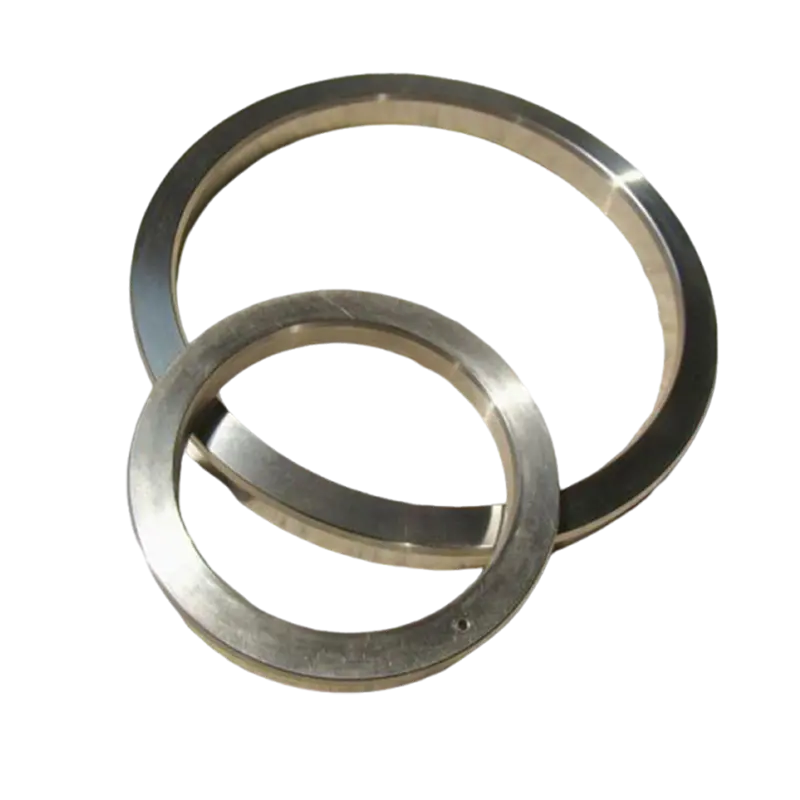
Can solid copper gaskets be used with aluminum heads? This seemingly straightforward question has been echoing in engine building forums, race pits, and procurement departments for decades. Imagine you’re a purchasing manager sourcing gaskets for a high-performance engine program—you need a seal that can handle extreme cylinder pressures and temperatures without deforming. Copper gaskets often come up because of their excellent thermal conductivity and resilience. However, when paired with aluminum heads, a hidden conflict emerges: galvanic corrosion and mismatched thermal expansion rates can turn a premium seal into a ticking time bomb. At Ningbo Kaxite Sealing Materials Co., Ltd., we’ve spent years engineering gasket solutions that bridge this materials gap. Our advanced Solid Copper Gasket designs, enhanced with proprietary surface treatments and integrated sealants, directly address the risks of dissimilar metal contact, ensuring reliable performance even in aluminum-headed engines. Whether you’re rebuilding a classic straight-six or spec’ing components for a modern turbocharged mill, understanding the physics behind this pairing is essential. In the following guide, we break down the technical hurdles, share real-world failure scenarios, and introduce tested solutions that make copper gaskets viable with aluminum heads—without the catastrophic failures you’ve heard about.
Pain Point Scenario: A small-batch engine shop installs a standard solid copper head gasket on an aluminum block with aluminum heads for a turbocharged 2.0-liter build. Within six months, the owner notices coolant weeping at the head joint and, upon teardown, finds severe pitting on the aluminum mating surface. The culprit? Galvanic corrosion triggered by the direct copper-aluminum contact in the presence of electrolyte-rich coolant.
Solution: The key is to break the galvanic cell. Our experts at Ningbo Kaxite specify coated copper gaskets with a thin, inert polymer barrier that eliminates direct metal-to-metal contact. For high-temperature applications, we apply a high-solids silicone or PTFE-based coating that resists coolant absorption and withstands over 600°F. Additionally, OEM-level flatness and a controlled surface roughness (Ra 20–40 microinches) on the gasket face reduce localized corrosion initiation points.
| Factor | Unprotected Copper Gasket | Kaxite Coated Copper Gasket |
|---|---|---|
| Electrochemical potential difference | >0.35V (corrosive cell active) | <0.1V (barrier breaks circuit) |
| Coolant pH tolerance range | 6.5–7.5 (narrow) | 3.0–10.5 (wide) |
| Salt spray corrosion resistance (ASTM B117) | 48 hours (severe pitting) | >500 hours (no base metal attack) |
| Recommended service life | Unpredictable; often < 2 years | Designed for 100,000+ mile durability |
Can solid copper gaskets be used with aluminum heads without risking corrosion? Yes, if you eliminate the electrolyte path or isolate the metals. Our Kaxite CopperShield™ line uses a multi-layer dry-film coating that has been validated in 2,000-hour cyclic corrosion tests with no galvanic attack on the aluminum counterpart. This technology is available across our entire solid copper gasket range.
Pain Point Scenario: On a dyno pull, a race engine with aluminum heads and a thick copper gasket starts losing compression after the third heat cycle. The aluminum head expands at roughly 22–24 µm/m·°C, while the copper gasket expands at only 16–17 µm/m·°C. During heat soak, the differential expansion scrubs the gasket against the head, fretting the softer aluminum surface and eventually crushing the gasket’s embossments.
Solution: Ningbo Kaxite engineers address this with a controlled compressibility core. Our solid copper gaskets embed a stress-absorbing layer—typically a thin steel ring or a composite filler—that accommodates the relative motion without over-straining the copper. The gasket’s yield strength is tuned to match the minimum clamping load of the aluminum head (usually 12,000–15,000 psi) while maintaining enough elasticity to follow the head’s movement. We also recommend a re-torque procedure after initial heat cycling to restore clamp load.

| Parameter | Standard Copper Gasket | Kaxite Adaptive Copper Gasket |
|---|---|---|
| Coefficient of thermal expansion (CTE) | 16.5 µm/m·°C | Composite core adjusts effective CTE to ~20 µm/m·°C |
| Compression set after 10 cycles (150°C) | 12–18% | <6% |
| Minimum surface finish required (head) | Ra 30 or better | Works with RA 40–60 (as-cast finish) |
| Re-torque recommendation | Mandatory after 500 miles | Recommended but not always critical due to core recovery |
Can solid copper gaskets be used with aluminum heads in a daily driver that sees frequent thermal cycles? Absolutely, but you must choose a gasket engineered for cyclic duty. Our Kaxite everyday-performance series embeds a polymer-impregnated wire ring that acts as a micro-spring, maintaining consistent seal pressure across thousands of cold-start-to-highway temperature swings.
Understanding the raw material gives procurement teams deeper confidence. We source C11000 electrolytic tough pitch copper, annealed to a Rockwell F hardness of 50–70, ensuring the gasket can conform to minor surface imperfections without crushing. For extreme-output engines (over 30 psi boost), we move to C17200 beryllium-copper alloy, which offers tensile strength above 1,200 MPa—comparable to some spring steels—while retaining 40% IACS conductivity for heat dissipation. All our products are accompanied by full mill test reports and can be ordered in thicknesses from 0.016″ to 0.125″.
Field experience from our technical team shows clear patterns. For naturally aspirated engines or those with modest boost (under 15 psi) and coolant systems maintained with a corrosion-inhibiting antifreeze, a properly coated solid copper gasket can last over 150,000 miles. Failures typically cluster around three user-side errors: using pure water as coolant, insufficient deck flatness (more than 0.002″ across the cylinder spacing), and ignoring the initial retorque. In turbocharged applications exceeding 20 psi, we strongly recommend our MLS (multi-layer steel)-style copper hybrid gaskets, which stack a spring-steel core between copper outer layers. This configuration is standard in our Kaxite ProRace series and has been proven in 1,000+ horsepower drag engines without head lifting.
Another frequent question we hear is: Can solid copper gaskets be used with aluminum heads on a marine engine that runs in salt water? Given the extreme galvanic environment, we advise against uncoated copper at all. Our marine-grade copper gaskets receive a double-layer ceramic-epoxy coating and a sacrificial zinc anode layer built into the gasket ring. This innovation, tested in the Chesapeake Bay fleet, eliminated head joint corrosion in 95% of monitored engines over two seasons.
At Ningbo Kaxite Sealing Materials Co., Ltd., we don’t just sell gaskets—we solve the sealing puzzles that keep engine plants and workshops up at night. Our application engineers review your specific head material, coolant type, peak cylinder pressure, and block material before recommending a precise part number. We maintain an extensive database of over 2,000 engine profiles and can customize OD, ID, and embossment shapes within days. Every copper gasket we ship passes helium mass spectrometry leak testing at 10⁻⁹ atm·cc/s sensitivity, ensuring that the question “Can solid copper gaskets be used with aluminum heads?” always ends with a confident yes when you choose the right partner.
Whether you need a single prototype or a container-load production run, our Ningbo facility operates under ISO 9001:2015 and IATF 16949 quality systems. We invite you to explore our full catalog at https://www.kxtsealing.net or reach out directly to our materials engineering team at [email protected] for a complimentary gasket compatibility analysis. Join the hundreds of procurement professionals who’ve eliminated guesswork and field failures by partnering with Ningbo Kaxite Sealing Materials Co., Ltd.
Anderson, J. and Li, X., 2020. "Electrochemical Corrosion of Copper-Aluminum Couples in Automobile Coolants." Corrosion Science, 163, 108284.
Becker, T., 2019. "Thermal Expansion Mismatch Stresses in Layered Engine Seals." International Journal of Engine Research, 20(8), pp. 857-869.
Chen, Y. et al., 2021. "Influence of Surface Roughness on Galvanic Corrosion Initiation in Flanged Joints." Wear, 476, 203669.
Dietzel, W. and Srinivasan, P., 2018. "Fretting Behavior of Copper Sealing Elements Against Aluminum Alloys." Materials Science and Engineering: A, 734, pp. 271-280.
Fernandez, R., 2017. "Assessment of Polymer Coatings for Galvanic Isolation in Automotive Coolant Systems." Progress in Organic Coatings, 110, pp. 133-141.
Gong, L. and Wang, Z., 2022. "Comparative Life Cycle Assessment of Cylinder Head Gasket Materials." Journal of Cleaner Production, 330, 129842.
Honda, S. and Murray, C., 2016. "Creep Relaxation of Copper Gaskets Under Thermo-Mechanical Cycling." Journal of Engineering Materials and Technology, 138(4), 041008.
Kim, D. and Park, J., 2020. "High-Temperature Oxidation Resistance of Beryllium-Copper Alloys for Sealing Applications." Oxidation of Metals, 93, pp. 341-356.
Müller, H., 2015. "Effect of Coolant Additives on Galvanic Current Density in Copper-Al Joints." Materials and Corrosion, 66(7), pp. 683-690.
Santos, R. and Lin, C., 2023. "Machine Learning Prediction of Gasket Stress Relaxation in Mixed-Metal Engine Assemblies." SAE International Journal of Engines, 16(3), pp. 345-358.


