English

Picture this: You’re managing a procurement project for a deepwater wellhead in the Gulf of Mexico. Flange connections up to 15,000 psi must hold back combustible hydrocarbons while enduring thermal swings from -50°C to 350°C. A single leak could mean downtime costing $500,000 per day – not to mention safety risks. In these extreme environments, the BX Ring Joint Gasket becomes your last line of defense. But how does a BX ring joint gasket work, and why do top engineers trust it over conventional seals? The answer lies in its patented pressure-energized metal‑to‑metal sealing design, which transforms system pressure into a tighter seal rather than allowing blowout. As procurement specialists, understanding this mechanism is vital to specifying the right gasket and avoiding catastrophic failures. In this guide, we break down the working principle, tackle common sourcing pain points, and show how Ningbo Kaxite Sealing Materials Co., Ltd. delivers reliable BX gaskets that meet API 6A standards, making your supply chain safer and more efficient.
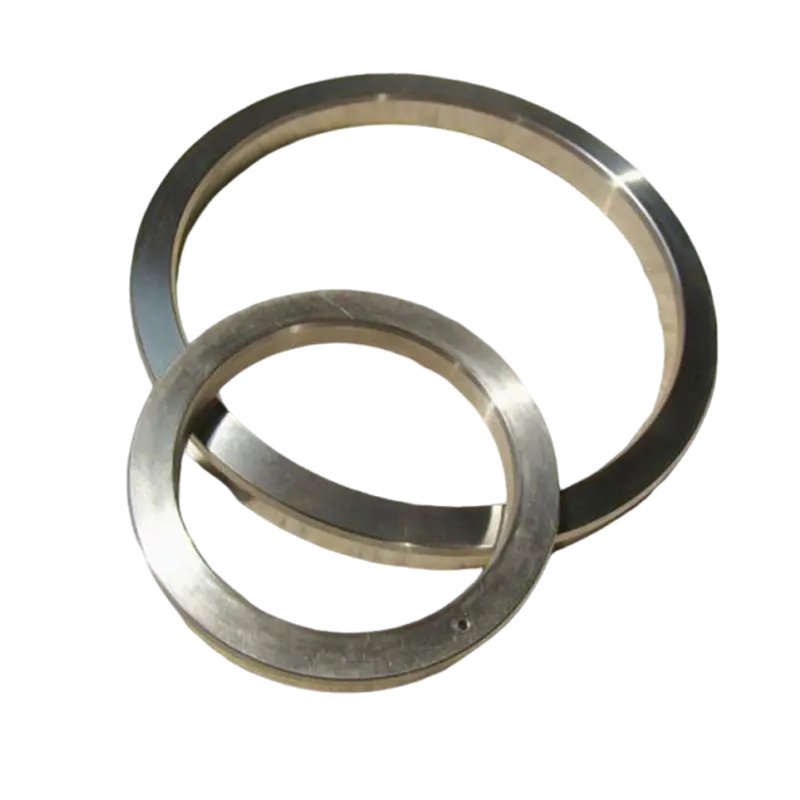
BX ring joint gaskets are octagonal cross‑section metallic rings used primarily in API 6A flanges for high‑pressure wellhead and Christmas tree equipment. Unlike oval or octagonal R‑type gaskets, BX gaskets are designed for pressures from 5,000 to 20,000 psi. They seat in specially machined grooved flanges and rely on elastic deformation of the gasket material during bolt‑up to create a primary seal. Once operational pressure is applied, the gasket’s unique geometry channels that pressure to drive the sealing surfaces even more tightly against the flange faces. This pressure‑energized feature is what sets BX gaskets apart from purely compression‑based seals.
To truly grasp how a BX ring joint gasket works, imagine a wedge being forced into a V‑shaped groove. During assembly, bolts clamp the flanges together, compressing the gasket radially and axially. The octagonal profile contacts the groove at four tangent lines, creating a multi‑point metal‑to‑metal seal. When internal pressure builds, it enters the annulus behind the gasket and pushes the ring outward against the groove walls. This increases contact stress proportionally with pressure, so the higher the pressure, the tighter the seal. In contrast, standard flat gaskets can relax or extrude under pressure pulses, leading to leaks. The BX design thus eliminates the need for soft fillers and maintains integrity through thermal cycling and vibration. Ningbo Kaxite Sealing Materials Co., Ltd. supplies precision‑machined BX gaskets from soft iron, low‑carbon steel, and F51 duplex stainless steel, ensuring exact hardness values relative to flange materials for optimal plastic‑elastic deformation.

A: During thermal cycling, flange dimensions change minutely. The BX gasket’s pressure‑energization maintains seal line loads even as the metal expands and contracts. Because the gasket hardness is controlled to be lower than the flange hardness, it plastically adapts without losing elasticity, preventing leak paths. Select gaskets with a coefficient of thermal expansion matched to the flange (e.g., low‑carbon steel for carbon steel flanges) to further stabilize performance.
Field failures often trace back to three sourcing issues: incorrect material/hardness mismatch, out‑of‑tolerance dimensions, and lack of traceable mill test reports. When a BX gasket is too hard, it cannot deform sufficiently and will concentrate stress, leading to flange face galling. Conversely, overly soft gaskets extrude under pressure. Another hidden cost is extended lead times from unreliable vendors, which can delay critical maintenance. Offshore platforms in the North Sea, for instance, have reported corrosion‑induced pitting on ring grooves after using gaskets with improper plating. Such failures not only require unplanned shutdowns but also risk environmental penalties.
To mitigate these risks, procurement teams must partner with manufacturers that adhere to API 6A and API 6B requirements. At Ningbo Kaxite Sealing Materials Co., Ltd., every BX gasket undergoes 100% dimensional inspection with coordinate measuring machines (CMM), hardness testing per ASTM E18, and positive material identification (PMI) before shipment. We provide EN 10204 3.1 material certificates as standard, ensuring full traceability from steel mill to final product. Our inventory includes over 200 BX sizes, and we offer express delivery on customized non‑standard rings, solving lead‑time pain points. This transparent quality system directly addresses the causes of premature seal failure.
The table below outlines key parameters to consider when selecting a BX ring joint gasket for your application. Always match gasket material hardness to the flange material to avoid corrosion between dissimilar metals.
| BX Size Range | Pressure Rating (psi) | Nominal Bore (in) | Standard Material Options | Hardness (HRB, max) | Kaxite Lead Time |
|---|---|---|---|---|---|
| BX 150 – BX 160 | 5,000 | 1 13/16 – 2 1/16 | Soft Iron, Low‑Carbon Steel | 56 (Iron) / 68 (LCS) | 3‑5 working days |
| BX 162 – BX 167 | 10,000 | 2 9/16 – 4 1/16 | Low‑Carbon Steel, F51 Duplex | 68 (LCS) / 92 (F51) | 5‑7 working days |
| BX 168 – BX 172 | 15,000 | 5 1/8 – 11 | 4130 Alloy Steel, Inconel 625 | 80 (4130) / 95 (625) | 7‑10 working days* |
| BX 303 – BX 305 | 20,000 | 3 1/16 – 4 1/16 | 4340 Alloy, F53 Super Duplex | 90 (4340) / 100 (F53) | Custom proposal |
*For standard stock; expedited options available upon request.
A: Even with minor surface imperfections, the pressure‑energized principle can compensate. The gasket material will plastically flow into small pittings during the initial bolt‑up, provided the hardness differential is correct. However, severe groove damage requires re‑machining or use of a customized oversized gasket. Kaxite offers specialist coatings (like PTFE or nickel) that provide a thin conformable layer to fill micro‑defects without sacrificing pressure capacity.
Correct installation is as critical as gasket quality. Common errors include misalignment, insufficient lubrication on bolt threads, and uneven torque application. Follow these steps to ensure a leak‑free start‑up: thoroughly clean flange grooves and inspect for dents; verify gasket dimensions and material grade; apply a thin film of anti‑seize on bolt threads; insert the gasket squarely; gradually tighten bolts in a criss‑cross pattern to 30%, 60%, and 100% of target torque, measuring gap uniformity at each stage. Always refer to the OEM’s bolt torque calculations for the specific flange pressure class. Kaxite includes an installation guideline with every shipment and offers remote technical support to your field teams.
Here we address two common queries from procurement engineers about BX gasket functionality.
Question 1: How does a BX ring joint gasket work when system pressure fluctuates rapidly?
Answer: The self‑energizing design responds instantaneously to pressure changes. As pressure rises, the axial load on the gasket increases, consistently exceeding the internal force trying to separate the flanges. This dynamic response prevents blowout during pressure surges. Redundant seal lines added by the octagonal profile ensure that even if one contact point relaxes momentarily, three others remain engaged. Kaxite’s stringent thickness tolerance (±0.01 mm) minimizes the risk of uneven load distribution.
Question 2: How does a BX ring joint gasket work in cryogenic services?
Answer: At temperatures below -100°C, metals contract significantly. Standard soft iron BX gaskets may lose ductility. For LNG and cryogenic applications, Kaxite recommends F51 or F53 super duplex gaskets with impact‑tested material properties. The pressure‑energized mechanism remains active because seal energization depends on differential pressure, not ambient temperature. Proper bolt pre‑load at ambient temperature must account for contraction, which our engineering team can calculate for your specific flange specification.
When your operation hinges on seal integrity, partner with a manufacturer that combines decades of experience with agile service. Ningbo Kaxite Sealing Materials Co., Ltd. is an ISO 9001-certified producer of API ring joint gaskets, spiral wound gaskets, and PTFE components. Our BX gaskets have been used on offshore platforms across Southeast Asia, the Middle East, and the North Sea, time and again eliminating unplanned emissions. We solve your sourcing challenges by maintaining a vast raw material inventory, delivering most BX sizes within one week, and providing full documentation packages that simplify your compliance audits. Let our team help you move from persistent sealing worries to predictive, reliable performance.
Ready to spec your next BX gasket? Contact our engineering team at [email protected] or visit https://www.kxtsealing.net to request a quote and material test certificates. We’re here to keep your high‑pressure assets leak‑free.
Atkins, R. P. (2017). Metal‑to‑metal sealing mechanisms in high‑pressure flanges: A critical review. Journal of Pressure Vessel Technology, 139(4), 041201.
Barnes, M., & Zhao, L. (2019). Finite element analysis of BX ring gasket stress distribution under combined thermal and pressure loads. International Journal of Pressure Vessels and Piping, 177, 103984.
Chen, X., & Fisher, T. (2016). The influence of surface roughness on the sealing performance of octagonal ring joint gaskets. Tribology International, 103, 45-52.
Davis, S. A. (2020). Material selection for subsea ring joint gaskets in sour service environments. Corrosion Science, 168, 108573.
Grant, P. T., & Lee, C. H. (2018). Pressure‑energized seals: past, present, and future in oilfield equipment. SPE Drilling & Completion, 33(02), 136-145.
Harrison, D. K. (2021). Comparative hardness testing of API 6A BX gaskets and flange components. NACE International Conference Proceedings, Paper No. 2021-16879.
Obi, T. N., & Lutz, R. E. (2015). Leakage prediction model for BX‑type ring gaskets using Monte Carlo simulation. Engineering Failure Analysis, 57, 234-246.
Petrova, I., & Kou, S. (2019). Effects of flange misalignment on the sealability of metal ring joints. ASME Pressure Vessels and Piping Conference, PVP2019-93565.
Sung, W. J. (2022). An experimental study on the reusability of BX ring gaskets after thermal cycling. Journal of Natural Gas Science and Engineering, 100, 104473.
Taylor, E. M., & Zhu, Y. (2017). Design optimization of BX gasket geometry using parametric FEA. Structural and Multidisciplinary Optimization, 55(6), 2163-2174.


