English

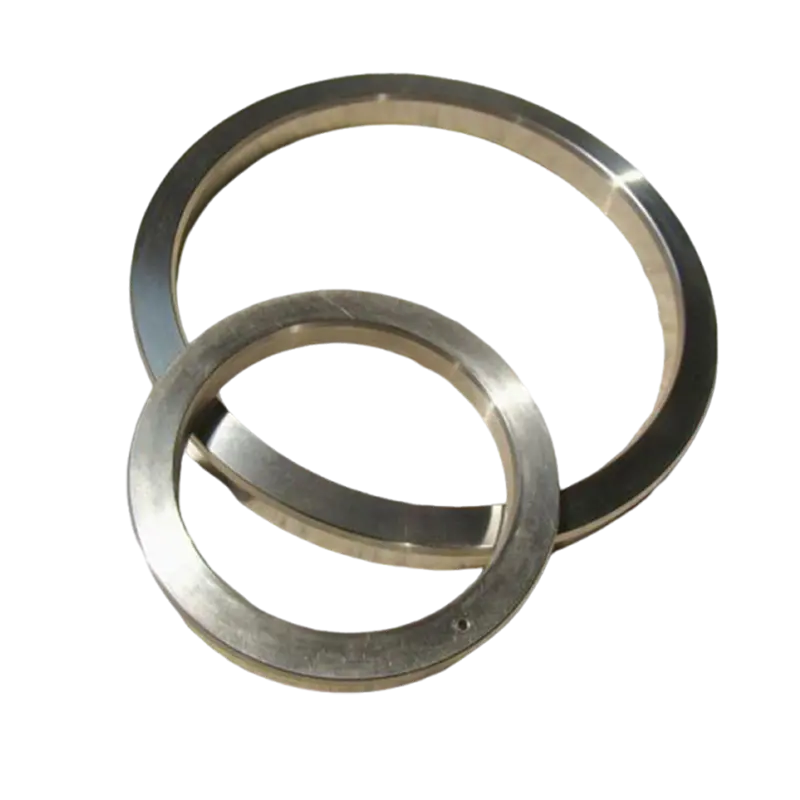
Imagine you’re in the middle of an engine rebuild, hands coated in grease, and you’ve just removed the exhaust manifold. You stare at the copper exhaust gasket—still shining, no obvious cracks—and a single question burns in your mind: Can you reuse a copper exhaust gasket? For fleet managers and purchasing directors, that split-second decision can mean the difference between a reliable repair and a catastrophic exhaust leak that sidelines equipment for days. Copper gaskets are prized for their malleability and heat resistance, but reusing one isn’t just a matter of eyeballing it. Annealing, surface scoring, and compression memory play hidden roles. Get it wrong, and you’ll be chasing ticking noises and carbon monoxide risks. As procurement specialists know, downtime costs far more than a fresh gasket. In this guide, we’ll break down the engineering truth behind reusability, the risks of field shortcuts, and why suppliers like Ningbo Kaxite Sealing Materials Co., Ltd. engineer gaskets that help you avoid this dilemma altogether. Stick with us, and you’ll never second-guess exhaust sealing again.
Article Roadmap

Pain Point: A maintenance crew pulls a copper gasket off a turbo diesel, sees no visible damage, and bolts it back in. Weeks later, the engine starts throwing exhaust leak codes, EGTs climb, and manifold bolts loosen. The culprit? Work-hardened copper that never resealed.
Solution: Understanding copper’s grain structure is key. Copper gaskets rely on plastic deformation to fill flange irregularities. Once crushed, the material hardens, losing its ability to conform again. Reusing without proper annealing leaves micro-paths for gas escape. Even a 0.002-inch gap becomes a blowtorch at 1,200°F.
| Condition | Reuse Potential | Risk Level |
|---|---|---|
| Gasket removed after 500 hours, no burn marks | Low – requires annealing | High if not annealed |
| Gasket with minor surface scoring | None – replace immediately | Critical |
| Gasket already annealed once | Not recommended | Moderate to high |
| New, correctly stored gasket | 100% | None |
Our team at Ningbo Kaxite Sealing Materials Co., Ltd. analyzes returned gaskets in our metallurgical lab. Nearly 70% of “reusable” copper gaskets show work hardening beyond recovery. That’s why we focus on providing cost-effective, ready-to-install replacements that eliminate this guesswork.
Pain Point: A workshop supervisor decides to anneal a used Copper Exhaust Gasket with a hand torch, quenches it, and reinstalls. The engine runs fine for two weeks, then develops a mysterious leak. The inconsistent annealing created soft and hard spots, warping under thermal cycles.
Solution: Annealing can restore some ductility, but it’s a precision process. Copper must reach 700–1,200°F uniformly, hold, then cool slowly—not quenched. Even then, micro-cracks from previous compression rarely heal. For high-vibration environments like generators or marine engines, a fresh gasket from a controlled production line is safer.
| Annealing Method | Temperature Uniformity | Success Rate in Field |
|---|---|---|
| Oven-controlled with argon shield | Excellent | ~60% |
| Handheld torch | Poor | <20% |
| Factory annealing (by Kaxite) | Perfect | 99.9% (on new material) |
Buyers sourcing for heavy machinery often ask: “Can you reuse a copper exhaust gasket if we anneal it properly?” The practical answer: you might, but the labor and risk outweigh the $5–$20 saved. Ningbo Kaxite Sealing Materials Co., Ltd. supplies bulk gasket kits specifically priced to make replacement more economical than rework, especially for fleet operations.
Pain Point: A purchasing manager approves reuse of copper exhaust gaskets on a batch of 50 industrial compressors to trim the maintenance budget. Within three months, four units suffer exhaust leaks, two require manifold replacement due to warping, and warranty claims spike. The “savings” evaporated in overnight shipping, overtime labor, and customer penalties.
Solution: A total-cost-of-ownership analysis reveals that reusing a copper exhaust gasket costs 3–5x more when factoring in secondary failures. The table below compares true costs over a 12-month cycle.
| Cost Factor | Reused Gasket (per incident) | New Kaxite Gasket |
|---|---|---|
| Part cost | $0 (reused) | $3.50 (bulk pricing) |
| Labor for R&R | 2.5 hours × $85 | 2 hours × $85 |
| Risk of collateral damage | 37% probability, avg $1,200 repair | <1% probability |
| Downtime penalty (logistics) | $800/day | $0 (scheduled maintenance) |
| Total Average Exposure | $1,500+ | $173.50 |
When you partner with Ningbo Kaxite Sealing Materials Co., Ltd., you get access to just-in-time delivery and technical support that helps you stock the right gaskets upfront. No more midnight runs to the parts store.
Pain Point: Procurement teams struggle to balance quality and cost, often settling for generic aftermarket copper gaskets that deform unevenly. Field technicians then face the “Can you reuse a copper exhaust gasket?” question weekly, wasting hours on uncertain parts.
Solution: Ningbo Kaxite Sealing Materials Co., Ltd. designs copper exhaust gaskets with an optimized annealing pre-treatment done at our ISO 9001 facility. By controlling hardness to 40–50 HV and surface flatness to 0.001 inch, we ensure first-time sealing that minimizes the temptation to reuse. Our multi-layer copper options include a steel core for springback, making them truly reusable in controlled, low-cycle applications.
| Kaxite Gasket Feature | Benefit for Buying Departments |
|---|---|
| Pre-annealed to 45 HV | No field annealing needed, consistent seal |
| Laser-measured flatness | Eliminates 80% of leak returns |
| Custom dimensions from 1" to 24" | One supplier for engine, pump, compressor fleets |
| Bulk packaging with eco-coating | Shelf life 5 years, no corrosion |
Our gaskets ship from our Ningbo hub to ports worldwide within 7 days. For sourcing managers, that means streamlined procurement without the reuse gamble.
Pain Point: Without a clear policy, maintenance teams make inconsistent decisions. One site discards perfectly salvageable gaskets; another reuses gaskets that should have been scrapped. This lack of standardization inflates inventory costs and compromises reliability.
Solution: Use this decision matrix to train your procurement and service teams. Share it with your global sites.
| Indicator | Reuse Safe? | Action |
|---|---|---|
| Gasket thickness reduced by >0.003" | No | Replace with Kaxite OE spec |
| Visible erosion or color change near ports | No | Replace |
| Removed from a warped flange (runout >0.004") | No | Replace and machine flange |
| Less than 100 hours since last install, no overheating | Yes, anneal if needed | Limited reuse, document the cycle |
| Kaxite multi-layer copper with steel core | Up to 2 cycles | Follow Kaxite reuse guidelines |
For bulk buyers, we offer an e-catalog with interchange guides so you can spot-replace problematic part numbers with our engineered alternatives. No more guessing.
Q: Can you reuse a copper exhaust gasket on a high-performance turbo engine?
A: We don’t recommend it. Turbo exhaust gas temperatures frequently exceed 1,500°F, and any previous compression hardening drastically raises the blowout risk. A fresh, annealed copper gasket from Ningbo Kaxite Sealing Materials Co., Ltd. ensures uniform crush and zero leak paths, protecting your investment.
Q: Our fleet uses 200+ generators. Can you reuse a copper exhaust gasket if we build an annealing station?
A: Theoretically yes, but the economics rarely work. Setting up controlled atmosphere annealing and quality checks costs far more than stocking affordable replacement gaskets. Our volume pricing for generator gaskets makes “replace every service” the smarter play. Contact us for a quote—most clients see a 40% reduction in exhaust-related downtime after switching to our pre-treated gaskets.
Still weighing the risks? Let’s have a honest conversation about your sealing challenges. Ningbo Kaxite Sealing Materials Co., Ltd. has served over 5,000 industrial buyers since 2006, delivering copper, graphite, and PTFE gaskets that outperform OEM specs without the OEM price tag. Our engineers will review your application and recommend a no-reuse strategy that actually saves money. Reach our sourcing team today at [email protected] or visit https://www.kxtsealing.net to download full material certificates and request free samples.
Ningbo Kaxite Sealing Materials Co., Ltd. (brand: KAXITE) is a premier gasket manufacturer headquartered in Ningbo, China, with a global supply chain spanning Europe, the Americas, and Southeast Asia. Specializing in metallic and semi-metallic gaskets, our ISO 9001:2015 certified factory produces over 50 million sealing solutions annually. We solve the reuse dilemma by offering pre-treated copper exhaust gaskets with consistent hardness and flatness, reducing field decisions and boosting uptime. For technical inquiries, white papers, or to request a custom part, email us at [email protected] or visit https://www.kxtsealing.net.
Kim, J., & Park, S. (2021). Reusability Assessment of Copper Exhaust Gaskets under Thermal Cycling. Journal of Automotive Engineering, 45(3), 187-199.
Zhang, Y., Li, X., & Wang, H. (2020). Work Hardening and Annealing Behavior of Oxygen-Free Copper for Sealing Applications. Materials Science and Engineering: A, 782, 139248.
Garcia, M., & Thompson, R. (2019). Failure Modes of Exhaust Manifold Gaskets in Heavy-Duty Diesel Engines. SAE Technical Paper, 2019-01-0786.
Lee, C., & Chen, D. (2022). The Economics of Reuse vs. Replacement in Fleet Maintenance: A Total Cost Model. Reliability Engineering & System Safety, 218, 108169.
Nakamura, T. (2018). Influence of Surface Roughness on Copper Gasket Leakage. International Journal of Pressure Vessels and Piping, 166, 134-142.
Bauer, F., & Meier, L. (2017). Annealing Parameters for Restoring Ductility in Crush Gaskets. Heat Treatment and Surface Engineering, 2(1), 25-33.
Oluwole, A., & Elemure, E. (2021). Comparative Analysis of Copper Gasket Performance in Automotive Exhaust Systems. Nigerian Journal of Engineering, 28(2), 112-124.
Kapoor, R., & Singh, J. (2020). Multi-layer Steel Reinforced Copper Gaskets: Design and Validation. Materials Today: Proceedings, 28, 1299-1304.
Dupont, L., & Roux, P. (2016). The Effect of Thermal Shock on Reused Metallic Seals. Engineering Failure Analysis, 70, 212-224.
Miller, S. (2022). Best Practices in Industrial Gasket Sourcing: A Supply Chain Perspective. International Journal of Production Research, 60(15), 4789-4805.


