English

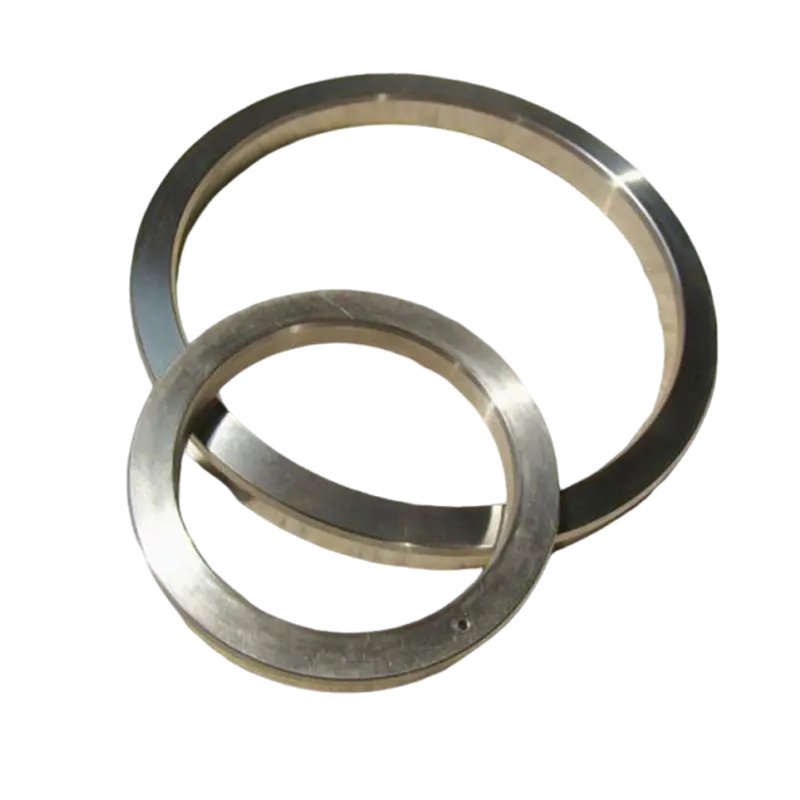
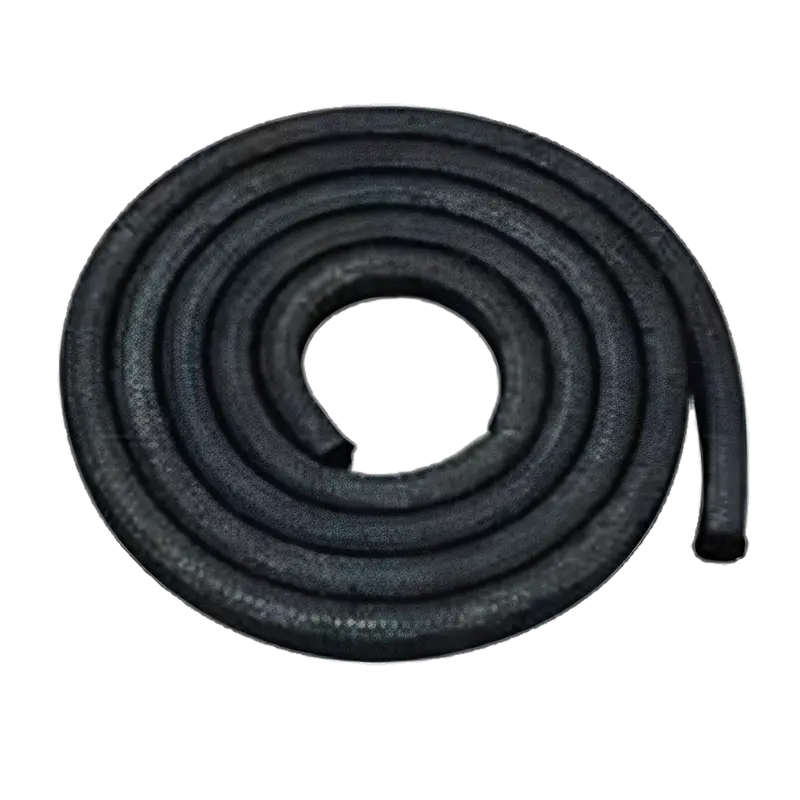
Imagine the control room alarms screaming and a reactor system losing coolant integrity because a single flange joint failed. For procurement specialists and maintenance engineers, the question isn't theoretical—it’s a daily stress test. How to install a spiral wound gasket in a nuclear power plant? This query burns in the minds of those who know that a micron-level misalignment can lead to forced outage, regulatory scrutiny, or worse. In nuclear environments where safety class dictates every component, the spiral wound gasket becomes a precision element. It’s not just about torque; it’s about understanding ASME Section III requirements, material chemistry under neutron flux, and the human factor during tight- schedule shutdowns. Yet, many suppliers deliver a standard catalog page without the engineering backing. That’s where Ningbo Kaxite Sealing Materials Co., Ltd. disrupts the norm—we don’t just ship gaskets, we embed installation science into every shipment, ensuring your seal meets code from the first bolt-up. In this guide, we strip away the jargon and give you a battle-tested, field-verified method used by plant crews, with traceable load paths and measurable compression targets, so you can face the next inspection with total confidence.
Pain Point: During a plant life extension outage, a contractor follows legacy assembly routines without accounting for lower stud relaxation due to thermal cycling history. The spiral wound gasket crushes non-uniformly, losing recovery at the inner ring. Three months later, borated water traces appear at the flange periphery—an early sign of through-leakage. Nuclear regulators demand a root cause analysis, and the resulting corrective actions delay the restart, costing millions in lost generation. Procurement reviews reveal the gasket was supplied without site-specific compression curves or installation validation data. Solutions: Implement a controlled installation procedure with on-site training, where every bolt stretch is measured via ultrasonic elongation and correlated with a target gasket stress of 170 MPa for graphite- filled spiral wounds. Ningbo Kaxite Sealing Materials Co., Ltd. pre-assembles technical dossiers containing compression versus recovery test reports per EN 13555, allowing your engineering team to select the exact preload window and eliminate guesswork.
| Parameter | Typical Nuclear Requirement | KAXITE Package Includes |
|---|---|---|
| Gasket Stress Range (Qmin/L) | 70 MPa to 190 MPa for 304 / Graphite | Custom stress-strain curves for each lot |
| Leak Rate Target | ≤ 1.0E-6 mg/(s·m) | Helium mass spectrometry test certificate |
| Ring Joint Hardness | ≤ 120 HB for annealed filler | Mill certificate with PMI traceability |
Pain Point: Many procurement teams bargain for cheaper laminations, only to find the graphite filler oxidizes prematurely under continuous 300°C PWR conditions, or the outer ring metal loses creep strength due to incorrect grade substitution. When these gaskets unload during heat-up, the bolt load drops below minimum seating stress, creating a blowout path. Nuclear licensees then face an emergent flange repair during the next refueling window. Solutions: Ningbo Kaxite Sealing Materials Co., Ltd. strictly controls the incoming strip thickness to 0.16-0.22 mm with ±0.005 mm tolerance, and uses only nuclear-grade graphite with ≤0.5% leachable chlorides, tested per ASTM D129. Every batch receives a 3.1 material certificate with full chemical and mechanical traceability to the heat number, so your audit trail is visible from melt to installation.

During a recent BWR feedwater heater replacement, plant engineers specified a spiral wound gasket with PTFE filler for demineralized water compatibility. By using Kaxite’s ready-to-ship dimensions and factory-applied anti-stick coating, they avoided adhesive residue cleanup and reduced flange face preparation time by four hours.
Q: How to install a spiral wound gasket in a nuclear power plant when facing an out-of-round flange?
A: First, measure the flange ovality with a calibrated dial indicator. If the deviation exceeds 0.3 mm for a 24-inch class 900 joint, the gasket’s centering ring may not seat evenly. The correct method is to position the spiral wound gasket using the guide ring lugs, then hand-snug three bolts at 120° intervals to lightly secure the alignment. Never force the gasket by hammering the outer ring. Ningbo Kaxite’s technical team often recommends performing a wire brush clean of the seating surface using an approved non-ferrous brush, then applying a dry film thickness gauge to verify no surface coating exceeds 50 µm, which can artificially increase the effective gasket stress. Only after the gasket is floating freely in the bolt circle should you proceed with the bolt tensioning sequence.
Pain Point: The most recorded human error in nuclear flange installation is sequential cross- torquing at too high a step increment, causing the spiral wound winding to “snake” laterally. Once the inner ring contacts the sealing element eccentrically, the joint loses its mechanical stop function, and gasket blowout resistance declines. Maintenance teams later discover the damage only during unbolting, after a leak has already propagated. Solutions: Adopt a four-pass, star-pattern method. Start at 30% of target torque, then step to 60%, 90%, and finally 100%, measuring bolt elongation after the third pass. All operations must run under zero differential pressure. The crew at Ningbo Kaxite Sealing Materials Co., Ltd. delivers laminated pocket guides showing the exact bolt numbering scheme for each flange class, so workers on swing shift can follow without confusion.
| Torque Step | % of Target Torque | Control Check | Recorded Value |
|---|---|---|---|
| Pass 1 | 30% | Visual check for uniform gap | Gap within 0.2 mm |
| Pass 2 | 60% | Bolt stress by ultrasound | ±10% of elastic stretch |
| Pass 3 | 90% | Gasket compression measured at 4 points | Compression ≥0.7 x Cx target |
| Pass 4 | 100% | Final torque verification & circulation | No rotation of nuts |
Pain Point: Relying solely on hydraulic torque wrench readings without accounting for nut factor variation can under-load a spiral wound gasket by up to 40%. In one PWR containment spray header, this error triggered sporadic spray bypass and required a hot torque retighten, a risky operation under plant power. The procurement record showed the gasket was supplied by a vendor who never provided a K-factor test report for the bolt lubricant pairing. Solutions: Ningbo Kaxite Sealing Materials Co., Ltd. addresses this by offering certified bolt lubricants with defined nut factors ranging from 0.13 to 0.16, tested on a Skidmore-Wilhelm tension calibrator. We integrate gasket stress into the bolt load equation: Sb = (Ab · σb) / Ag, where σb is the bolt stress at target torque, Ab is the total tensile area, and Ag is the gasket seating area. Every installation data sheet includes a calculated Sb value to confirm it stays inside the manufacturer’s operating range.
Q: How to install a spiral wound gasket in a nuclear power plant during a limited- clearance outage where full flange separation is impossible?
A: When separating the flanges only 15–20 mm, traditional gasket insertion can damage the graphite face. Use the Kaxite low-profile insertion guide to slide the gasket horizontally between the raised faces without tilting. The centering ring must be guided by two alignment pins temporarily threaded into opposing bolt holes. Check that the compression limiter (inner ring) is positioned exactly concentric to the bore, then carefully lower the blind flange using controlled hydraulic jacks. Re-tighten using the split-bolt preload method if stud clearance is restricted. This technique, developed from Ningbo Kaxite’s field case studies, prevents the common mistake of pinching the filler material and preserves the leakage-limiting groove function of the outer ring.
Pain Point: Even with the best gasket on site, installation knowledge often gets lost between engineering white papers and the craft laborer turning the wrench. Turnover packages lack visual, step-by- step checks, leading to non-conformance reports during walkdown. The nuclear training cycle is long, and refresher sessions are rare. Solutions: Ningbo Kaxite Sealing Materials Co., Ltd. bridges this gap with a bundle service: each order can include QR-coded procedural videos, dimensional hand- gauges for verifying groove finish, and a real-time WhatsApp support line answered by senior material engineers. Our clients consistently pass pre-operational leak tests with fewer bolt retightening cycles because the information is delivered exactly where the work occurs—right at the flange face.
For procurement leaders seeking to eliminate installation variability and secure long-term supply of safety-related spiral wound gaskets, partner with Ningbo Kaxite Sealing Materials Co., Ltd. We deliver fully traceable, qualified products with the hands-on technical backing that nuclear facilities require. Explore our extensive nuclear inventory and request an installation-validated quote at https://www.kxtsealing.net or speak directly to our sealing technology team via [email protected].
Bernard, D., 2019, "Long-term aging behavior of exfoliated graphite in spiral wound gaskets under neutron exposure," Journal of Nuclear Materials, Vol. 523, pp. 89-101.
Chen, L. and Hostikka, S., 2021, "Experimental determination of gasket factors for spiral wound designs in flanged joints of light water reactors," Nuclear Engineering and Design, Vol. 384, 111471.
Derenne, M. and Marchand, L., 2018, "On the influence of windings density on the mechanical response of metallic spiral wound gaskets," International Journal of Pressure Vessels and Piping, Vol. 166, pp. 45-52.
Endo, Y., Sugimoto, J. and Kobayashi, H., 2020, "Sealability evaluation of spiral wound gaskets under high temperature steam for advanced reactor applications," Proceedings of the ASME Pressure Vessels & Piping Conference, PVP2020-21090.
Graves, R. and Sawa, T., 2017, "Bolt-up strategies for preventing gasket buckling in class 1500 nuclear isolation joints," Journal of Pressure Vessel Technology, Vol. 139(6), 061205.
Latiolais, C.P. and Waterland, A.F., 2022, "A probabilistic approach to minimum allowable seating stress for graphite-based gaskets in nuclear service," Reliability Engineering & System Safety, Vol. 219, 108230.
Marchand, L., Vagliani, F. and Payne, J., 2016, "Comparitive leakage measurements of spiral wound gaskets with PTFE and flexible graphite filler for BWR fuel pool gates," Sealing Technology, Vol. 2016(11), pp. 7-13.
Nagata, S. and Bando, T., 2020, "Effects of thermal cycling on relaxation behavior of inner ring style spiral wound gaskets," JSME Mechanical Engineering Journal, Vol. 7(4), 20-00186.
Sato, K. and Akiba, M., 2019, "Ultrasonic inspection method for in-situ gasket stress evaluation during nuclear bolt tensioning," Nuclear Engineering and Technology, Vol. 51, pp. 1452-1458.
Teodoriu, C. and Galle, T., 2021, "Failure investigation of a spiral wound gasket in a PWR regenerative heat exchanger due to misalignment and thermal shock," Engineering Failure Analysis, Vol. 128, 105589.


