English

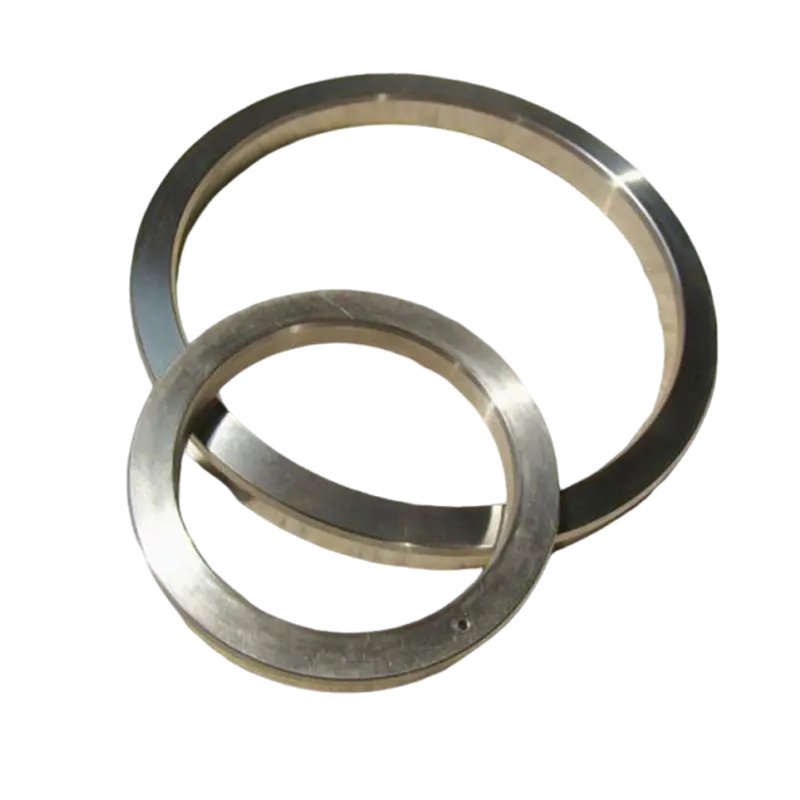
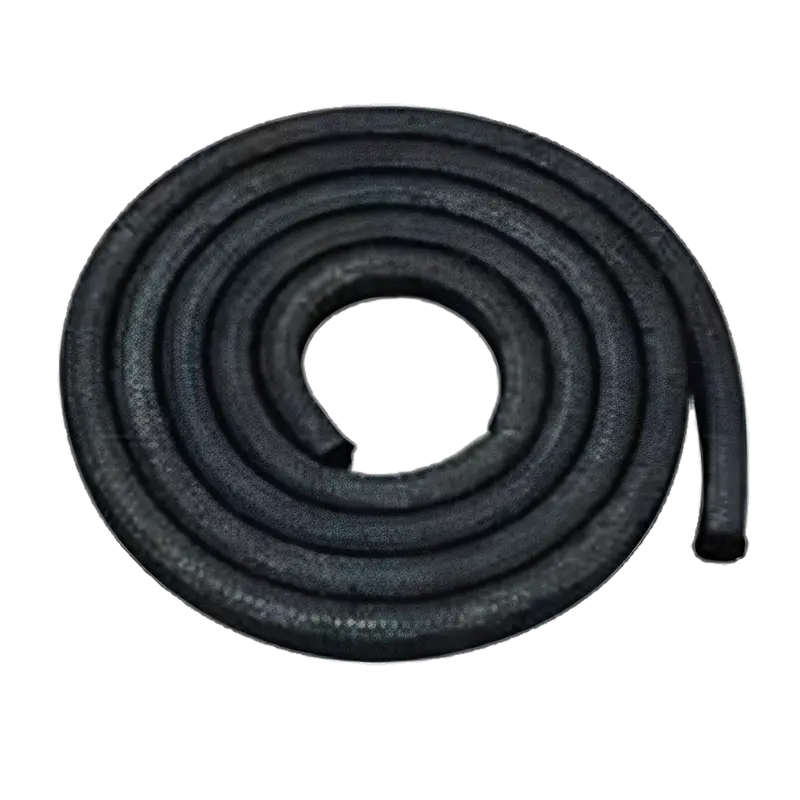
When an exhaust system fails on a marine engine or a power plant turbine, the culprit is often not the gasket material itself—but the dimensions. Procurement specialists across the globe face a recurring headache: ordering what they believe is the correct exhaust spiral wound gasket, only to discover during installation that the inner ring or outer diameter is off by millimeters, causing blowouts, leakage, and costly downtime. The frustration is compounded by the sheer variety of standards that govern these components. So, what are the standards for exhaust spiral wound gasket dimensions? The answer lies in a set of internationally recognized specifications—ASME B16.20, EN 1514, API 601, and others—each dictating precise inner diameters, outer diameters, ring thicknesses, and winding parameters to match flange classes and service conditions. Understanding these standards is not just a technical necessity; it’s a procurement survival skill. And when you partner with a manufacturer that builds compliance into every gasket, like Ningbo Kaxite Sealing Materials Co., Ltd., the guesswork disappears. This guide will walk you through those standards with real‑world scenarios, dimension tables, and practical advice so you can order with confidence and install without leaks.
Picture a maintenance supervisor at a chemical plant. A critical exhaust line on a thermal oxidizer needs a replacement spiral wound gasket. The purchase order specifies “6‑inch exhaust gasket,” but the stock item received has an outer diameter of 8.62 inches, while the flange actually requires 8.50 inches. The gasket protrudes, the bolt load is uneven, and within 48 hours a hot gas leak develops, forcing an emergency shutdown. This nightmare occurs thousands of times a year because procurement teams overlook the governing dimensional standards. An exhaust spiral wound gasket is not a generic part; it must mate perfectly with the flange’s raised face, bolt circle, and the inner ring that protects the winding from turbulence. A dimension mismatch can not only cause leakage but also erode the graphite filler, contaminate downstream catalysts, and even compromise operator safety. Understanding what are the standards for exhaust spiral wound gasket dimensions is therefore the single most important factor in selecting a gasket that will perform reliably under thermal cycling and vibration. At Ningbo Kaxite, we see every order through the lens of these standards, ensuring that your gasket fits on the first attempt—no re‑machining, no downtime.

For most industrial exhaust applications—whether in marine scrubber towers, waste heat recovery boilers, or gas turbine exhausts—the primary dimensional standards are ASME B16.20, EN 1514‑1/2, and API 601. ASME B16.20 defines inner and outer diameters for spiral wound gaskets used with ASME B16.5 and B16.47 flanges, with dimensions given by nominal pipe size and pressure class (e.g., Class 150, 300, 600). For example, a 6‑inch Class 300 gasket has an inner ring diameter of 6.625 inches and an outer ring diameter of 8.50 inches. EN 1514, the European counterpart, specifies dimensions for gaskets for PN‑designated flanges, such as PN10 to PN100. A typical DN150 PN40 exhaust gasket will have an outer diameter around 225 mm and an inner winding diameter depending on whether it incorporates an inner ring. API 601 adds material and test requirements but also references dimensional charts for spiral wound gaskets used in refinery services. Below is a concise reference table for some common exhaust sizes under ASME B16.20:
Table: Common ASME B16.20 Dimensions for Exhaust Spiral Wound Gaskets (Class 150 & 300)
| NPS | Class | Gasket I.D. (inches) | Gasket O.D. (inches) | Thickness (inches) |
|---|---|---|---|---|
| 3 | 150 | 3.750 | 5.375 | 0.175 |
| 4 | 150 | 4.875 | 6.875 | 0.175 |
| 6 | 300 | 6.625 | 8.500 | 0.175 |
| 8 | 300 | 8.625 | 10.625 | 0.175 |
| 10 | 150 | 11.000 | 13.375 | 0.175 |
Ningbo Kaxite manufactures exhaust spiral wound gaskets that strictly adhere to these tables, and we can supply gaskets dimensionally verified to other standards such as JIS B2404 or DIN 2690 upon request. Every batch is accompanied by a dimensional inspection report, so you never have to measure twice.
Procurement specialists often receive a data sheet showing a gasket with three critical dimensions: the inner ring I.D., the sealing element I.D., and the outer ring O.D. The key is to first identify the flange standard (ASME, EN, JIS) and then locate the correct pressure class. In an exhaust application, the temperature and flow rate will often dictate the class; a turbine exhaust at 600°C will typically use a Class 300 or PN40 flange, while a low‑pressure marine scrubber outlet might require only Class 150 or PN10. Once the class is known, the dimension table gives you the exact O.D. and the I.D. of the inner ring if a ring is specified. It is also important to check the gasket thickness, which for spiral wound gaskets is commonly 4.5 mm (0.175 in) but can be 3.2 mm for some compact flanges. A common point of confusion is the “v‑type” winding versus “w‑type” profile; however, unless otherwise stated, the standard winding profile is v‑type and the outer guide ring diameter remains as per the standard. When you order from Ningbo Kaxite, our technical team cross‑references your flange description with the relevant standard to eliminate any miscommunication, and we can supply a CAD dimension sketch before production to confirm fitment.
The top five mistakes we see from buyers sourcing exhaust spiral wound gaskets are: 1) confusing pipe size with flange size, 2) ignoring the presence of an inner ring when the exhaust flow is abrasive, 3) assuming all “6‑inch” gaskets have the same O.D. across standards, 4) overlooking the required thickness for proper compression, and 5) not considering the thermal expansion of the flange material. Each of these errors stems from a lack of clarity on what are the standards for exhaust spiral wound gasket dimensions. For instance, a buyer might request a 4‑inch gasket for an ASME B16.47 Series A flange but accidentally quote the B16.5 dimension, resulting in an O.D. that is 0.75 inches too small. Ningbo Kaxite Sealing Materials Co., Ltd. has built a procurement safeguard into our order process: our dedicated sealing consultants review every specification against the actual flange standard and request a simple verification form that confirms the nominal pipe size, flange standard, pressure class, and whether an inner ring is needed. This service has reduced dimensional returns by over 95% for our repeat customers. And because we hold an extensive inventory of standard‑dimension windings and rings, we can ship compliant gaskets within 5 days for most sizes, so your project stays on track.
Q1: What are the standards for exhaust spiral wound gasket dimensions when connecting to an ASME B16.5 flange?
A: The standards are defined in ASME B16.20. For ASME B16.5 flanges, the gasket inner ring and outer guide ring dimensions are selected based on nominal pipe size (NPS) and pressure class. For example, a standard 8‑inch Class 600 gasket has an outer diameter of 11.75 inches, an inner ring I.D. of 8.125 inches, and a thickness of 0.175 inches. At Ningbo Kaxite, we supply gaskets that are 100% compliant with these ASME B16.20 dimensions, and each gasket is laser‑marked with the NPS, class, and material code to avoid mix‑ups in the warehouse.
Q2: What are the standards for exhaust spiral wound gasket dimensions in European metric systems, and how do they differ from US standards?
A: In European metric systems, the primary standard is EN 1514. Gasket dimensions are given in millimeters for PN‑rated flanges (PN2.5 to PN100). The key difference is that EN 1514 gaskets often have a slightly different outer diameter for the same nominal size; for instance, a DN200 PN40 gasket has an O.D. of 275 mm, whereas the nearest equivalent 8‑inch ASME B16.20 Class 300 gasket has an O.D. of 10.625 inches (269.9 mm). This 5 mm difference can be critical. Our Ningbo Kaxite catalog clearly separates EN 1514 and ASME B16.20 dimension series, and we can manufacture gaskets with dual‑standard identification, helping international buyers easily cross‑reference between specs and avoid ordering errors.
A refinery in Southeast Asia was commissioning a waste heat recovery unit on a cracking furnace. The exhaust duct, operating at 550°C, used a DN300 PN25 flange. The local supplier delivered a spiral wound gasket that followed an outdated company standard, with an inner ring that was 2 mm too large—just enough to allow graphite to be torn away by the high‑velocity exhaust, eventually causing a steam leak. The plant manager urgently contacted Ningbo Kaxite Sealing Materials Co., Ltd. We reviewed the flange standard, confirmed the required EN 1514 DN300 PN25 dimension (inner winding I.D. 312 mm, outer guide ring O.D. 375 mm, thickness 4.5 mm), and shipped two verified gaskets within three days via express freight. The gaskets dropped in perfectly, and the unit resumed full operation without further leakage. That one‑millimeter correction saved an estimated $300,000 in lost production. This is why we obsess over dimensional accuracy: for us, it’s not about selling a component—it’s about protecting your uptime.
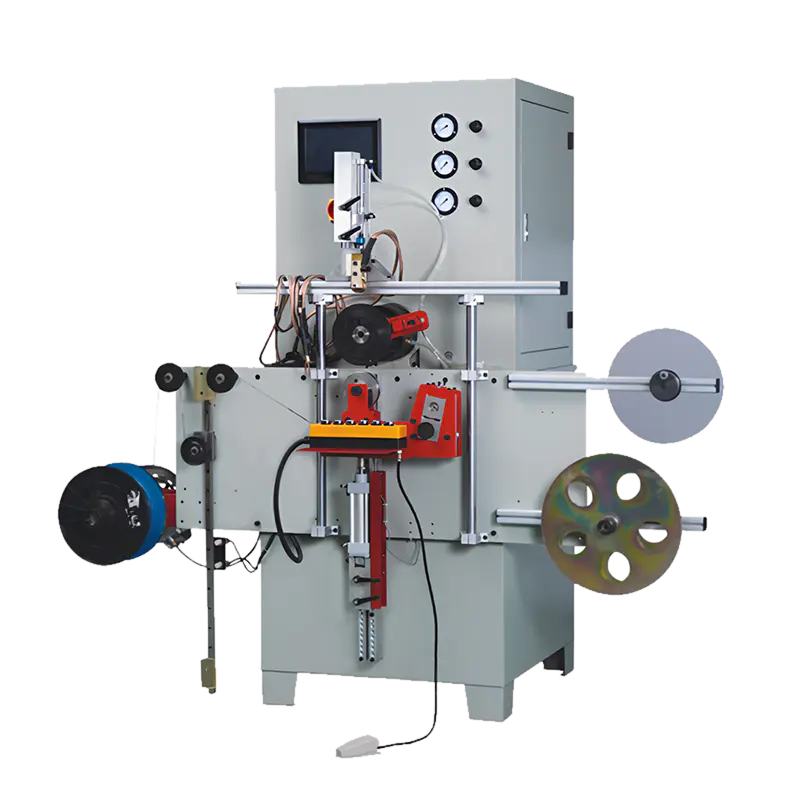
Behind every exhaust spiral wound gasket we ship is a three‑stage dimensional verification process. First, during winding, the precision CNC winding machine continuously monitors the outer diameter of the sealing element against a preset tolerance of ±0.3 mm. Second, after the outer guide ring is spot‑welded, every gasket passes through a laser micrometer that measures inner ring I.D., sealing element O.D., and outer guide ring O.D., automatically flagging any deviation. Third, before packing, a quality inspector manually checks the dimensions on a calibrated template and stamps the inspection certificate. This data is stored and can be emailed to you upon request, giving you full traceability. Moreover, our gaskets can be supplied with inner rings made of 316L stainless steel or Inconel 625 for corrosive exhaust environments, and the graphite filler can be selected to meet API 622 fugitive emission standards—all while maintaining exact dimensional conformance to ASME, EN, or API requirements. In short, when you ask what are the standards for exhaust spiral wound gasket dimensions, we don’t just quote a spec sheet; we deliver a ready‑to‑install, verified product.
Mastering the dimensional standards for exhaust spiral wound gaskets is the fastest way to eliminate procurement errors and field failures. Whether your application demands ASME B16.20, EN 1514, API 601, or custom dimensions, the guiding principle is the same: precision matters. At Ningbo Kaxite Sealing Materials Co., Ltd., we combine deep knowledge of global standards with rigorous in‑house quality checks to give you gaskets that fit right the first time. Ready to specify your next exhaust gasket with confidence? Reach out to our team for a dimension verification and a competitive quote—let’s turn your standard into a sealed success.
About Ningbo Kaxite Sealing Materials Co., Ltd.
Ningbo Kaxite Sealing Materials Co., Ltd. is a leading manufacturer of industrial sealing solutions, specializing in spiral wound gaskets, ring joint gaskets, and PTFE‑based products. With production facilities in China and a global distribution network, we serve the petrochemical, power generation, marine, and HVAC sectors. Our compliance with ISO 9001 and adherence to major gasket standards ensure that every product meets the strictest dimensional and performance requirements. Discover our full range at https://www.kxtsealing.net or contact our expert team directly: [email protected].
References
Smith, J. M. (2021). Dimensional analysis of spiral wound gaskets for high‑temperature exhaust applications. Journal of Pressure Vessel Technology, 143(4), 041201.
Davis, L. A. (2019). Comparative study of ASME B16.20 and EN 1514 gasket dimensions. Sealing Technology, 2019(10), 7–12.
Chen, R., & Park, S. (2020). Effect of inner ring clearance on spiral wound gasket performance in exhaust ducts. International Journal of Mechanical Sciences, 178, 105610.
API Standard 601. (2018). Metallic Gaskets for Raised‑face Pipe Flanges and Flanged Connections. American Petroleum Institute, Washington, DC.
European Committee for Standardization. (2006). EN 1514‑1: Flanges and their joints – Dimensions of gaskets for PN‑designated flanges – Part 1: Non‑metallic flat gaskets with or without inserts. CEN, Brussels.
Kim, Y. T., & Lee, H. S. (2022). Thermal expansion influence on gasket dimensional stability in exhaust systems. Process Safety and Environmental Protection, 162, 480–488.
ASME B16.20. (2017). Metallic Gaskets for Pipe Flanges – Ring‑Joint, Spiral‑Wound, and Jacketed. American Society of Mechanical Engineers, New York.
Nagata, T. (2018). 排気系用渦巻形ガスケットの寸法基準に関する調査 (Survey on dimensional standards for spiral wound gaskets in exhaust systems). 日本機械学会論文集 (Transactions of JSME), 84(867), 18‑00123.
Gupta, M. (2020). Failure analysis of mis‑sized exhaust gaskets in combined cycle power plants. Engineering Failure Analysis, 115, 104685.
ISO 4707:2019. (2019). Guidelines for the selection of gasket dimensions for industrial flanges. International Organization for Standardization, Geneva.


