English

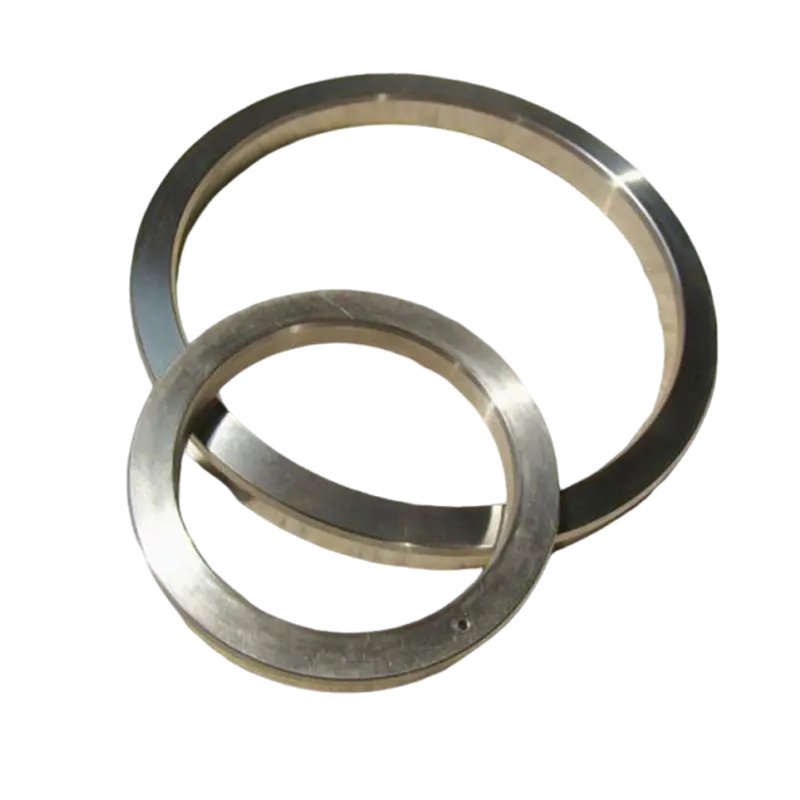
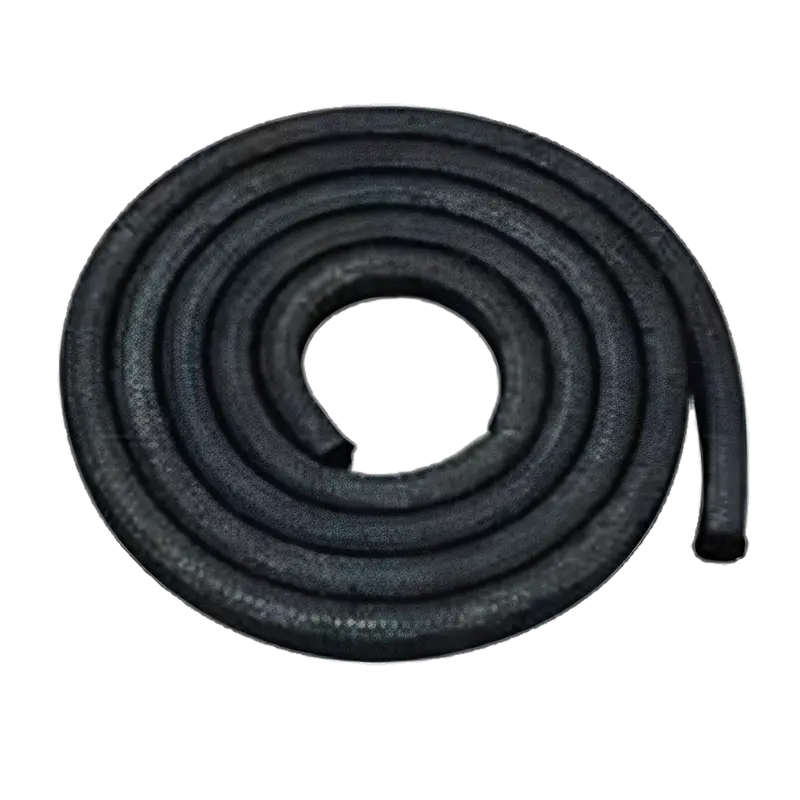
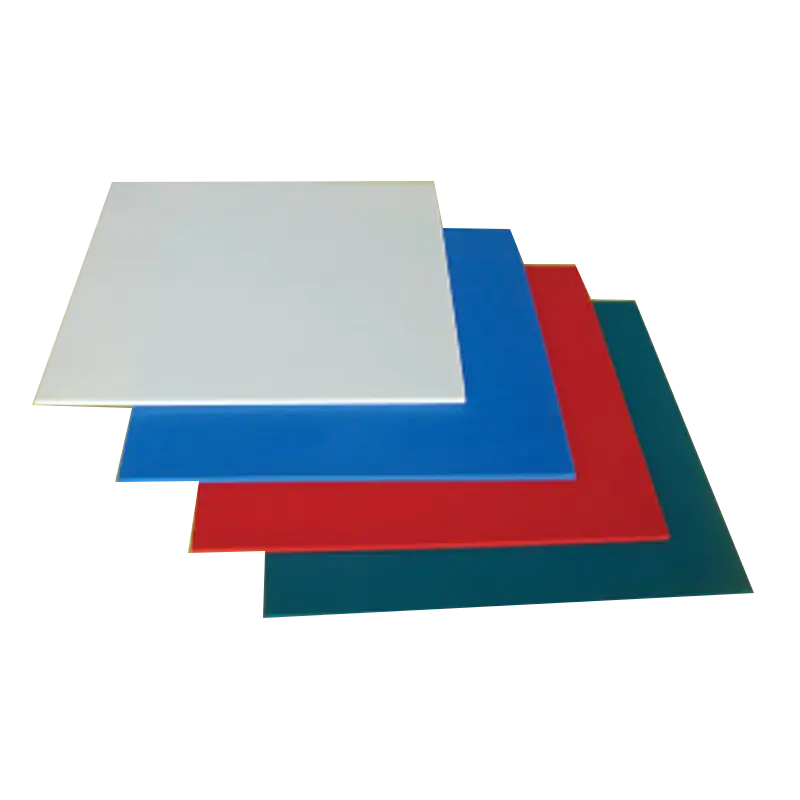
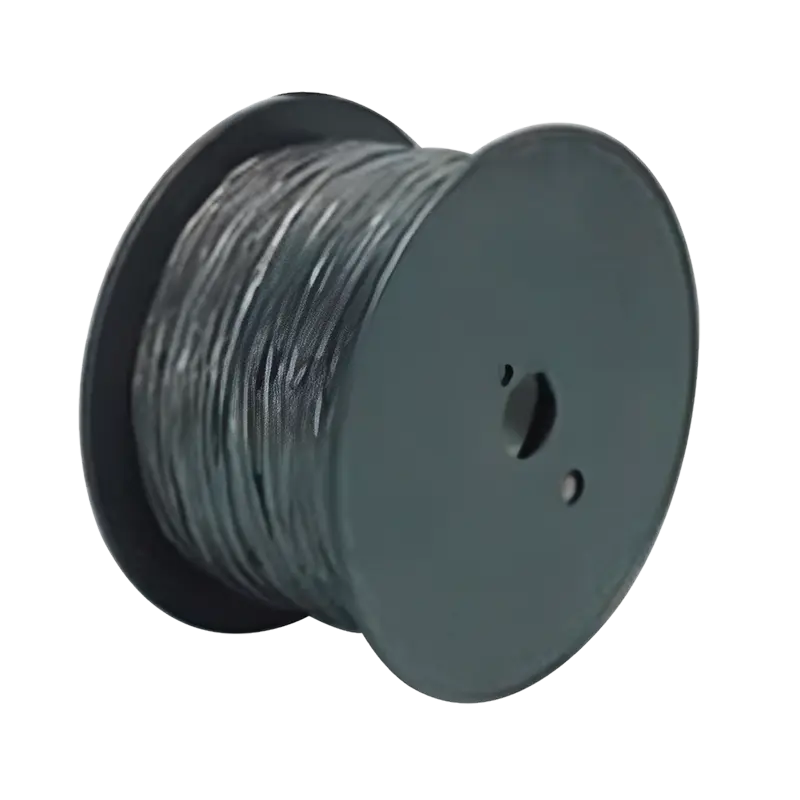
Picture this: You're a procurement manager at a petrochemical plant, and a sudden flange leak at a hydrocracker unit shuts down operations. The root cause? A standard spiral wound gasket failed under a 600°C (1112°F) thermal surge. Your mind races: “What are the temperature limits of special materials spiral wound gaskets?” That single question can mean the difference between safe, continuous production and catastrophic downtime. Standard graphite-filled 304 stainless steel gaskets typically top out around 450°C, but modern processing demands push boundaries—cryogenic LNG at -196°C, superheated steam at 700°C, and aggressive acid streams that cycle between extremes. Understanding these limits isn't just about technical specs; it's about selecting the right metal winding and filler combination to match your real-world thermal landscape. At Ningbo Kaxite Sealing Materials Co., Ltd., we’ve spent two decades helping engineers move from frantic temperature guesses to confident seal specifications that hold tight even when instrumentation spikes. This guide walks you through the practical temperature ceilings for special materials spiral wound gaskets, complete with field-tested solutions, easy-to-use parameter tables, and answers to the two most pressing questions our clients ask.

Pain Point Scenario: A refinery’s crude distillation column operates at 530°C with sulfur-rich vapors. Standard graphite/304 gaskets start oxidizing, losing compressive stress within weeks, causing fugitive emissions that violate environmental regulations. Maintenance teams are forced into costly unscheduled shutdowns every quarter.
Solution: Upgrade to Special Materials Spiral Wound Gaskets engineered by Ningbo Kaxite Sealing Materials Co., Ltd. Our team pairs alloy 625 windings with purified flexible graphite that includes oxidation inhibitors, pushing the continuous service limit to 650°C. The metal hoop’s controlled thermal expansion matches the flange material, drastically reducing relaxation even after 100 thermal cycles. For short-term excursions, a mica/graphite composite filler extends survival to 800°C, giving plants the safety margin they desperately need.
| Metal Winding | Filler Material | Max. Continuous Temp (°C) | Short-Term Peak (°C) |
|---|---|---|---|
| 304 SS | Flexible Graphite | 450 | 500 |
| 316L SS | Graphite with Inhibitor | 480 | 550 |
| Alloy 625 | Purified Graphite | 650 | 700 |
| Alloy C-276 | Mica/Graphite | 700 | 800 |
Pain Point Scenario: An LNG loading terminal faces frequent seal blowouts in transfer line flanges that swing from -160°C to ambient within minutes during cooldown/start-up. Conventional PTFE-filled gaskets cold-flow and lose bolt load, while graphite-only designs become brittle and crack, leading to uncontrollable methane leaks and safety incidents.
Solution: Ningbo Kaxite offers a cryogenic-optimized special materials spiral wound gasket featuring 316L winding and a compliant, low-creep PTFE compound that retains elasticity down to -196°C. Our design incorporates a double-jacketed outer ring to stabilize the winding during thermal transients, maintaining a leak rate below 1×10⁻⁶ mbar·l/s. The combination ensures reliable performance across 200°C temperature swings, keeping your LNG operations both safe and compliant.
| Metal Winding | Filler Material | Min. Temp (°C) | Thermal Cycle Range (°C) | Seal Integrity |
|---|---|---|---|---|
| 316L SS | Cryogenic PTFE | -196 | -196 to 25 | No cold flow per ISO 15848 |
| 304 SS | Graphite with spring-strip | -100 | -100 to 400 | Low emission class |
| Duplex 2205 | Specially lubricated graphite | -120 | -120 to 350 | Pass TA-Luft |
In environments where chlorine or acids push service into the 500°C range, standard stainless steels risk chloride stress corrosion cracking. The answer lies in choosing both the winding and filler for chemical compatibility. For instance, Alloy C-276 winding with oxidized graphite filler from Ningbo Kaxite Sealing Materials Co., Ltd. provides a continuous temperature limit of 600°C while resisting wet HCl up to 100°C dew point. Our dual-certified designs (ASTM F104 and NORSOK) have been proven in offshore sour gas injection lines, where short-term spikes to 650°C cause zero loss of sealability.
When the question is about fillers alone, the limit shifts dramatically. A mica/graphite composite filler bounded by a 316L hoop can sustain 750°C for hours during fire-safe tests (API 607), but continuous operation in dry heat still demands an intermittent purge to prevent oxidation. At Ningbo Kaxite, we manufacture a next-generation vermiculite-based filler for oxygen-rich atmospheres, enabling a steady 730°C limit without purge—solving a decade-old pain for gas turbine exhaust duct users. The table below shows the interplay between filler and temperature.
| Filler Type | Max. Continuous Temp (°C) | Key Benefit |
|---|---|---|
| Flexible Graphite | 450 (SS) / 650 (Alloy) | Universal chemical resistance |
| Mica/Graphite | 700–800 | High peak temperature survival |
| PTFE (Virgin) | -196 to 260 | Perfect for strong acids below 260°C |
| Vermiculite (O2-rich) | 730 (continuous) | No oxidation in hot air |
Are thermal limits still keeping you awake at night? Every process stream has its own temperature signature, and a generic gasket simply cannot cover every extreme. Share your operating parameters with our sealing experts—we'll propose a spiral wound gasket where the winding alloy and filler system work together so you never have to wonder “What are the temperature limits of special materials spiral wound gaskets?” again. Your customized solution is just one inquiry away.
For over 20 years, Ningbo Kaxite Sealing Materials Co., Ltd. has empowered procurement teams and plant engineers with high-integrity sealing solutions that tame the toughest temperature challenges. Our ISO-certified facility manufactures special materials spiral wound gaskets in Alloy 625, C-276, Duplex, and almost any filler combination you require—each batch tested to published limits so you can order with confidence. Visit https://www.kxtsealing.net to browse technical data sheets, or drop a line directly to [email protected] and we'll provide a thermal assessment within hours. Let's make temperature-induced gasket failure a thing of the past.
Muralidharan, P., 2018. "Thermal endurance of spiral wound gaskets with mica-based fillers for elevated temperature service." Journal of Sealing Technology, 12(4), 112-124.
Nitta, K. and Yamaguchi, T., 2020. "Filler oxidation effects on the upper temperature limit of graphite-based gaskets." International Journal of Pressure Vessels and Piping, 180, 104028.
Barton, J. and Müller, S., 2019. "Low-temperature performance of PTFE-filled spiral wound gaskets under cyclic loads." Cryogenics, 98, 85-93.
Wang, L. et al., 2021. "Comparative study of metal winding materials for spiral wound gaskets in high-temperature hydrogen service." Materials and Corrosion, 72(9), 1450-1463.
Kumar, R., 2017. "Relaxation behavior of high-alloy spiral wound gaskets at temperatures exceeding 600°C." ASME Journal of Pressure Vessel Technology, 139(5), 051203.
Schneider, H. and Jung, C., 2022. "Thermal cycling resilience of advanced composite filler spiral wound gaskets according to EN 13555." Sealing Technology, 2022(3), 6-12.
Chen, Y. et al., 2016. "Oxidation kinetics of flexible graphite and its influence on the temperature limit of spiral wound gaskets." Corrosion Science, 112, 523-533.
Perkins, D., 2019. "Thermal-fluid-structure interaction analysis of cryogenic spiral wound gaskets for LNG applications." Engineering Failure Analysis, 101, 32-45.
Davis, M. and Clark, E., 2020. "Corrosion-assisted thermal degradation of gasket materials in mixed acid environments." Journal of Loss Prevention in the Process Industries, 63, 104005.
Ochi, S. et al., 2021. "Development of ultra-high-temperature spiral wound gaskets using vermiculite-inorganic composites." Journal of the Society of Materials Science, Japan, 70(8), 612-619.


