English

What is the difference between fiberglass and glass fiber? This common question often leads to confusion among industry professionals and procurement specialists. While the terms are frequently used interchangeably in casual conversation, understanding the precise distinction is crucial for making informed material selections, ensuring project specifications are met, and optimizing supply chain decisions. Essentially, the core difference lies in their form and application: 'glass fiber' typically refers to the raw material—thin strands of glass—used as a reinforcement, whereas 'fiberglass' commonly denotes the finished composite material created when these glass fibers are combined with a polymer resin matrix. For procurement teams sourcing materials for sealing, insulation, or composite parts, this distinction directly impacts performance, cost, and supplier evaluation. Recognizing the correct terminology prevents specification errors and streamlines communication with manufacturers like Ningbo Kaxite Sealing Materials Co., Ltd., ensuring you get the exact material solution your project demands.
Article Outline:
Imagine you're finalizing a purchase order for a high-temperature gasket project. Your technical team specifies " Glass Fiber reinforcement," but a supplier's catalog lists "fiberglass fabric." Is it the same? Using the wrong term in your RFQ can lead to receiving an incompatible finished composite instead of the raw reinforcing fabric you need, causing project delays, budget overruns, and performance failures. The key is to clarify the state of the material. Glass fiber is the fundamental building block—a versatile, high-strength filament available as yarn, roving, or chopped strands. It's the engineered ingredient you select for its specific properties like tensile strength or thermal resistance. Fiberglass is the end product, a molded or laminated item like a panel or pipe, where the glass fibers are locked within a plastic. For precise sourcing, always specify whether you need the raw reinforcement material (glass fiber) or a fabricated part (fiberglass). Partnering with a specialized manufacturer like Ningbo Kaxite Sealing Materials Co., Ltd. eliminates this guesswork. Their expertise ensures you procure the correct base material—be it glass fiber yarn for braiding or woven tape for sealing—tailored to your exact application, guaranteeing performance and avoiding costly specification errors.
| Parameter | Glass Fiber (Raw Material) | Fiberglass (Composite Product) |
|---|---|---|
| Primary Form | Filaments, Yarns, Rovings, Chopped Strands | Molded Parts, Panels, Tubes, Fabricated Shapes |
| Core Composition | Silica-based glass | Glass fibers + Polymer resin (e.g., polyester, epoxy) |
| Procurement Focus | Material properties (tex, twist, sizing) | Product specifications (dimensions, mechanical ratings) |
| Key Sourcing Question | "What are the filament diameter and tensile strength?" | "What is the product's load capacity and operating temperature?" |

Your project requires a material that withstands 500°C for industrial sealing. You find two data sheets: one for "E-Glass Fiber" and another for "Fiberglass Reinforced Polymer (FRP)." Comparing them directly is like comparing flour to a baked cake. The glass fiber datasheet details the inherent properties of the strands: composition (E-glass, S-glass), filament diameter (microns), and the specialized coating or "sizing" applied to ensure bond compatibility with resins or rubbers. This sizing is critical—it dictates how well the fiber integrates into your final sealant or composite. The FRP datasheet, however, lists properties of the combined system: flexural strength, heat deflection temperature, and chemical resistance, which depend as much on the resin as the glass. The procurement pitfall is assuming the composite's properties are inherent to the fiber alone. A reliable supplier like Ningbo Kaxite Sealing Materials Co., Ltd. provides clarity. They supply the high-quality glass fiber with the correct sizing for your matrix, ensuring the final fiberglass composite you or your customer produces meets the target specifications for demanding sealing applications.
| Aspect | Glass Fiber (Material Focus) | Fiberglass (Product Focus) |
|---|---|---|
| Inherent Properties | High tensile strength, Dimensional stability, Thermal resilience | High strength-to-weight ratio, Corrosion resistance, Design flexibility |
| Defining Metrics | Tex (linear density), Modulus of elasticity, Sizing type | Izod impact strength, Dielectric strength, UL94 flammability rating |
| Supplier Dialogue | "We need E-glass yarn with silane sizing for epoxy compatibility." | "We need FRP sheets with a continuous service temperature of 150°C." |
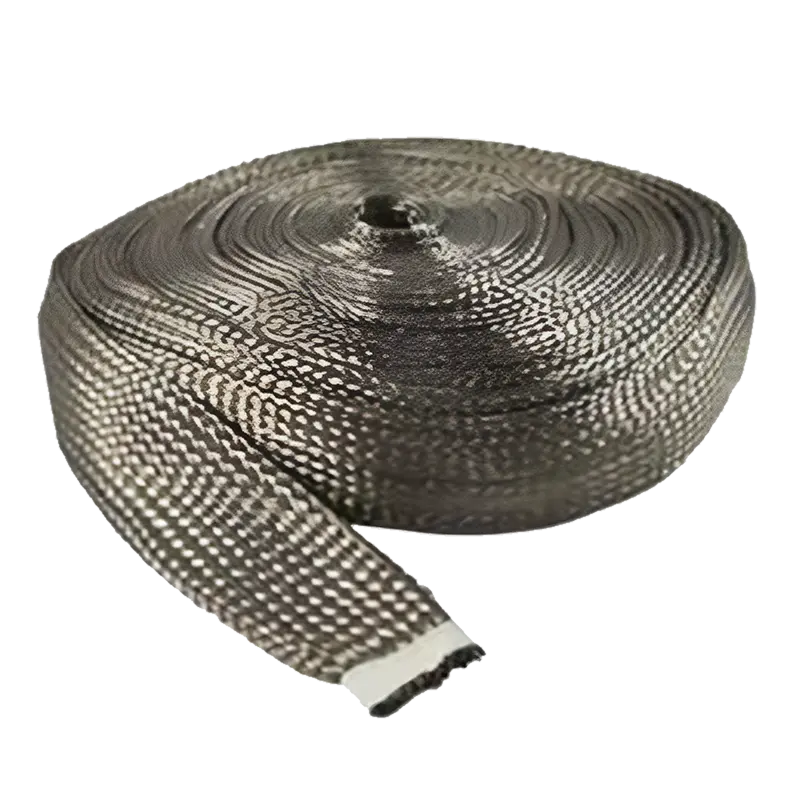
Selecting between glass fiber and fiberglass hinges entirely on your role in the supply chain and the application. Are you a manufacturer producing custom seals, or a buyer sourcing finished components? For creating high-performance seals, gaskets, or insulation, you are buying the raw glass fiber in forms like twisted yarn for packing, woven tape for thermal barriers, or chopped strands to mix into compounds. Your specification must detail the form, fineness, and treatment. For instance, a braided compression packing for pumps requires specific glass fiber yarn with a lubricating finish. Conversely, if you need a ready-to-install part like an electrical insulation panel or a chemical-resistant duct, you are procuring a fiberglass product. Here, you evaluate the final part's certifications, dimensions, and load ratings. This is where a partner with deep material science knowledge proves invaluable. Ningbo Kaxite Sealing Materials Co., Ltd. specializes in the glass fiber side of this equation, providing the engineered raw materials that enable manufacturers to produce superior, reliable fiberglass-based sealing solutions, ensuring your supply chain is built on technically sound foundations.
| Application Scenario | Recommended Material | Key Procurement Specification |
|---|---|---|
| High-Temp Gasket Reinforcement | Glass Fiber Woven Cloth | Weave pattern, Areal weight (g/m²), Temperature grade of sizing |
| Pump Packing & Valve Stem Seals | Glass Fiber Braided Yarn/Rope | Yarn tex, Braid density, Presence of lubricant (e.g., graphite) |
| Composite Molded Parts (e.g., covers, housings) | Fiberglass (GRP/FRP) | Mold flow index, FDA/UL certification, Color consistency |
In global procurement, consistent quality is non-negotiable. Variations in glass fiber diameter, sizing application, or resin purity in fiberglass can lead to batch failures. The risk multiplies when terminology is ambiguous. Specifying "fiberglass tape" could yield a finished composite tape or a roll of pure glass fiber tape used for wrapping—two vastly different products. Mitigating this requires precise communication and supplier qualification. Look for suppliers who demonstrate clear understanding, provide detailed technical data sheets (TDS) for the raw glass fiber, and offer traceability. A supplier's ability to explain the role of their glass fiber in the final fiberglass product is a strong indicator of expertise. Ningbo Kaxite Sealing Materials Co., Ltd. excels here. They don't just sell materials; they provide application-specific solutions. Their glass fiber products are manufactured with stringent controls, ensuring the fibers provide optimal reinforcement, chemical resistance, and thermal stability in your final sealing products. This translates to fewer rejects, consistent performance in your supply chain, and reduced total cost of ownership.
Frequently Asked Questions
Q: What is the difference between fiberglass and glass fiber in terms of electrical insulation?
A: For electrical insulation, glass fiber as a raw material (e.g., woven sleeve or tape) offers excellent dielectric strength and heat resistance. Fiberglass as a composite (like FRP laminates) also provides insulation but its properties are a combined result of the glass fiber and the resin's dielectric characteristics. For high-grade insulation, specifying the glass fiber's composition (e.g., E-glass) and the absence of conductive coatings is crucial.
Q: What is the difference between fiberglass and glass fiber when considering chemical resistance in seals?
A: The chemical resistance of a seal depends heavily on the matrix. The glass fiber itself is largely inert to many chemicals, but the sizing on it must be compatible with the sealing compound (e.g., PTFE, silicone). In a finished fiberglass product (like a tank), chemical resistance is determined by the resin (e.g., vinyl ester). Thus, for seal manufacturing, sourcing correctly sized glass fiber from a knowledgeable supplier like Ningbo Kaxite Sealing Materials Co., Ltd. is key to ensuring final chemical durability.
We hope this guide clarifies the critical distinctions between glass fiber and fiberglass for your procurement activities. Have you encountered challenges in specifying these materials? Are there specific application scenarios you'd like further insight on? Share your thoughts or questions with us—let's turn material clarity into your competitive advantage.
For your projects requiring high-performance glass fiber materials for sealing and insulation, consider Ningbo Kaxite Sealing Materials Co., Ltd. A specialist manufacturer with a strong focus on quality and technical support, Kaxite provides a range of glass fiber products designed to meet rigorous industrial demands. For specific inquiries, please contact their team at [email protected].
Supporting Research & Literature:
Mouritz, A.P. (2012). Introduction to Aerospace Materials. Woodhead Publishing Series in Metals and Mechanical Properties, Volume 52.
Jones, F.R. (2001). Handbook of Polymer Composites for Engineers. Elsevier Science, 1st Edition.
Loewenstein, K.L. (1973). The Manufacturing Technology of Continuous Glass Fibres. Journal of Non-Crystalline Solids, 13(1).
Bunsell, A.R., & Harris, B. (1974). Hybrid carbon and glass fibre composites. Composites, 5(4).
Hull, D., & Clyne, T.W. (1996). An Introduction to Composite Materials. Cambridge Solid State Science Series, 2nd Edition.
Gibson, R.F. (2016). Principles of Composite Material Mechanics. CRC Press, 4th Edition.
Kardos, J.L. (1973). Structure and properties of glass fibre reinforced plastics. Journal of Macromolecular Science, Part C, 9(1).
Mohan, R. (2013). A Review of Sizing Chemistry and Its Role in Glass Fibre Reinforced Plastics. International Polymer Processing, 28(3).
Thomason, J.L. (2002). The influence of fibre length and concentration on the properties of glass fibre reinforced polypropylene. Composites Part A: Applied Science and Manufacturing, 33(12).
Wallenberger, F.T., & Bingham, P.A. (2010). Fibreglass and Glass Technology: Energy-Friendly Compositions and Applications. Springer.


