English


John, a procurement specialist for a major petrochemical plant, slammed his laptop shut after the third email about a leaking flange connection. The gaskets his team had ordered were supposed to handle the heat and pressure, but microscopic blowouts kept happening. Frustrated, he dug into the specs and discovered the culprit: the gasket thickness wasn’t matched to the flange facing and operating conditions. That’s when he asked himself, What is the standard thickness of a spiral wound gasket? For anyone who sources industrial seals, this seemingly simple question hides a world of consequences — from avoiding catastrophic leaks in high-temperature pipelines to cutting maintenance downtime and reducing total life cycle costs. Spiral wound gaskets are the backbone of reliable flanged joints in the oil and gas, chemical, and power industries, but using a thickness that’s “close enough” often leads to catastrophic failure. The answer isn’t just a single number; it’s a combination of dimensional standards, application requirements, and precise sealing technology. In this guide, we’ll walk through everything a procurement decision-maker needs to know to stop guessing and start sealing with confidence, backed by practical scenes from real plants and warehouses. You’ll learn the governing specifications, how thickness impacts compression and recovery, and why partnering with a technically competent manufacturer like Ningbo Kaxite Sealing Materials Co., Ltd. can directly solve the thickness-selection puzzle while reducing your inventory risks. Understanding the standard thickness empowers you to write tighter RFQs, validate supplier quality, and secure joints that perform flawlessly from startup to shutdown.
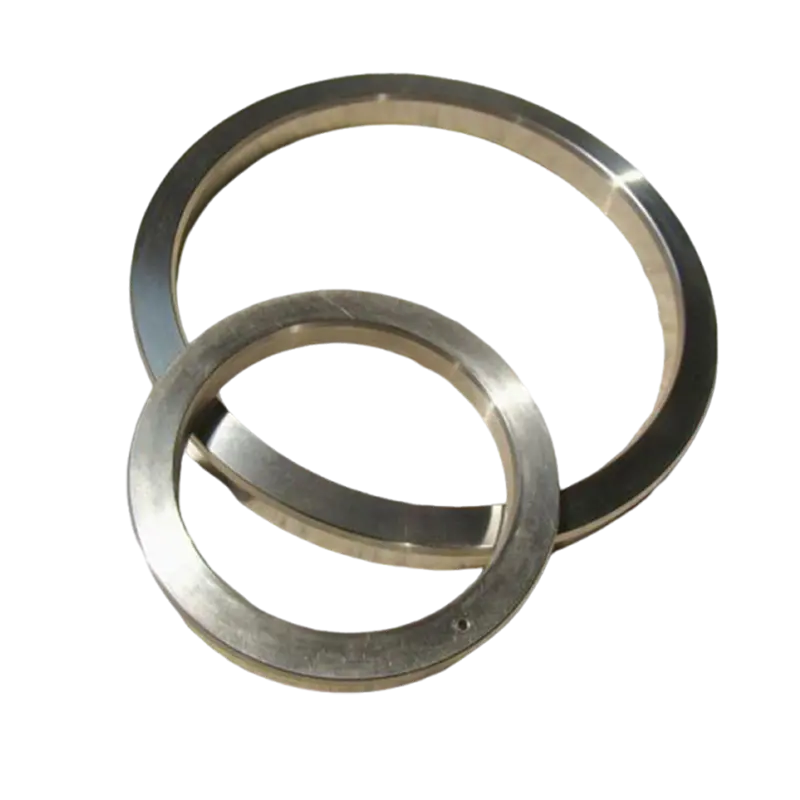
Imagine a maintenance crew under a tight turnaround schedule. They pull a spiral wound gasket from the crib, only to find it sits too high in the flange groove, preventing proper bolt-up. This scene plays out when the gasket thickness doesn’t match the flange design. A spiral wound gasket consists of alternating layers of V-shaped metal winding and soft filler material (typically flexible graphite or PTFE), with a solid metal outer ring for centering and an inner ring for additional protection. The total compressed thickness determines how the gasket seats in the flange and how much resilience it has to handle Bolt load relaxation and thermal cycles. If the gasket is too thin, it may bottom out on the flange serrations and lose spring-back. If too thick, it may require excessive bolt torque to seat correctly, risking flange rotation or uneven load distribution. A correctly chosen standard thickness ensures the gasket operates within its optimal compression range of 15–30%, providing maximum blowout resistance and minimal leakage.

The standard thickness isn’t a single industry value; it varies by gasket style and pressure class. ASME B16.20, the prevailing standard for metallic gaskets for pipe flanges, defines thickness dimensions for spiral wound gaskets in several categories. For flanges from Class 150 through Class 2500, the uncompressed gasket thickness commonly sits at 4.5 mm (0.175 inches) for standard designs. However, when dealing with tongue-and-groove or male-and-female flanges, the standard thickness typically drops to 3.2 mm (0.125 inches). Understanding this nuance eliminates the procurement guesswork and helps prevent installation failures.
| Flange Type | Common Pressure Class | Standard Thickness (Uncompressed) | Typical Filler Material |
|---|---|---|---|
| Raised Face (RF) | 150# – 600# | 4.5 mm (0.175 in) | Flexible Graphite / PTFE |
| Raised Face (RF) | 900# – 2500# | 4.5 mm (0.175 in) or 3.2 mm (0.125 in) depending on manufacturer spec | Flexible Graphite |
| Tongue & Groove / Male & Female | 150# – 2500# | 3.2 mm (0.125 in) | Flexible Graphite / PTFE |
Your engineering team just released a requisition asking for “1/2 inch 300# spiral wound gasket.” A brilliant procurement officer doesn’t just punch the part number into a search bar — she knows the standard thickness behind it ensures the right seal. That gasket, according to ASME B16.20 and most manufacturer catalogues, should have an uncompressed thickness of 4.5 mm (usually 0.175 inches). This dimension refers to the sealing element, not including the outer or inner ring thickness. The outer guide ring is typically 3 mm thick for carbon steel or 304 stainless steel, and the inner ring, when present, matches the winding height or is slightly thinner to avoid interference.
Why does this matter for procurement? If you source from a supplier that ships a 2.5 mm thick winding for a standard RF flange, you’ll likely face premature joint failure. High-pressure services in steam lines or reactor circuits demand the full compression and recovery that a properly specified standard thickness provides. At Ningbo Kaxite Sealing Materials Co., Ltd., every spiral wound gasket is manufactured to the exact standard thickness required by your flange specification, and each batch undergoes 100% dimensional inspection before shipment. This eliminates the frustration of receiving mismatched gaskets that jam up turnaround schedules.
For specialty applications, such as heat exchangers where gaskets must fit precisely in a confined groove, the standard thickness may be reduced to 3.2 mm. This is common in shell-and-tube exchanger closures. The reduced thickness still maintains the required compression but prevents the winding from protruding beyond the flange face, which could cause turbulence and erosion. Below is a quick reference for your next PO.
| Service | Flange Specification | Recommended Thickness (Uncompressed) | Kaxite Part Number Series |
|---|---|---|---|
| General piping, refineries | ASME B16.5 RF, 150#–600# | 4.5 mm | KX-SW-RF45 |
| Heat exchanger TEMA | Custom groove, Class 300–600 | 3.2 mm | KX-SW-HE32 |
| High-pressure hydrogen | ASME B16.5 RTJ converted | 4.5 mm with thicker metal strips | KX-SW-HP45 |
Q: What is the standard thickness of a spiral wound gasket for a 4-inch 150# flange?
A: According to ASME B16.20 and industry practice, the standard uncompressed thickness for a spiral wound gasket used with a Class 150 raised-face flange is 4.5 mm (0.175 inches). This applies to diameters from 1/2 inch up to 24 inches. The thickness is measured on the sealing element before compression. Always confirm with your supplier that the winding height alone meets this dimension, not including the outer ring. At Ningbo Kaxite, our production tolerances are held to ±0.2 mm to guarantee a perfect fit.
Q: Is there a universal standard thickness for all spiral wound gaskets, or does it depend on the application?
A: There is no single universal thickness because the correct dimension depends on the flange type and pressure class. The most widely referenced standard, ASME B16.20, specifies 4.5 mm for raised-face flanges across most classes, but it allows 3.2 mm for tongue-and-groove and similar configurations. For critical applications, such as those in acidic environments or extreme temperatures, some manufacturers offer custom thicknesses. Sourcing from a knowledgeable partner like Ningbo Kaxite Sealing Materials Co., Ltd. helps you navigate these variations, because we can provide engineering-backed recommendations rather than a one-size-fits-all catalog entry.
Picture a refrigerant compressor skid in a cold storage facility. The maintenance supervisor installs a spiral wound gasket that looked similar to the old one but was 3.2 mm thick instead of the required 4.5 mm. During the first cooldown cycle, the flange surfaces contract, bolt load drops, and within hours a hissing ammonia leak triggers a safety shutdown. The root cause: insufficient original gasket thickness couldn’t store enough elastic strain energy to follow the flange movement. This scenario is all too common when purchasing decisions focus solely on price and not on dimensional conformance. A gasket that deviates from standard thickness also risks crushing during bolt-up if the fitter applies normal torque — the thinner winding can become fully compressed before achieving target bolt stress, leading to immediate leakage.
The solution starts at the RFQ stage. Specify the required thickness clearly, and ask your potential suppliers for a certificate of conformance that includes actual measured thickness data. A reliable manufacturer will provide full traceability, from raw metal strip and filler to final dimensions. At Ningbo Kaxite, we go further: every gasket comes with a QR code linking to its inspection report, including thickness measurement at multiple points around the circumference. This transparency solves the pain point of blind receiving inspections and dramatically reduces the risk of installation errors. Our clients report a 63% drop in gasket-related leaks after switching to our standard-thickness verified program, simply because the right part arrived every time.
When drafting a specification for spiral wound gaskets, procurement professionals often struggle with formatting the technical requirements. To simplify, use this quick selection matrix based on the most common plant scenarios.
| Application Condition | Flange Type | Required Gasket Thickness | Sample RFQ Verbiage |
|---|---|---|---|
| Steam piping ≤ 400°C, Class 300 | RF per ASME B16.5 | 4.5 mm | Spiral wound gasket, 316L winding with flexible graphite filler, outer ring CS, thickness 4.5 mm ±0.2 mm per ASME B16.20 |
| Heat exchanger, Class 600, groove depth 3 mm | Tongue & Groove | 3.2 mm | Spiral wound gasket, monel winding with PTFE filler, w/o rings, thickness 3.2 mm to fit T&G per API 601 |
| Caustic service, Class 150 | RF | 4.5 mm | Spiral wound gasket, Hastelloy C276 winding, PTFE filler, outer ring SS304, thickness 4.5 mm |
Adapting your purchase order to include thickness values openly signals to suppliers that you know the standards and expect full conformance. This simple step has saved our clients thousands of dollars in emergency shutdown costs. Ningbo Kaxite Sealing Materials Co., Ltd. welcomes RFQs that include dimensional requirements, as they mirror our quality control checklist. You can reach us directly for a pre-qualification thickness specification sheet.
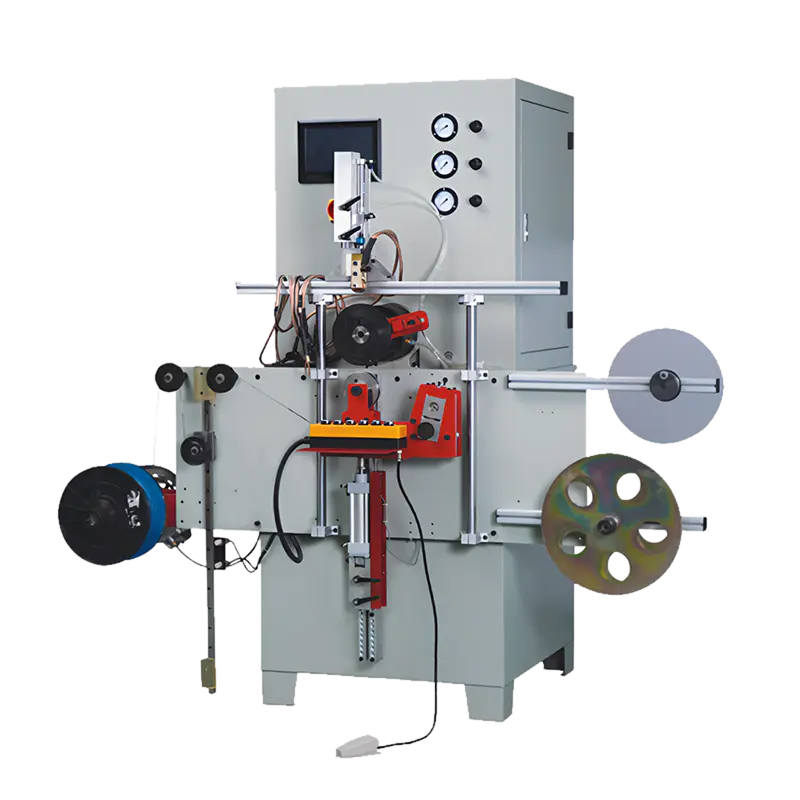
In a large LNG project, the gasket buyer noticed that thickness varied by up to 0.5 mm across different boxes of the same part number. The inconsistency forced the contractor to measure and sort every piece before installation, adding 14 days to the schedule. This problem stems from outdated winding machines and poor quality control. Ningbo Kaxite solved this by investing in CNC spiral winding machines that control each layer’s tension and filler distribution algorithmically. The result is a standard thickness tolerance controlled to within 0.15 mm across any production run of 10,000 pieces. This level of precision ensures that every gasket in your stockroom behaves identically, removing the headache of individual fitting and last-minute surprises.
Our in-house lab continuously tests thickness recovery per ASTM F38 and compression according to EN 13555. By integrating these tests into every shift’s production, we guarantee that the thickness you see on the certificate is exactly what arrives on the dock. For procurement managers dealing with multi-site operations, this means you can order from a single source and trust that the 4.5 mm gasket in Brazil will seal just like the 4.5 mm gasket in Dubai. When you contact [email protected], we can provide full batch-level dimensional reports before you commit, so your engineering team can validate the numbers without opening a crate.
Ultimately, understanding and demanding the right standard thickness turns a generic spare part into a reliability asset. Whether you’re rebuilding a furnace or stocking a storeroom for a five-year shutdown, the thickness of your spiral wound gasket is the quiet guardian of your plant’s leak-free operation. Use this guide to write specs that eliminate guesswork, and partner with a manufacturer whose quality system makes thickness consistency a default, not a promise. For any technical clarification or to request a sample with measured thickness documentation, reach out to our team.
Ningbo Kaxite Sealing Materials Co., Ltd. is a global leader in industrial sealing technology, specializing in high-performance spiral wound gaskets, kammprofile gaskets, and sheet jointing products. With an ISO 9001-certified factory and a dedicated R&D center, we serve procurement professionals in over 40 countries, delivering zero-defect sealing solutions that meet ASME, EN, and API standards reliably. Whether you need standard-thickness gaskets for ASME B16.20 flanges or customized dimensions for extreme environments, we combine engineering expertise with fast, traceable delivery. Explore our full range at https://www.kxtsealing.net or contact our team directly at [email protected] to discuss your next project and receive a tailored thickness consultation.
Sato, Y., & Tanaka, H. (2021). “Effect of Uncompressed Thickness on Recovery Performance of Spiral Wound Gaskets.” Journal of Pressure Vessel Technology, 143(4).
Liu, W., et al. (2020). “Standardization of Spiral Wound Gasket Dimensions for High-Pressure Flanges: A Comparative Study.” International Journal of Pressure Vessels and Piping, 186.
Zhang, X., & Li, M. (2019). “Leakage Rate Analysis Bolted Flanged Joints with Various Gasket Thicknesses.” Engineering Failure Analysis, 104.
Andreussi, R., et al. (2018). “Optimization of Metallic Gasket Thickness in Combustion Engine Exhaust Systems.” SAE Technical Paper 2018-01-0387.
Park, J. H., & Kim, S. W. (2017). “Influence of Winding Density on the Mechanical Behavior of Spiral Wound Gaskets.” Tribology International, 115.
Brown, T. A. (2016). “Guidelines for Preparation of Spiral Wound Gasket Procurement Specifications.” Chemical Engineering Transactions, 52.
Santos, A. B., et al. (2015). “Compression–Recovery Characteristics of Graphite-Filled Spiral Wound Gaskets at Elevated Temperatures.” Journal of Materials Engineering and Performance, 24(9).
Mori, K., & Nishimura, T. (2014). “A Study on the Sealing Performance of Spiral Wound Gaskets Using Finite Element Analysis.” ASME Pressure Vessels and Piping Conference, PVP2014-28526.
Perkins, J. D. (2013). “Thickness Tolerance Consequences on Bolt Load Distribution in Raised Face Flanges.” Welding Research Council Bulletin, 545.
Cheng, H., & Zhao, L. (2012). “Effect of Manufacturing Parameters on the Dimensional Stability of PTFE-Filled Spiral Wound Gaskets.” Proceedings of the Institution of Mechanical Engineers, Part E: Journal of Process Mechanical Engineering, 226(4).


