
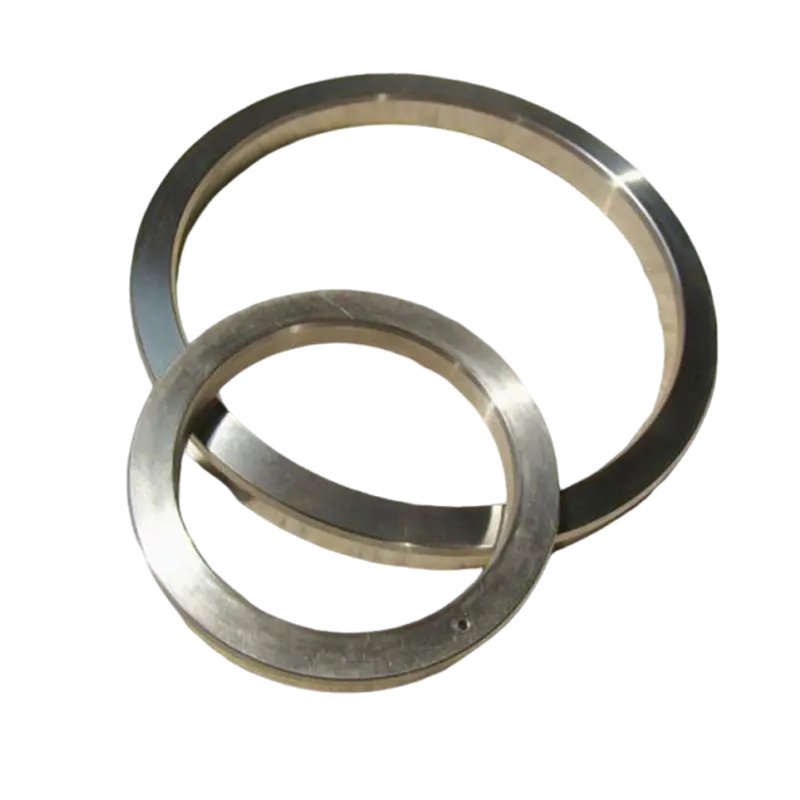
Precision Engineered for Demanding Applications: The Die-formed Graphite Ring
In high-temperature sealing and industrial processing, component reliability is non-negotiable. Standard materials often fail under extreme thermal cycling, corrosive atmospheres, and continuous mechanical stress. This is where the engineering superiority of a Die-formed graphite ring becomes critical. Unlike machined or molded alternatives, die-formed rings are manufactured through a high-pressure, precision die-forming process that aligns the graphite's crystalline structure for unparalleled consistency and performance. At Kaxite, we have refined this process over decades, producing sealing solutions that set the benchmark for durability, thermal management, and leak-tight integrity in the most challenging environments.
The core advantage of the Kaxite die-formed graphite ring lies in its homogeneous density and enhanced structural integrity. The high-pressure formation eliminates internal voids and porosity variations common in other manufacturing methods. This results in a component with superior mechanical strength, excellent thermal conductivity, and a consistent sealing surface that minimizes friction and wear on mating parts. Whether in chemical processing pumps, high-temperature valves, aerospace systems, or semiconductor manufacturing equipment, our rings deliver predictable, long-lasting performance.
Key Technical Parameters & Specifications
Selecting the correct graphite ring requires a detailed understanding of its specifications. Below are the critical parameters that define a high-performance die-formed graphite ring.
Primary Material Properties:
- Base Material: High-purity, fine-grain synthetic graphite (Flexible Graphite/Exfoliated Graphite may be used for specific grades).
- Density: 1.5 - 1.9 g/cm³ (Controllable via die-forming pressure to balance strength vs. flexibility).
- Purity Level: ≥ 99.9% carbon content for standard grades; ultra-high purity (≥ 99.99%) available for sensitive applications.
- Temperature Resistance: Inert/Reducing Atmospheres: Up to 3000°C (5432°F); Oxidizing Atmospheres: Up to 450°C (842°F) with optional oxidation-resistant impregnations.
- Tensile Strength: 8 - 15 MPa (Varies with density and grain orientation).
- Compressive Strength: 40 - 120 MPa.
- Thermal Conductivity: 80 - 120 W/(m·K) (Excellent for heat dissipation).
- Coefficient of Thermal Expansion: 2 - 5 x 10⁻⁶ /K (Low, ensuring dimensional stability under thermal shock).
- Hardness (Shore): 30 - 70 (Can be tailored).
Standard Dimensional Tolerances (Kaxite Standard):
| Dimension | Standard Tolerance (mm) | Precision Tolerance (mm) | Notes |
|---|---|---|---|
| Inner Diameter (ID) | ±0.2 | ±0.05 | Critical for shaft fit. |
| Outer Diameter (OD) | ±0.25 | ±0.075 | Ensures proper housing fit. |
| Cross-Section (Width) | ±0.15 | ±0.05 | Uniformity is key for seal face contact. |
| Concentricity (ID to OD) | <0.3 | <0.1 | Guarantees balanced performance. |
| Surface Finish (Ra) | 3.2 µm | 1.6 µm or better | Smoother finishes reduce wear. |
Common Grades & Impregnations Offered by Kaxite:
| Grade Code | Description | Key Features | Ideal For |
|---|---|---|---|
| KX-DG100 | Standard High-Purity Die-Formed Graphite | 99.9% C, excellent thermal & electrical conductivity, good machinability. | General high-temp furnaces, EDM electrodes, inert gas sealing. |
| KX-DG200OR | Oxidation-Resistant Impregnated | Impregnated with phosphate or borate salts, extends life in air up to 550°C. | Air blowers, hot air valves, oxidizing atmosphere applications. |
| KX-DG300MF | Metal-Foil Laminated (e.g., Inconel) | Graphite core with thin metal foil on sealing faces, enhances strength and creep resistance. | High-pressure pumps, aggressive chemical service, dynamic seals. |
| KX-DG400AT | Antimony-Impregnated | Increased hardness and lubricity, lower wear rate. | Dry or marginally lubricated running applications, compressor seals. | KX-DG500UH | Ultra-High Purity (99.99%+) | Minimal ash content, extremely low outgassing, high thermal stability. | Semiconductor CVD/PVD chambers, vacuum furnaces, analytical equipment. |
Frequently Asked Questions (FAQs) About Die-formed Graphite Rings
Q: What is the fundamental difference between a die-formed graphite ring and a machined-from-block graphite ring?
A: The difference lies in the manufacturing process and the resulting material structure. A machined ring is cut from a larger block of molded or extruded graphite, which can have inherent density gradients and grain orientation that may affect performance uniformity. A die-formed graphite ring is created by compressing high-purity graphite powder directly in a precision die under extremely high pressure. This process produces a ring with homogeneous density throughout, no preferential weak points, superior dimensional accuracy, and grain alignment that enhances strength and thermal properties perpendicular to the compression force.
Q: Can Kaxite die-formed graphite rings be used in both static and dynamic sealing applications?
A: Yes, Kaxite die-formed rings are engineered for versatility. For static seals (where there is no relative motion between sealing surfaces), our standard grades provide exceptional creep resistance and leak-tightness under high temperature and pressure. For dynamic sealing applications (like rotating pump shafts or reciprocating rods), we offer specific grades, such as our antimony-impregnated (KX-DG400AT) or metal-foil laminated (KX-DG300MF) rings. These grades are designed with enhanced self-lubricity, reduced wear rates, and higher mechanical strength to withstand continuous friction and maintain a reliable seal over extended operational cycles.
Q: How does the die-forming process at Kaxite contribute to longer service life compared to other methods?
A: Kaxite's controlled die-forming process directly impacts longevity in three key ways. First, the high, uniform pressure eliminates microscopic pores and voids, creating a denser structure that is less susceptible to gas permeation and corrosive fluid ingress. Second, the consistent density means the ring wears evenly, preventing localized failure. Third, the process allows for precise control over the ring's hardness and flexibility, enabling our engineers to tailor the ring to absorb system vibrations and thermal expansions without cracking. This combination of material integrity and application-specific design minimizes downtime and replacement costs.
Q: What are the limits for using a standard die-formed graphite ring in an oxidizing atmosphere, and what are the options if my application exceeds these limits?
A: Unprotected high-purity graphite begins to oxidize significantly in air at temperatures above approximately 450°C (842°F). For applications operating between 450°C and 750°C (1382°F) in oxidizing environments, Kaxite provides specially impregnated rings like the KX-DG200OR grade. These rings are infused with oxidation-inhibiting compounds that form a protective glaze on the graphite surface, drastically slowing the oxidation rate. For even higher temperatures or more aggressive conditions, we recommend exploring our metal-foil laminated rings or discussing a custom solution involving ceramic or metal-alloy coatings applied to the graphite substrate.
Q: How should I specify and order a custom die-formed graphite ring from Kaxite?
A: Providing comprehensive application details ensures you receive the optimal component. Please prepare the following information: 1) Detailed dimensional drawings (ID, OD, width, and any special geometry like grooves or tapers). 2) Operational environment (media/chemicals, temperature range, pressure range, static/dynamic). 3) Performance requirements (leakage rate, expected lifespan, rotational/sliding speed if dynamic). 4) Mating surface materials and finish. Our engineering team will analyze these parameters to recommend the most suitable graphite grade, impregnation, density, and tolerances. We specialize in rapid prototyping and production of both standard and custom geometries to meet precise technical demands.
Q: Are there specific handling, storage, or installation precautions for die-formed graphite rings?
A: While robust in operation, graphite rings are brittle and can be chipped or fractured by impact. Handle with clean gloves to prevent contamination from oils. Store in a dry environment to avoid moisture absorption, which can temporarily affect dimensions. During installation, ensure the sealing housing is clean and free of burrs. Use proper installation tools—never hammer a ring directly into place. For split rings, follow the manufacturer's guidance on gap orientation relative to flow or pressure. Proper installation is crucial to achieving the designed performance and lifespan of the seal.


