English

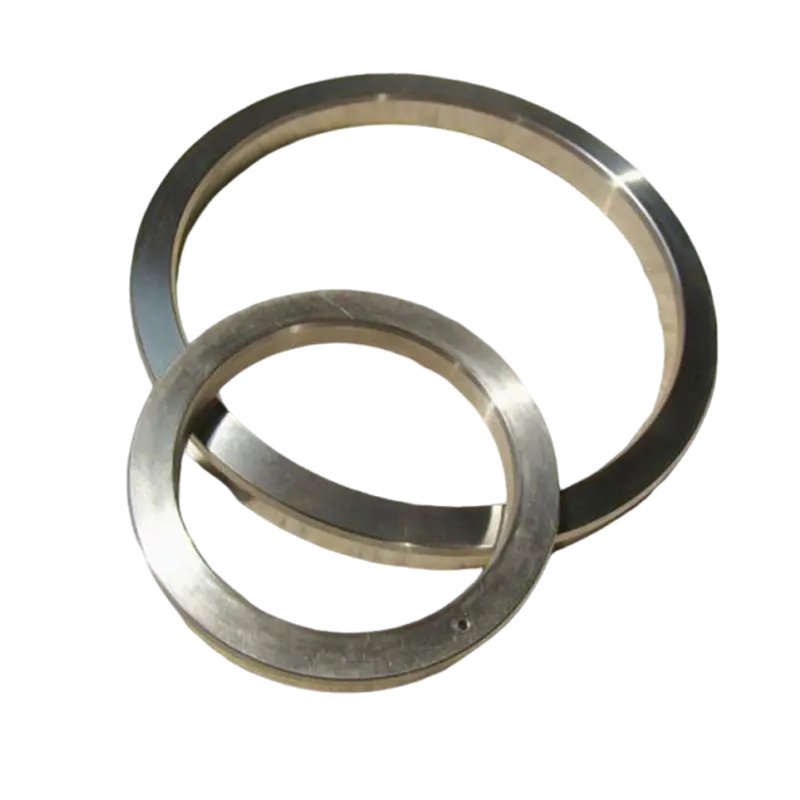
In the critical world of industrial piping and pressure containment, failure is not an option. The integrity of a flange connection can mean the difference between safe, efficient operation and catastrophic downtime or hazardous leaks. For the most severe service conditions involving high pressure, high temperature, corrosive media, or thermal cycling, standard gasket solutions often fall short. This is where the precision-engineered Ring Joint Gaskets (RJ Gaskets) excel. As a cornerstone of safety in industries like oil & gas, petrochemical, refining, and power generation, the correct selection and specification of these gaskets are paramount. Kaxite, with decades of metallurgical and engineering expertise, stands at the forefront of manufacturing premium quality Ring Joint Gaskets that meet and exceed global standards for performance and reliability.
Unlike flat sheet or spiral wound gaskets, a Ring Joint Gasket is a solid, metal ring with an oval or octagonal cross-section. It is designed to seat in a machined groove in the flange faces (the "ring groove"). When the flanges are bolted together, the gasket is compressed, creating a highly effective, pressure-energized metal-to-metal seal. The seal becomes tighter as internal system pressure increases, making it ideal for applications from 5,000 psi to beyond 20,000 psi and temperatures ranging from cryogenic to over 1000°F. Kaxite's commitment to precision ensures every gasket provides an optimal seal from the moment of installation.
Kaxite Ring Joint Gaskets are manufactured to exacting specifications, ensuring compatibility and leak-free performance. Our product range covers all standard sizes and types, with custom engineering available for specialized applications.
Kaxite utilizes a comprehensive range of materials to suit every corrosive and temperature environment. Material selection is critical to gasket performance and longevity.
| Material Grade | ASTM Specification | Typical Hardness (Brinell) | Key Characteristics & Primary Applications |
|---|---|---|---|
| Soft Iron | AISI 1006-1010 | 56-80 | Excellent ductility and sealing for non-corrosive services, hydrocarbon systems. |
| Low Carbon Steel | A105 | 120-150 | General purpose for refinery and process piping. |
| 304 Stainless Steel | A182 F304 | 130-180 | Good general corrosion resistance, oxidizing environments. |
| 316 Stainless Steel | A182 F316 | 130-190 | Superior corrosion resistance, especially to chlorides and acids. |
| Alloy 20 | B462 / UNS N08020 | 140-190 | Excellent resistance to sulfuric acid and other aggressive chemicals. |
| Monel 400 | B164 / UNS N04400 | 110-150 | Superior resistance to seawater, hydrofluoric acid, and alkalies. |
| Inconel 600 | B166 / UNS N06600 | 150-210 | High temperature oxidation resistance, caustic services. |
| Hastelloy C276 | B574 / UNS N10276 | 180-220 | Exceptional corrosion resistance in severe oxidizing and reducing media. |
| Titanium | B381 / Gr. 2 | 120-200 | Excellent strength-to-weight ratio, superb corrosion resistance in chlorides. |
Every Kaxite RJ Gasket is machined to precise tolerances as per relevant industry standards to ensure perfect fit and function. Critical dimensions include Ring Number (size), Pitch Diameter, Width, and Height. Our gaskets conform to:
Q: What is the fundamental difference between Oval (R/RX) and Octagonal (BX) Ring Joint Gaskets?
A: The difference lies in their cross-sectional shape, application, and sealing mechanism. Oval rings have a rounded cross-section and seat on the outer "humps" of the flange groove. They are commonly used in pipeline and refinery flange connections (ASME B16.5/B16.47). Octagonal (BX) rings have a flat-sided, octagonal cross-section that provides a larger sealing surface area. They are designed for higher sealing stress and are the standard for API 6A/6BX wellhead and manifold systems. They are not interchangeable with oval ring grooves.
Q: Can a Ring Joint Gasket be reused after disassembly?
A: It is generally not recommended to reuse a Ring Joint Gasket. During initial bolting, the metal ring deforms plastically to conform perfectly to the imperfections of the flange grooves, creating a unique seal. Upon disassembly, this deformation is set, and the gasket will not reliably conform to the same degree a second time, significantly increasing the risk of a leak. Kaxite always advises using a new, unused gasket for critical reassembly to ensure system integrity.
Q: How do I select the correct material for my service conditions?
A: Material selection depends on four primary factors: 1) Fluid Media (corrosivity, presence of H2S, chlorides, acids), 2) Temperature (both operating and thermal cycle range), 3) Pressure, and 4) Galvanic Compatibility with the flange material. For example, for sour service (containing H2S), materials must comply with NACE MR0175. For high-temperature hydroprocessing units, hardened chromium-moly steels or Inconel may be required. Kaxite's engineering team can provide detailed material selection guidance based on your specific process data sheets.
Q: What is the proper procedure for installing a Ring Joint Gasket?
A: Correct installation is critical. Key steps include: 1) Thoroughly inspect and clean the flange ring grooves, removing any old gasket material, debris, or burrs. 2) Visually inspect the new Kaxite gasket for any defects or shipping damage. 3) Lightly lubricate the gasket with a compatible anti-seize compound (unless prohibited by service). 4) Carefully place the gasket into the bottom flange groove, ensuring it sits flat and is not twisted. 5) Align the flanges and insert all bolts hand-tight. 6) Follow a calibrated cross-bolting pattern (e.g., ASME PCC-1) to achieve the specified bolt stress and ensure even compression of the gasket. Never use impact wrenches without torque control.
Q: Why might a Ring Joint Gasket connection still leak after installation?
A: Several factors can cause a leak: Incorrect Gasket Specification (wrong size, style, or material), Damaged or Incorrect Flange Grooves (wear, pitting, or out-of-spec machining), Improper Installation (insufficient or uneven bolt load, misalignment, dirty grooves), Flange Movement (excessive piping stress or thermal growth), or Gasket Damage (scratches, nicks, or improper handling before installation). A thorough investigation of all these elements is necessary to diagnose and rectify a leak.
Q: How does Kaxite ensure the quality and traceability of its Ring Joint Gaskets?
A: Kaxite implements a rigorous quality management system. Each batch of raw material is certified to ASTM/ASME standards. CNC machining ensures dimensional accuracy to within thousandths of an inch. Every gasket undergoes visual, dimensional, and surface finish inspection. For critical applications, we provide full Material Test Reports (MTRs) with heat number traceability, chemical analysis, and hardness test results. Our gaskets are also marked with material grade, size, and Kaxite branding for permanent identification.
Beyond standard offerings, Kaxite provides solutions for extreme applications. This includes gaskets for Subsea environments with specialized coatings to resist seawater corrosion and prevent galvanic coupling. We manufacture rings for Thermal Cycling services using materials with matched thermal expansion coefficients to the flange. For Sour Gas (H2S) applications, we supply NACE-compliant materials with controlled hardness. Furthermore, Kaxite offers Gasket Pairing and Witness Assembly services for super-critical joints, where the gasket and flanges are measured and matched as a set to guarantee optimal contact and sealing performance before they ever reach the field.
The reliability of your high-pressure systems hinges on the smallest details. Choosing a Kaxite Ring Joint Gasket means investing in precision engineering, proven materials, and the peace of mind that comes from a seal built to withstand the test of time and pressure.


