English

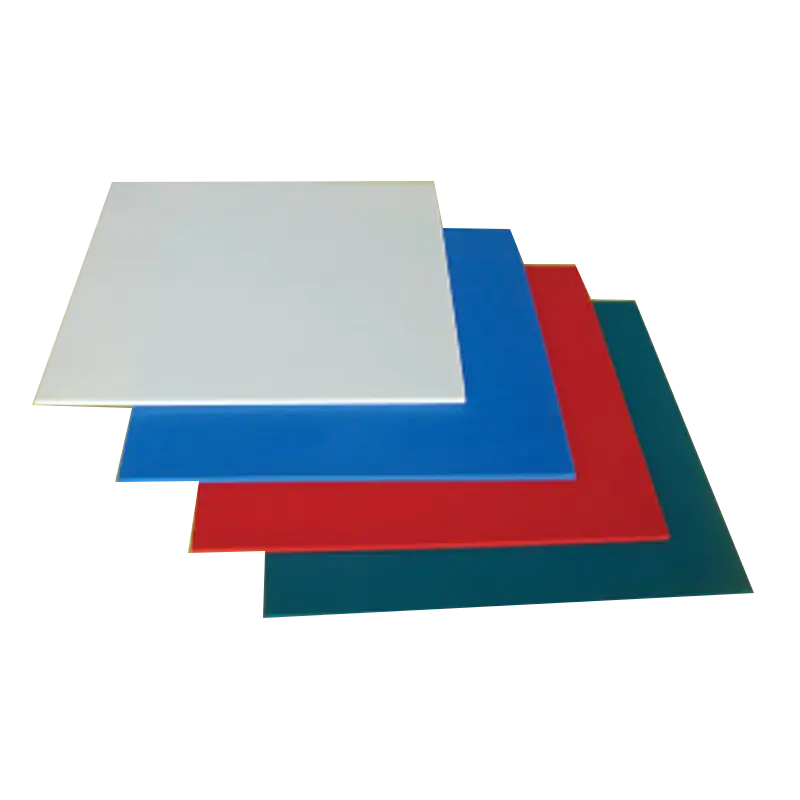
In the world of advanced industrial materials, few substances offer the remarkable combination of properties found in PTFE Film. Polytetrafluoroethylene, or PTFE, is a synthetic fluoropolymer renowned for its exceptional performance across extreme conditions. At Kaxite, we specialize in manufacturing premium-grade PTFE films that meet the rigorous demands of modern industry. This versatile material serves as a critical component in sectors ranging from aerospace and electronics to medical devices and food processing, thanks to its unique molecular structure that provides an almost unparalleled set of characteristics.
The inherent value of PTFE film lies in its trifecta of key properties: extreme thermal stability, outstanding chemical resistance, and an extremely low coefficient of friction. These attributes are not just incremental improvements over other plastics; they represent a fundamental leap in material science. Kaxite's advanced manufacturing processes ensure that these innate properties are maximized, delivering a film product that is consistent, reliable, and engineered for excellence in the most challenging applications.
PTFE film is not a one-size-fits-all material; its value is precisely defined by a set of measurable, superior properties. Understanding these is crucial for engineers and specifiers.
Kaxite offers a comprehensive portfolio of PTFE films, available in skived, cast, or extruded forms to suit specific application needs. The following table details our standard product range specifications. Custom formulations and dimensions are available upon request.
| Product Grade | Thickness Range | Width Range | Key Characteristics | Primary Applications |
|---|---|---|---|---|
| KX-PTFE-S (Standard) | 0.01mm - 3.0mm | Up to 1500mm | High tensile strength, general purpose, excellent electrical properties. | Gaskets, seals, electrical insulation, release liners. |
| KX-PTFE-HP (High Purity) | 0.025mm - 1.5mm | Up to 1200mm | Ultra-low extractables, superior chemical resistance, FDA compliant options. | Medical device components, pharmaceutical processing, food contact surfaces. |
| KX-PTFE-C (Conductive) | 0.05mm - 2.0mm | Up to 1000mm | Carbon or metal-filled for static dissipation or EMI shielding. | Antistatic packaging, electronics shielding, combustible environment safety. |
| KX-PTFE-G (Glass Microfiber Filled) | 0.1mm - 5.0mm | Up to 1200mm | Enhanced creep resistance, improved wear properties, higher stiffness. | Heavy-duty bushings, bearings, thrust washers, industrial liners. |
| KX-PTFE-CL (Clear Optical) | 0.005mm - 0.5mm | Up to 500mm | High light transmittance, low haze, excellent UV stability. | Optical lens coatings, solar panel protective layers, display components. |
To aid in precise material selection, below is a comparison of critical technical parameters for standard Kaxite PTFE films against common alternative materials.
| Property (Units) | Kaxite Standard PTFE Film | Polyimide Film | Polyethylene Film (HDPE) | FEP Film |
|---|---|---|---|---|
| Continuous Use Temp (°C) | -270 to +260 | -269 to +260 | -50 to +80 | -200 to +205 |
| Tensile Strength (MPa) | 20 - 35 | 230 - 300 | 20 - 30 | 20 - 25 |
| Dielectric Strength (kV/mm) | 60 - 100 | 120 - 280 | 20 - 40 | 80 - 100 |
| Coefficient of Friction (Dynamic) | 0.05 - 0.10 | 0.40 - 0.60 | 0.20 - 0.30 | 0.20 - 0.30 |
| Chemical Resistance | Excellent | Good (Poor to bases) | Very Good | Excellent |
| Moisture Absorption (%) | <0.01 | 2.8 - 3.0 | <0.01 | <0.01 |
What is the primary difference between skived, cast, and extruded PTFE film?
Skived film is produced by slicing thin layers from a solid, sintered PTFE billet, resulting in a dense, strong film with excellent mechanical properties, ideal for gaskets and seals. Cast film is created by dispersing PTFE particles in a carrier, casting onto a belt, and sintering; it offers superior thickness uniformity and smoothness for applications like release liners. Extruded film is made by paste extrusion and stretching, often used for threads or tapes. Kaxite selects the manufacturing method based on the target performance characteristics.
Can Kaxite PTFE film be used for food contact applications?
Yes. Kaxite offers specific grades of PTFE film that are compliant with relevant FDA regulations (such as 21 CFR 177.1550 for Perfluorocarbon Resins) for food contact. These high-purity grades are manufactured with strict controls to ensure low extractable levels and are suitable for applications like non-stick surfaces on processing equipment, conveyor belts, and packaging layers. It is crucial to specify your food contact requirement to ensure the correct grade is supplied.
How does PTFE film handle extreme cold, like in cryogenic applications?
PTFE film excels in cryogenic environments. It retains its flexibility and does not become brittle at temperatures as low as -270°C (-454°F). This, combined with its minimal thermal expansion/contraction and maintained non-stick properties, makes Kaxite PTFE film a preferred material for seals, insulators, and spacers in liquid nitrogen systems, superconducting magnet insulation, aerospace components, and other cryogenic engineering applications.
Is PTFE film resistant to UV radiation and outdoor weathering?
Absolutely. PTFE is inherently resistant to degradation from ultraviolet (UV) light and general weathering. Unlike many polymers that embrittle and crack when exposed to sunlight, Kaxite PTFE film maintains its mechanical and electrical properties over extended periods outdoors. This makes it an excellent long-term choice for architectural fabrics (like stadium roofs), outdoor sensor insulation, and protective layers in solar energy systems.
What are the options for bonding or laminating PTFE film to other materials?
Due to its non-stick nature, bonding PTFE is challenging but achievable with proper surface treatment. Kaxite can supply PTFE film with one surface treated (typically via sodium etching or plasma treatment) to create a bondable surface for adhesives or thermal laminating to substrates like rubber, metals, or other plastics. We also offer composite films pre-laminated with adhesives (e.g., pressure-sensitive adhesive with a liner) for easy application in the field.
What is the difference between PTFE and FEP films?
While both are perfluoropolymers, FEP (Fluorinated Ethylene Propylene) is a melt-processable copolymer. Key differences: PTFE has a higher maximum continuous use temperature (260°C vs. 205°C for FEP) and a slightly lower coefficient of friction. FEP films are often clearer and can be heat-sealed more easily due to their melt processability. Kaxite provides both materials, and the choice depends on the specific temperature, optical, and fabrication requirements of the application.
How should PTFE film be stored and handled to ensure its longevity?
Kaxite PTFE film should be stored in a cool, dry place away from direct sunlight and heat sources. It is best stored flat or on a core to prevent creasing or curling. While chemically resistant, it is advisable to keep it away from strong alkali metals and certain fluorinating agents. Standard shop handling is acceptable, but for cleanroom or high-purity applications, appropriate clean handling protocols should be followed to prevent surface contamination.


